

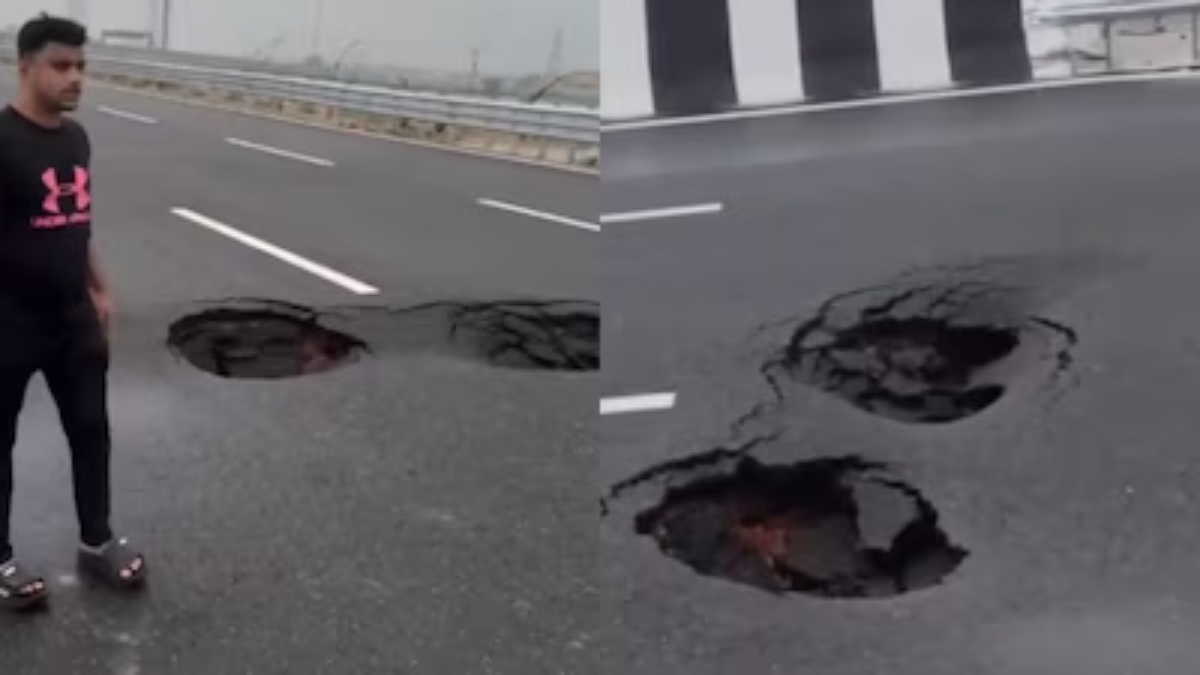
New Delhi, July 2, 2026 — The grand promise of a seamless, hyper-fast commute between the national capital and Uttarakhand has hit a literal and metaphorical roadblock. Just 79 days after its highly publicized inauguration, the ₹12,000-crore Delhi–Dehradun Expressway has found itself at the center of massive public fury and a brewing political storm. The catalyst? A viral social media video showcasing gaping potholes on the newly opened highway, accompanied by the biting caption, “Delhi to Heaven in 2.5 seconds.”
The controversy erupted on July 2, 2026, when a motorist filmed the severely damaged stretch of the six-lane expressway near Hathi Karoda village in Shamli, Uttar Pradesh. The footage, which rapidly clocked millions of views across X (formerly Twitter) and Instagram, shows large, deep cavities in the asphalt capable of causing catastrophic accidents at high speeds.
79 Days of Durability: First Rains Expose Structural Integrity
The 212-kilometer access-controlled highway was inaugurated by Prime Minister Narendra Modi on April 14, 2026, with the aim of reducing travel time from six hours to a mere two. Yet, with the arrival of the monsoon season, the very first spell of heavy rainfall seemingly washed away the top layers of the asphalt, revealing severe foundational compromises.
In the viral video, the distressed commuter points out the massive craters and claims he witnessed “four to five vehicles lose their balance” right in front of him after striking the craters at high speeds. The video further showcases a vehicle stranded on the shoulder with a bent alloy wheel, a direct result of hitting the unexpected dip.
Political Firestorm: Opposition Alleges Substandard Construction and Corruption
The swift deterioration of a marquee infrastructure project has given the political opposition potent ammunition against the ruling government. The Congress Party took a sharp swipe at the Centre on social media, accusing it of systemic corruption and institutional negligence.
The opposition argued that the issue extends beyond this single highway, pointing to a string of recent structural failures nationwide, including leaking airport roofs, collapsing bridges, and damaged railway infrastructure. The Aam Aadmi Party (AAP) also joined the offensive, sharing the clip with the sarcastic remark that the “government’s version of development has finally come to light.”
Quick Fixes and Long-Term Accountability
As the video gained momentum and triggered a public relations crisis, local highway authorities scrambled to deploy repair crews. By the evening of July 2, workers were seen performing patchwork on the affected Shamli stretch, hastily filling the craters with cold-mix asphalt.
However, experts note that such quick fixes are merely cosmetic. For a high-speed corridor designed to bear heavy commercial traffic and weekend tourist rushes, the appearance of deep potholes so early points to an inadequate binder course, poor compaction, or systemic waterlogging issues due to flawed drainage design.
What Happens Next?
The Delhi–Dehradun Economic Corridor was designed as an engineering marvel, featuring Asia’s longest elevated wildlife corridor (a 12-km stretch through the Rajaji National Park) to reduce man-animal conflict. While it has successfully brought the hills closer to Delhi, the safety of the thousands of motorists using it daily remains paramount.
As citizens demand an independent audit of the materials used by contractors, the National Highways Authority of India (NHAI) faces intense pressure to hold project developers accountable before the monsoon season inflicts more severe damage on the route.