

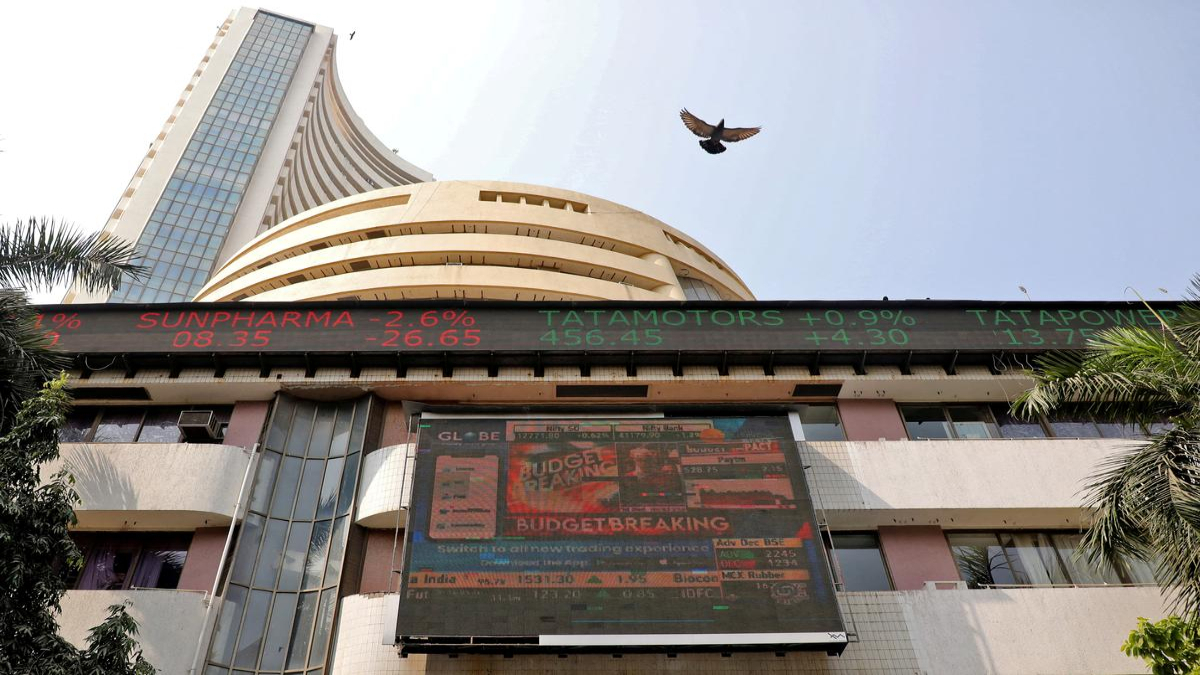
New Delhi, July 3, 2026 — The Indian equity benchmarks opened on a highly optimistic note on Friday, July 3, 2026, extending their winning streak for a second consecutive session. Driven by a major rally in technology stocks, cooling global crude oil prices, and reassuring macroeconomic signals from the United States, investor sentiment received a massive boost right at the opening bell. The 30-share BSE Sensex jumped 545.89 points, or roughly 0.70%, to touch 78,048.01 during early trade. Simultaneously, the broader 50-share NSE Nifty surged 173.85 points to climb comfortably above the psychological resistance level, trading at 24,346.90.
Market analysts pointed out that a combination of domestic resilience and favorable international developments provided a perfect launchpad for the morning’s gains. The market breadth remained exceptionally strong, with gainers heavily outnumbering losers during the initial hours of trading.
IT Stocks and Sectoral Gainers Lead the Charge
The primary engine behind Friday morning’s massive surge was the Information Technology (IT) sector. Heavyweights like HCL Technologies, Tech Mahindra, and Tata Consultancy Services (TCS) saw heavy buying from both institutional and retail investors. This sudden interest in IT stocks follows a trend from earlier in the week, where global tech adjustments forced capital into stable Indian tech firms. Alongside IT, other prominent winners in the early Sensex pack included Bajaj Finserv, Tata Steel, and Bharat Electronics.
The rally was not confined just to large-cap stocks. The broader market showed synchronized health, with the BSE MidCap and SmallCap indices registering steady gains as well. Out of over 3,000 shares traded on the Bombay Stock Exchange in early deals, more than 2,000 advanced, while fewer than 1,000 declined, highlighting a widespread and healthy risk-on sentiment across the board.
Conversely, the market saw minor profit-booking in traditionally defensive or highly valued sectors. Heavyweights like Mahindra & Mahindra, State Bank of India (SBI), NTPC, and InterGlobe Aviation (IndiGo) operated as mild laggards, slightly capping the index’s exponential headroom but failing to dampen the overall enthusiastic momentum.
Global Triggers: Soft U.S. Data and Geopolitical Easing
A significant portion of Friday’s market euphoria can be traced back to fresh economic data out of the United States. Softer-than-expected U.S. jobs data tempered growing fears regarding near-term monetary tightening by the Federal Reserve. When employment numbers cool off slightly, it signals to the market that the central bank may pause or delay aggressive interest rate hikes. This immediately relieves pressure on emerging markets like India, preventing rapid capital flight and giving local equities room to breathe.
Furthermore, ongoing progress in U.S.–Iran diplomatic negotiations has introduced a fresh wave of relief regarding the global energy supply. The potential for a peaceful diplomatic resolution has eased long-standing concerns about energy supply chain disruptions, allowing global markets to trade with less anxiety.
Adding to the macroeconomic comfort is the pricing of Brent crude, the global oil benchmark. Crude oil prices have stabilized down near pre-war levels, hovering around $72 per barrel. For a massive import-dependent economy like India, cheap crude oil functions as a direct macroeconomic shot in the arm. It lowers the country’s import bill, manages the fiscal deficit, and keeps retail inflation in check, making Indian corporate earnings far more predictable and attractive.
The Broader Picture: Institutional Activity and Economic Backing
The underlying market dynamics are also benefiting from a gradual stabilizing of foreign capital. While Foreign Institutional Investors (FIIs) remained minor net sellers on Thursday, offloading equities worth ₹311.82 crore, the intense selling pressure seen throughout June has notably tapered down. Crucially, Domestic Institutional Investors (DIIs) have stepped up aggressively to absorb any overseas selling, pumping in a massive net buy value of ₹1,784.40 crore in the preceding session alone. This strong domestic institutional support ensures that any minor foreign selloffs do not spiral into market panics.
Experts also note that India’s market outperformance is being structurally aided by geopolitical alignments in Asia. Fresh strategic and economic security agreements signed between India and Japan covering Artificial Intelligence (AI), defense technology, and clean energy supply chains have kept international investor confidence fixed on New Delhi.
As the trading day progresses, market participants are keeping a close watch on the rupee’s trajectory, which opened marginally stronger against the U.S. dollar, hovering around the 94.31 mark. With the India VIX—the stock market’s primary volatility gauge—dropping over 2%, the near-term outlook points to steady, confident consolidation rather than erratic fluctuations. Investors will now look forward to upcoming domestic corporate earnings reports to see if individual company fundamentals match up with the market’s current macroeconomic optimism.