

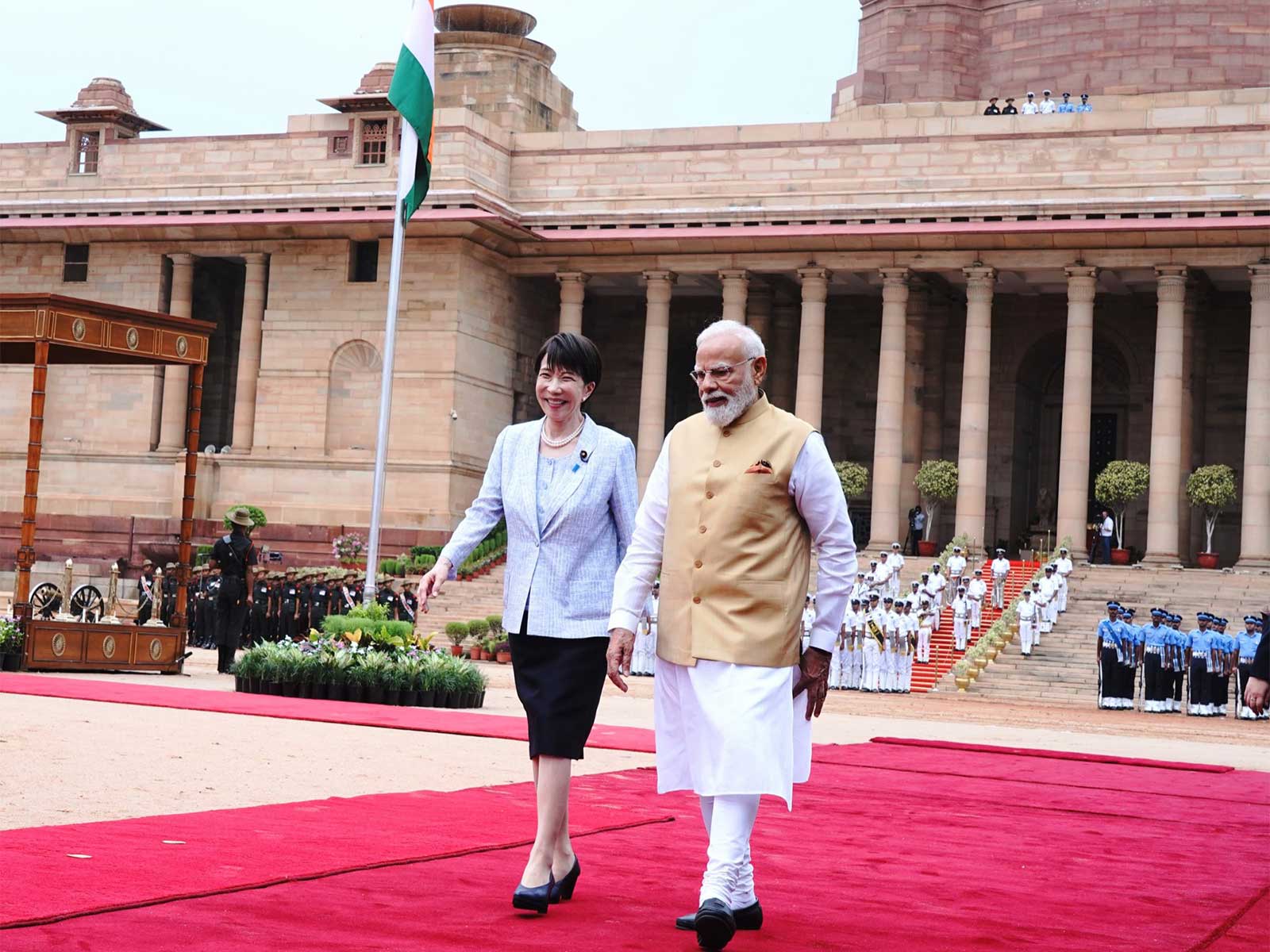
New Delhi, July 3, 2026 — In a major step toward shaping the future of the Indo-Pacific region, Indian Prime Minister Narendra Modi and Japanese Prime Minister Sanae Takaichi successfully concluded the 16th India-Japan Annual Summit. Held in New Delhi from July 1–3, 2026, the high-profile summit served as Prime Minister Takaichi’s maiden official visit to India since taking office.
The three-day event brought together senior government officials, top CEOs, and industry leaders from both nations. Set against the backdrop of an increasingly volatile global geopolitical climate, the two leaders signed a wide range of agreements aimed at deepening cooperation in defense, critical technology, economic security, and green energy. The discussions highlighted a shared commitment to building a resilient, free, and open international order based strictly on the rule of law.
Strategic and Defense Cooperation Takes Center Stage
A major highlight of the 2026 summit was the aggressive push toward advanced defense and security collaboration. Moving past a traditional buyer-seller dynamic, India and Japan are pivoting toward joint development and high-tech engineering.
The two leaders expressed deep satisfaction with their escalating military ties, referencing the successful execution of the bilateral naval exercise “JIMEX 25” and Japan’s active participation in India’s International Fleet Review 2026 in Visakhapatnam.
The standard-bearer for this new era of defense technology cooperation is the Unified Complex Radio Antenna (UNICORN) project. Both sides announced that they have reached an agreement in principle on the remaining technical details, paving the way for an early conclusion and implementation of the project. Furthermore, Prime Minister Modi warmly welcomed Japan’s recent policy review regarding the transfer of defense equipment and technology. This shift allows for deeper collaboration on joint manufacturing under India’s “Make in India” initiative, with a special focus on Naval Maintenance, Repair, and Overhaul (MRO) systems and satellite-driven maritime domain awareness.
To maintain this momentum, instructions were given to hold the fourth round of the high-level 2+2 Foreign and Defense Ministerial Meeting in Tokyo before the end of the year.
Fortifying Economic Security and High-Tech Supply Chains
Economic security emerged as a defining pillar of the 2026 joint statement. Recognizing their mutual vulnerabilities in global supply networks, Modi and Takaichi established an extensive package of Memorandums of Cooperation (MoCs) designed to insulate their industries from external shocks.
A significant breakthrough was the elevation of their tech alliance to a strategic research and development partnership in Artificial Intelligence. The fresh roadmap outlines collaborative efforts to build safe, trusted, and inclusive AI tools.
Additionally, separate agreements were signed between prominent academic bodies. Notably, India’s Centre for Cellular and Molecular Platforms (C-CAMP) and the National Center for Biological Sciences (NCBS-TIFR) partnered with Japan’s elite research institute, RIKEN. These partnerships will drive innovation in deep-tech, neuroscience, and the life sciences, bridging the gap between basic laboratory research and commercially viable startups.
The Green Partnership: 1,000 Biogas Plants and Clean Energy
With both nations racing to meet ambitious climate targets, the summit delivered concrete agreements on clean energy and sustainability. The headline-grabbing initiative under this segment is an expansive plan to establish 1,000 biogas and organic fertilizer plants across India. This massive project will leverage India’s extensive network of rural dairy cooperatives, combining Japanese green technology with Indian agricultural infrastructure to significantly cut down methane emissions while boosting rural economies.
The leaders also reviewed progress on the landmark Mumbai-Ahmedabad High-Speed Rail project—famously known as the bullet train project. Acknowledged as the shining symbol of India-Japan industrial synergy, both sides cheered the steady engineering milestones achieved over the past year and committed to fast-tracking the remaining phases.
Aligning Visions for the Indo-Pacific
Beyond bilateral trade and military exercises, the 2026 summit reaffirmed the geopolitical alignment of New Delhi and Tokyo. As leading democracies in Asia, both leaders spent significant time harmonizing their regional maritime strategies.
Prime Minister Modi emphasized that Japan’s updated “Free and Open Indo-Pacific” (FOIP) vision blends seamlessly with India’s own regional frameworks, including the Indo-Pacific Oceans’ Initiative (IPOI) and the MAHASAGAR initiative. By synchronizing these policies, India and Japan aim to push back against coercive economic practices and unilateral attempts to alter the regional status quo by force.
Cultivating People-to-People Ties
The summit concluded with an emphasis on soft power and cultural connectivity. Both nations acknowledged that economic and military ties cannot survive without robust citizen-level relationships. New initiatives were introduced to enhance student exchange programs, language training, and professional migration, particularly for IT professionals and skilled workers moving from India to Japan’s tightening labor market.
Ultimately, the 16th India-Japan Annual Summit proved that the Special Strategic and Global Partnership is no longer just a diplomatic talking point. Through actionable defense contracts, targeted supply chain agreements, and massive green energy projects, Modi and Takaichi have successfully anchored a resilient framework capable of navigating the complex global landscape of 2026 and beyond.