

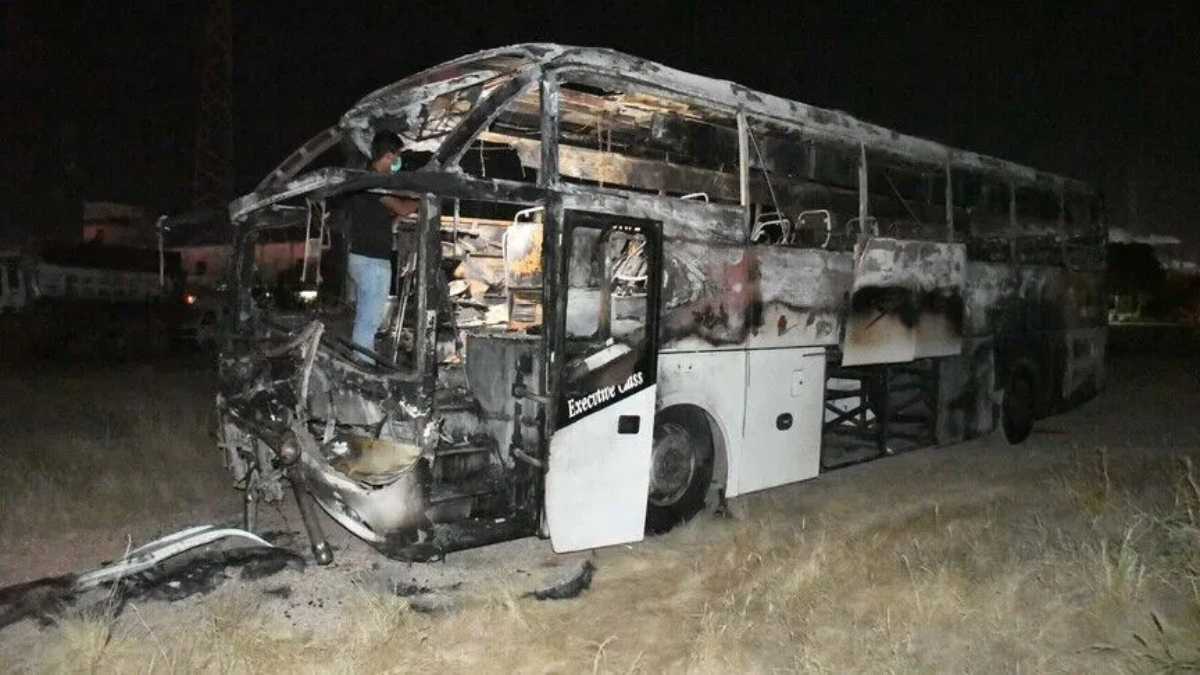
New Delhi, July 3, 2026 — A devastating road accident has claimed the lives of 40 people in southwestern Pakistan after an overcrowded intercity passenger bus lost control, veered off a mountainous highway, and plunged into a deep, rocky ravine. The tragic incident occurred in the early hours of Friday, July 3, 2026, leaving families devastated and highlighting ongoing concerns regarding road safety in the region.
The bus, operated by a private transport service, was making a long-distance journey from Quetta, the provincial capital of Balochistan, and was heading toward the national capital, Islamabad. Officials confirmed that there were a total of 48 people on board at the time of the crash. Alongside the 40 confirmed fatalities, eight other passengers survived the plunge but sustained serious injuries.
The Tragic Crash at Dana Sar
According to government administrators and emergency rescue agencies, the disaster unfolded in the remote Danasar (also spelled Dana Sar) area, located in the Sherani district. This mountainous zone sits directly along the rugged border dividing the provinces of Balochistan and Khyber Pakhtunkhwa.
Local police and border administrators reported that the vehicle was navigating a notoriously difficult, winding stretch of the highway when it suddenly spun out of control. Preliminary assessments from local transport authorities suggest that the vehicle may have suffered a catastrophic brake failure while attempting to negotiate a sharp bend on the steep descent. Unable to slow down or hold the road, the heavy vehicle skidded violently before tumbling off the edge of the asphalt, plunging directly into a jagged, deep roadside ditch below.
The impact of the fall was catastrophic. The rugged terrain and the sheer depth of the ravine crushed the frame of the vehicle, trapping many passengers inside. Local residents who heard the crash were the first to rush toward the site to offer help, facing a grim scene of twisted metal scattered across the rocks.
Overcrowding Compounds the Disaster
As provincial authorities began sorting through the details of the manifest, a critical factor emerged: the bus was severely overcrowded. Sherani Deputy Commissioner Hazrat Wali Kakar explained to reporters that the coach had originally departed from the station in Quetta with 36 ticketed passengers on board. However, the passenger count swelled significantly during the journey.
En route to Islamabad, the driver encountered another passenger bus belonging to the same transit network that had broken down on the side of the highway, leaving its travelers stranded. In an effort to assist, the driver of the fateful bus agreed to take those stranded commuters on board. This decision inadvertently overloaded the vehicle right before it entered the highly treacherous, steep mountain passes near the provincial boundary, putting an immense strain on the bus’s mechanical systems, particularly its brakes.
A Complex Border Rescue Operation
Because the crash took place in an incredibly isolated area directly on the frontier between two provinces, it triggered a massive, multi-agency rescue response. Emergency teams from both Balochistan and neighbouring Khyber Pakhtunkhwa rushed to the scene to coordinate their efforts.
The Medical Emergency Response Centre (MERC) quickly mobilized a substantial fleet to manage the disaster site, deploying:
- 6 dedicated emergency ambulances www.indiatoday.in
- 12 highly trained Emergency Medical Technicians (EMTs) www.indiatoday.in
- 10 light transport and support vehicles www.indiatoday.in
Rescue workers faced significant physical hurdles trying to reach the wreckage at the bottom of the steep ravine. Using specialized cutting equipment, emergency crews worked painstakingly for hours to extricate victims from the mangled body of the bus.
Once pulled from the debris, the eight surviving passengers were stabilized by EMTs and rushed to the specialized Trauma Centre in the city of Zhob, located roughly 75 kilometers (50 miles) away from the crash site. Hospital administrators in Zhob reported that several of the survivors arrived in critical condition, suffering from severe fractures and internal trauma. The bodies of the deceased were also transported to the same government hospital facility, where forensic teams and local administration officials began the difficult, painful process of identifying the victims and preparing to hand them over to their grieving families.
Official Reactions and Ongoing Investigation
The scale of the tragedy has sent shockwaves through the country, drawing swift condolences from Pakistan’s top leadership. From the capital, Pakistan President Asif Ali Zardari issued an official statement expressing profound sorrow over the heavy loss of life, noting that “the entire nation shares equally in the grief of the affected families in this tragic incident.” The President strictly directed regional health authorities to ensure that the surviving victims receive the absolute best medical care available.
Concurrently, Balochistan Chief Minister Sarfraz Bugti expressed his deepest condolences to the victims’ families and directed the district administration to oversee the relief operations personally. Chief Minister Bugti emphasized that a meticulous, formal investigation has been launched to determine the exact mechanical or human errors that led to the crash. Investigators are expected to review whether severe brake failure, excessive speed, or structural overload from the extra passengers was the primary catalyst behind the vehicle losing traction.
A Persistent National Infrastructure Crisis
This latest tragedy serves as a grim reminder of Pakistan’s long-standing struggles with road safety, particularly within its vast and mountainous southwestern territories. Balochistan features an expansive network of intercity highways that cut through demanding geographic terrains, yet these routes are frequently plagued by poor maintenance, a lack of safety barriers, and minimal illumination.
Independent transport safety analysts note that major road accidents are tragically common across Pakistan due to a dangerous combination of factors:
- Substandard Infrastructure: Dilapidated, narrow roads winding through mountain passes without proper structural enforcement. www.devdiscourse.com
- Lack of Regulatory Enforcement: Lax policing regarding speed limits, vehicle weight restrictions, and passenger capacities. www.sfgate.com
- Poor Vehicle Upkeep: Commercial transport companies frequently running aging buses with worn-out tires and degraded braking systems to cut costs.
- Untrained Drivers: Commercial operators pushing drivers to complete long, grueling shifts through the night without adequate rest.
As the community of Zhob and the families of the victims mourn this devastating loss, local advocacy groups are once again calling on the federal and provincial governments to transition from post-disaster condolences to proactive infrastructure reform. Until stringent checks on commercial vehicle health and strict laws against passenger overcrowding are firmly enforced, Pakistan’s treacherous mountain highways will continue to claim the lives of innocent travelers.