

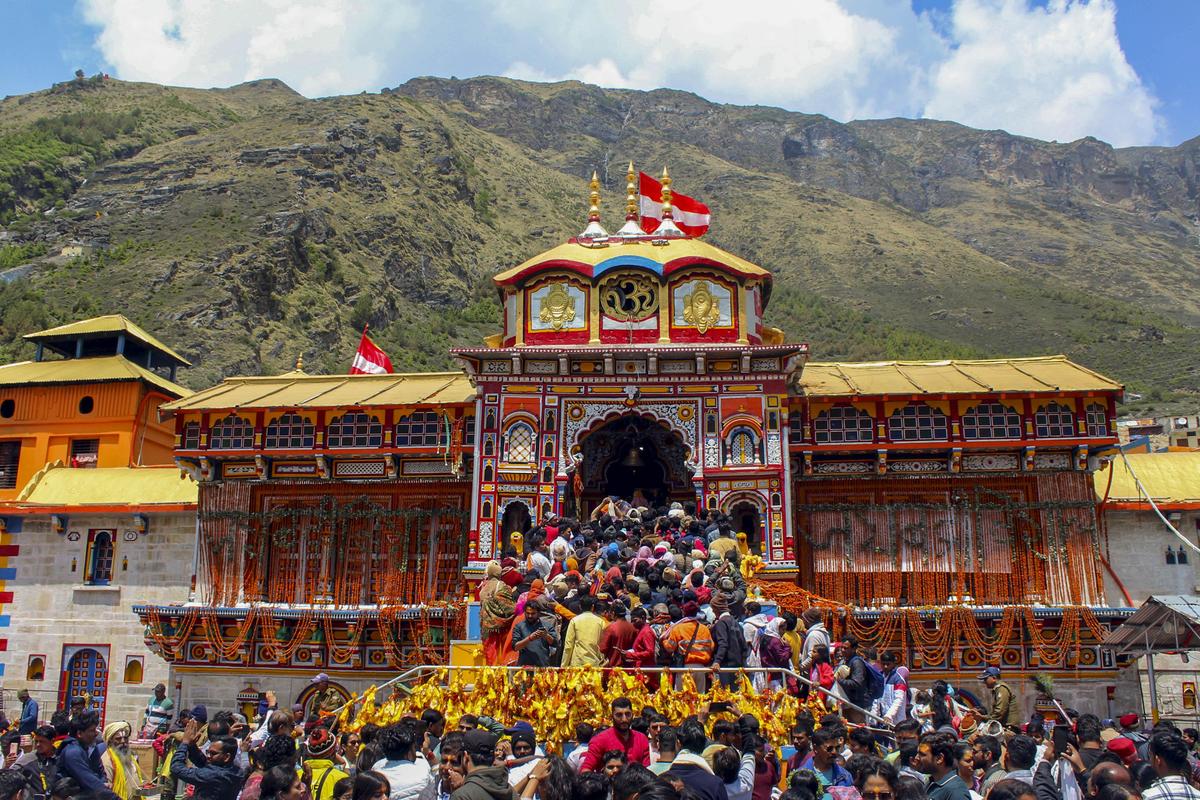
New Delhi, July 4, 2026 — Fresh off the heels of the recent financial controversy that shook the Ayodhya Ram Temple, another massive storm has hit India’s religious landscape. The Shri Badrinath-Kedarnath Temple Committee (BKTC) has officially launched a high-level, internal investigation following serious allegations of donation theft and misappropriation of offerings at the historic Shri Badrinath Dham in Uttarakhand.
The allegations, which spread rapidly across social media platforms over the last 48 hours, suggest that sacred offerings made by millions of faithful devotees have been systematically siphoned off by temple insiders. Recognizing the intense public sensitivity surrounding the Char Dham shrines, the BKTC stepped in within 24 hours to issue show-cause notices to staff and establish an independent inquiry panel to trace the money trail.
The Spark: Viral Claims and Local Watchdogs
The controversy erupted when Sanjeev Khatri, the president of the Dehradun-based social outfit Bhairav Sena, publicly leveled corruption charges against a seasoned temple employee. Khatri alleged that the individual had deliberately tampered with and pocketed offerings between 8:00 AM and 8:30 AM inside the shrine premises. Demanding immediate accountability, local watchdogs and temple patrons called on the administration to make all internal security footage public.
As the claims gained traction online, anger began brewing among the Hindu community. Devotees travel from across the globe, often enduring treacherous high-altitude terrains, to leave their hard-earned money as offerings to Lord Badri Vishal and Lord Shiva. The mere hint that these sacred funds might be landing in the pockets of corrupt employees sparked widespread indignation, forcing the temple administration onto the defensive.
Temple Administration Reacts Swiftly
In a video statement aimed at reassuring the public, BKTC Chairman Hemant Dwivedi emphasized that the committee is treating the matter with absolute gravity.
Dwivedi also used the opportunity to dispel a major rumor spreading online. Social media posts had heavily alleged that the accused staff member was functioning as the Chairman’s “personal secretary,” hinting at high-level political shielding. Dwivedi categorically denied this, clarifying that he does not have a personal secretary. He stated that the accused is a regular, permanent employee of the BKTC who has historically served under three previous chairpersons.
CCTV Audits and Legal Safe Guards
BKTC Chief Executive Officer (CEO) Sohan Singh Rangad confirmed that the administrative team immediately scrutinized the footage from five high-definition CCTV cameras installed inside the specialized donation-counting room. However, according to Rangad, the available footage from the specific timeframe lacked sufficient clarity to conclusively prove or disprove the theft.
To ensure no stone is left unturned, the committee has initiated the following immediate administrative actions:
- Show-Cause Notices: Formal notices have been served to all officials and employees tasked with counting donations and handling treasury branches.
- Fact-Finding Panel: A dedicated internal inquiry committee has been set up to pore over financial books, transaction histories, and interview eyewitnesses.
- Strict Statutory Warning: The BKTC has declared that if the probe reveals any financial irregularities, strict legal and departmental action will be executed under the stringent provisions of the Shri Badrinath-Kedarnath Temple Committee Act of 1939 alongside standard employee conduct rules.
The CEO additionally appealed to the public and the media for restraint, cautioning against treating unverified social media narratives as established facts before the formal inquiry wraps up.
Tighter Rules Amid National Temple Scrutiny
The timing of the Badrinath controversy is particularly volatile. It comes just days after the Uttar Pradesh Police widened an investigation into significant fund embezzlement at Ayodhya’s Ram Janmabhoomi Temple. The scandal in Ayodhya has already resulted in arrests and forced high-profile trust members to step down taking moral responsibility, making temple transparency a red-hot topic across India.
Anticipating a spillover effect, the BKTC had actually issued a preemptive directive just a day prior to these allegations hitting the fan. The July 2 administrative order explicitly commanded heightened vigilance and foolproof bookkeeping across all sectors of the Char Dham infrastructure.
Restoring Devotee Trust
The Badrinath and Kedarnath shrines are not just spiritual centers; they are the financial backbone of Uttarakhand’s local tourism and pilgrimage economy, drawing lakhs of visitors each summer. Financial opaque operations threaten to fundamentally fracture the fragile bond of trust between the management and the faithful.
The BKTC has promised that the findings of the newly formed inquiry committee will be made entirely transparent and accessible to the public upon completion. For now, all eyes remain on the Himalayan valleys as investigators attempt to separate online rumor from ground reality.