

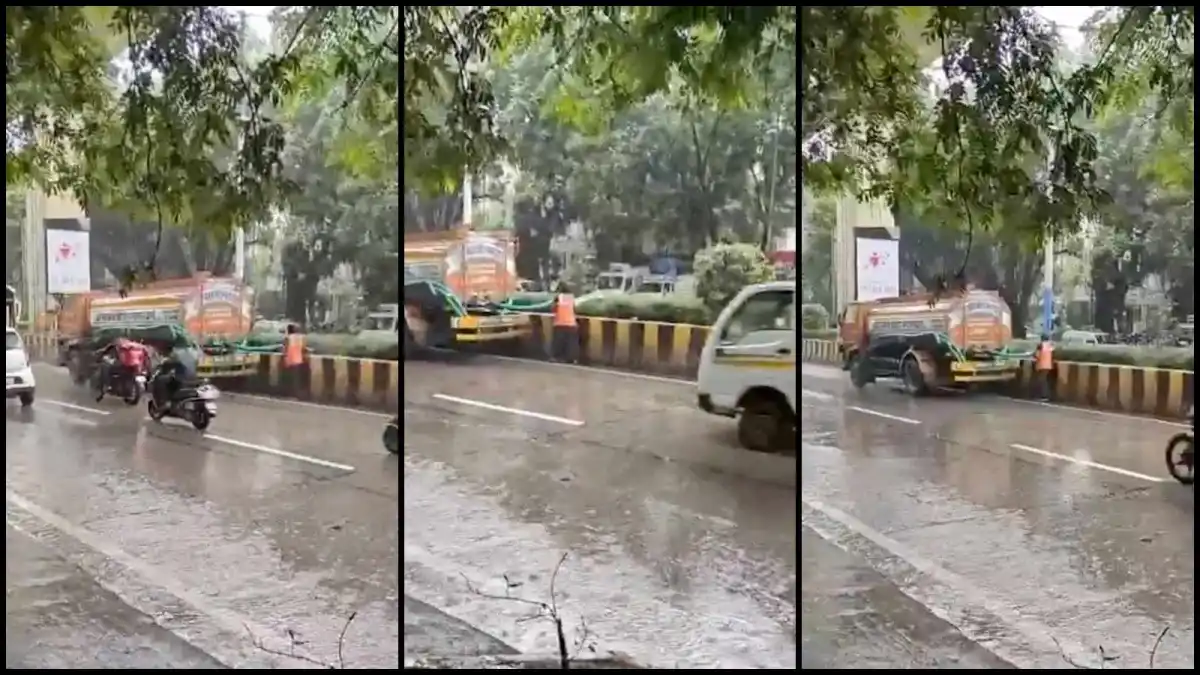
New Delhi, July 4, 2026 — A bizarre video of a water tanker methodically watering roadside plants in the middle of a heavy monsoon downpour went viral on social media, sparking a massive wave of public outrage, ridicule, and political cross-examination. The incident comes at a particularly sensitive time for Pune residents, who are currently grappling with strict civic water cuts. Netizens and local activists wasted no time in slamming the local administration for what appeared to be a staggering display of bureaucratic irony and a complete waste of precious natural resources.
The controversial footage, captured near Paud Road and Karve Road, shows a large water tanker parked alongside a central road divider. Despite heavy rain visibly lashing the city and creating waterlogged roads, civic workers can be seen casually pulling a large hose from the vehicle and spraying water onto the shrubs and trees planted on the median. The sheer contradiction of manually irrigating plants while nature was doing the exact same job in abundance immediately turned the clip into a trending topic across digital platforms, with many mocking it as a classic example of “mindless red tape.”
For Pune’s tax-paying residents, however, the humor quickly soured into anger. The city has been facing significant water supply constraints, forcing citizens to practice strict rationing and adapt to scheduled water cuts. To see thousands of liters of water being pumped onto already-soaked greenery while households face dry taps struck a painful chord. Activists and residents pointed out that if ordinary citizens are expected to conserve every drop, the authorities or their designated contractors should be held to the same standard.
The Official Defense: A Visual Shield from the Sky
As the backlash intensified, top officials from the Pune Municipal Corporation (PMC) and Maha Metro stepped forward to offer a surprising explanation. According to Additional Municipal Commissioner Omprakash Divate, the situation is not quite what it seems from a passing glance. The plants in question are located directly beneath an elevated Metro route.
The sprawling overhead viaduct operates effectively as a massive concrete roof or shield over the central divider. Because of this massive overhead structure, natural rainwater is physically blocked from falling directly onto the plants. While the rest of the city gets drenched, the narrow strip of soil beneath the Metro tracks remains entirely dry. Officials revealed that the advertising agency responsible for maintaining the green patch had reported that the plants had not received moisture in over ten days, putting the urban greenery at risk of dying.
Furthermore, civic representatives clarified that public drinking water supplies were not wasted in the exercise. The water used by the contractor was sourced entirely from a private borewell in the Warje neighborhood, meaning it did not drain the city’s municipal reservoirs.
Public Relations vs. Practical Execution
Despite the structural logic presented by the authorities, the explanation did not completely clear the air. Local political leaders and civic activists argued that even if the viaduct blocks vertical rain, the optic of a water tanker operating during an active monsoon alert indicates a massive gap in public communication and scheduling foresight.
Critics pointed out that during heavy downpours, strong crosswinds and ambient humidity often wet roadside areas naturally, or at the very least reduce the immediate evaporation of existing soil moisture. Pulling up a massive water tanker onto a busy, rain-slicked road to water plants mechanically—without considering how it looks to a public suffering from water cuts—was labeled an avoidable public relations disaster.
BJP leader Sandeep Khardekar officially intervened to trace the root of the controversy, tracking down both the tanker supplier and the private agency involved. While acknowledging the structural explanation regarding the Metro viaduct, Khardekar and other activists insisted that the PMC and Maha Metro must closely monitor their contractors. They urged authorities to ensure that such maintenance routines are handled during off-peak hours or carried out with better planning to prevent widespread public misunderstandings and avoid creating unnecessary traffic hazards on rain-heavy days.
Moving forward, the incident has prompted a broader conversation about urban design in modern Indian cities. As elevated metro corridors expand rapidly across major metropolises, maintaining the artificial green belts planted beneath them will require smarter, less disruptive irrigation methods. For now, the viral video serves as a reminder to Pune’s civic bodies that in the court of public opinion, optics matter just as much as explanations.