
 to issue a strict red alert,)
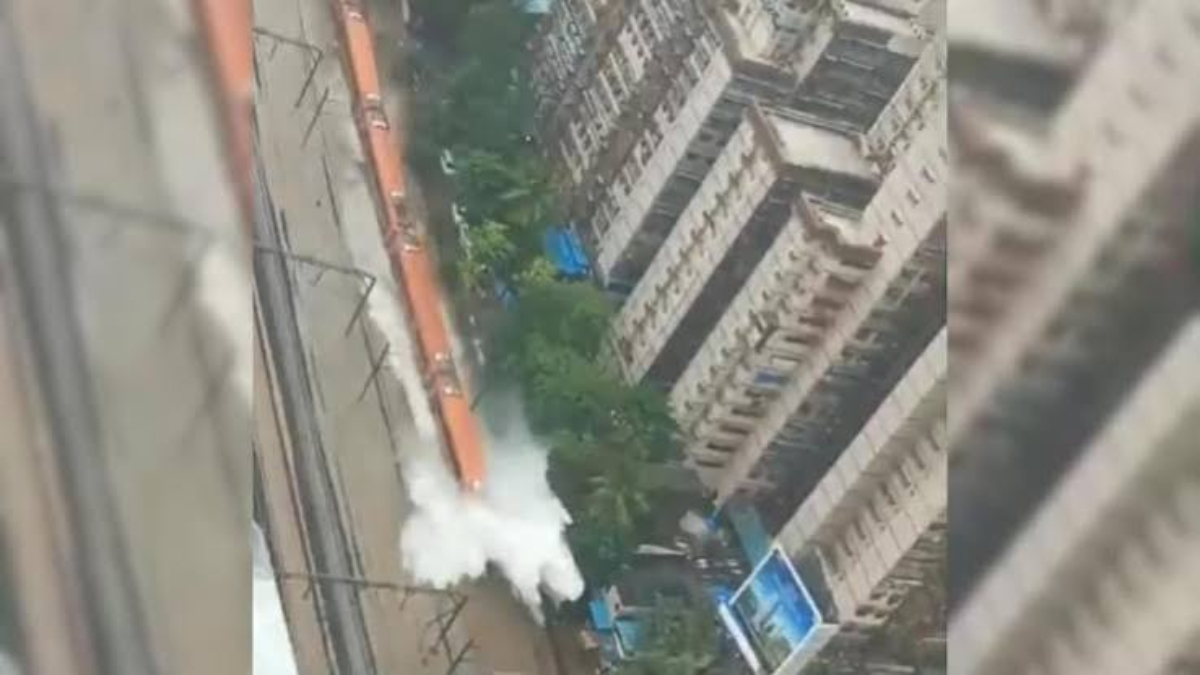
New Delhi, July 6, 2026 — As torrential monsoon rains continued to lash Mumbai, pushing the India Meteorological Department (IMD) to issue a strict red alert, a stunning piece of footage captured the internet’s imagination. A short video showing India’s premium semi-high-speed train, the Vande Bharat Express, gliding smoothly through heavily waterlogged tracks near Mumbai’s Kanjurmarg station quickly went viral across social media platforms. The clip, which perfectly highlights the sheer intensity of the city’s annual monsoon season, has sharply divided the internet—sparking an intense debate between those marvelling at modern engineering and others deeply concerned about the state of urban infrastructure.
The Dramatic Visuals That Captured the Internet
The video, originally shared on X (formerly Twitter) by user @mehtaudit_101, showcases the white-and-blue aerodynamic train steadily cutting through deep, stagnant rainwater accumulated on the tracks. As the Vande Bharat moves forward, it displaces the water with immense force, sending up massive, dramatic walls of white spray on both sides.
The visual resembles a cinematic thriller. The high-speed waves generated by the train even cascaded upward toward adjacent road bridges, splashing onto commuters, cars, and two-wheelers passing by. For many viewers, the imagery became an instant symbol of Mumbai’s indomitable spirit, epitomizing the classic local phrase, “Mumbai never stops, no matter how hard it rains.”
The monsoon has hit the Konkan region exceptionally hard, with several areas in Mumbai recording a staggering 250 mm to 300 mm of rainfall within a single 24-hour window. The persistent, heavy downpour has caused widespread civic chaos, submerging low-lying residential areas, triggering severe traffic gridlocks on major highways, and leading to tragic incidents across the suburbs, including tree collapses and localized flooding.
Netizens React: High-Speed Praise Meets Engineering Safety Apprehensions
The video quickly racked up hundreds of thousands of views, triggering an avalanche of reactions that showcase completely contrasting viewpoints.
On one side of the digital aisle, thousands of social media users flooded the comments section with immense pride, praising the design and technical strength of the indigenous Vande Bharat Express. Supporters pointed out that under normal circumstances, severe waterlogging completely paralyzes local and long-distance train networks. Watching a premium train smoothly navigate through what looked like a lake without breaking down was hailed as a massive win for Indian Railways’ modern engineering. “This is an unbelievable sight,” remarked one online commentator. “It shows how far our railway tech has come that a semi-high-speed train can push through water like a jet ski.”
However, the dramatic footage also invited a wave of sharp criticism and technical anxiety from safety enthusiasts and regular commuters. Many users raised concerns about the long-term safety risks of operating high-profile trains through deep water at significant speeds. Skeptics pointed out that the massive water gushes thrown up by the train could easily damage the undercarriage electronics or erode the underlying track ballast.
The Underlying Issue: The Reality of Urban Flooding
Beyond the internet applause and safety debates, the viral video has cast a harsh spotlight on the recurring failure of urban drainage systems. Every year, early monsoon showers bring India’s financial capital to a grinding halt. While the visual of a train slicing through water looks spectacular on a smartphone screen, it underscores a deeply frustrating reality for millions of residents who must brave waterlogged streets, hidden potholes, and severely disrupted public transport.
While the Central and Western Railway authorities have actively deployed heavy-duty water pumps at vulnerable low-lying stations, the sheer volume of rainfall frequently overwhelms the system. Despite the challenging weather conditions, railway officials confirmed that operations are being maintained with extreme caution, and safety teams are continuously monitoring water levels on the tracks to prevent any technical failures.
Ultimately, the viral Vande Bharat video remains a fascinating double-edged sword. To some, it is a proud showcase of India’s developing infrastructure pushing past the elements. To others, it is a stark, annual reminder that even the country’s most advanced trains are still at the mercy of unresolved urban flooding.