

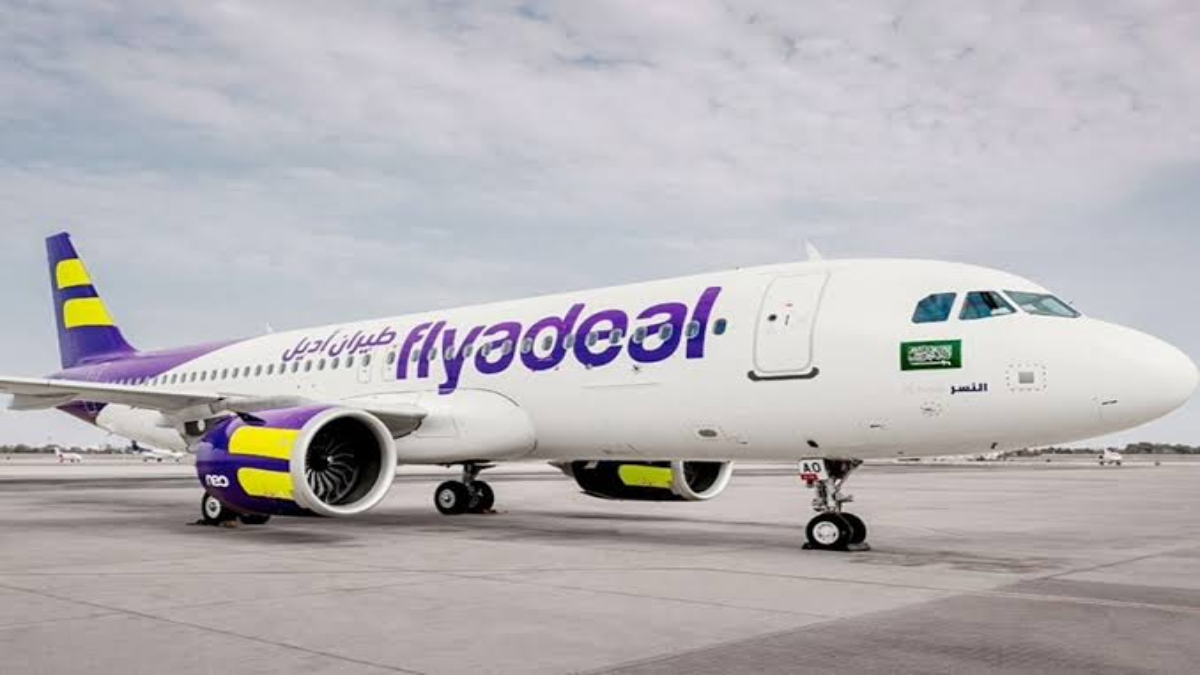
New Delhi, July 6, 2026: Saudi Arabia’s aviation landscape is expanding rapidly as flyadeal, the low-cost subsidiary of the Saudia Group, officially marked its entry into the highly competitive Indian market. On July 1, 2026, the budget carrier launched its inaugural scheduled commercial service to India, operating a daily nonstop flight connecting King Khalid International Airport (RUH) in Riyadh to Rajiv Gandhi International Airport (HYD) in Hyderabad.
This development marks a pivotal shift for flyadeal. Over the past three years, the airline restricted its Indian operations exclusively to seasonal, customized charter flights for Hajj and Umrah pilgrims. By transitioning into a regular scheduled carrier, flyadeal aims to tap into one of the busiest international travel corridors in the world, bringing budget-friendly alternatives to a sector traditionally dominated by full-service flag carriers and established Indian low-cost airlines.
Strategic Significance of the India Entry
The choice of Hyderabad as flyadeal’s maiden Indian destination is a calculated strategic move. The capital city of Telangana has evolved into a vital economic, technology, and aerospace hub over the past decade. Crucially, Hyderabad and its surrounding areas in Andhra Pradesh share deep historical, socio-economic, and cultural ties with the Gulf Cooperation Council (GCC) region, particularly Saudi Arabia.
West Asia stands as the backbone of international traffic for Rajiv Gandhi International Airport. A substantial Telugu-speaking expatriate workforce resides in the Kingdom, driving consistent, high-volume demand for year-round travel. Alongside corporate professionals and tech consultants moving between the two economic zones, the route sees persistent traffic from religious pilgrims traveling to the holy cities of Mecca and Medina.
Sanjiv Kapoor, flyadeal’s acting Chief Executive Officer and Executive Vice President of Strategies at Saudia Group, emphasized this alignment during the launch announcement.
Dual-Brand Strategy: Capturing Both Ends of the Market
Through this rollout, the state-owned Saudia Group is executing a comprehensive dual-brand strategy to maximize its market share across South Asia. While full-service sibling carrier Saudia focuses on premium, legacy international travel experiences, flyadeal is positioned to absorb cost-conscious leisure travelers, student populations, families, and migrant workers.
Historically, a substantial portion of direct aviation traffic between India and Saudi Arabia was diverted through third-country mega-hubs like Dubai (Emirates and flydubai) and Doha (Qatar Airways). Aviation analysts note that the introduction of direct low-cost point-to-point flights allows Saudi carriers to claw back their fair share of local traffic. Feeding price-sensitive travelers directly into flyadeal’s primary hub in Riyadh also offers potential future connectivity, as the airline opens up secondary transfer paths across its widening networks in the Middle East, North Africa, and Europe.
Onboard Experience and Flight Schedule
The daily nonstop service is operated using flyadeal’s modern fleet of narrowbody Airbus A320neo aircraft. Configured in an all-Economy Class layout, the cabin accommodates 186 passengers. To appeal to modern travelers, the airline has outfitted the aircraft with Airbus’s ‘Airspace’ cabin interior, which features noticeably larger overhead bins and a more spacious cabin ambiance. Every seat is equipped with individual USB-A and USB-C charging ports to keep mobile devices powered throughout the five-to-six-hour journey.
Tickets have been integrated seamlessly across flyadeal’s official website, mobile application, and international global distribution systems (GDS) for global travel agencies.
Looking Ahead: Saudi Vision 2030 and Future Expansion
The launch of the Hyderabad route represents the initial phase of a broader Indian expansion map. The airline’s management has confirmed that they are already finalizing plans to announce a second Indian destination shortly. Initially, flyadeal’s mid-term strategies targeted high-density metropolitan areas like New Delhi and Mumbai; however, the carrier has increasingly focused its lens on lucrative tier-2 regional airports where point-to-point traffic to the Gulf remains underserved.
This aggressive international footprint fits cleanly into the overarching goals of Saudi Vision 2030—the Kingdom’s blueprint to diversify its economy away from oil dependency, boost global tourism, and transform the nation into a global logistics and aviation epicenter. Backed by an extensive orderbook of over 50 narrowbody aircraft—including the incoming, longer-range Airbus A321neo—flyadeal intends to grow its destination tally to more than 100 cities by 2030. The carrier is even preparing for phased widebody inductions by late 2027 to venture into longer-haul global markets.
Amid an shifting West Asian aviation landscape, flyadeal’s entry injects much-needed capacity into the India-Saudi corridor, promising healthier competition, competitive airfares, and direct connectivity for thousands of weekly travelers.