

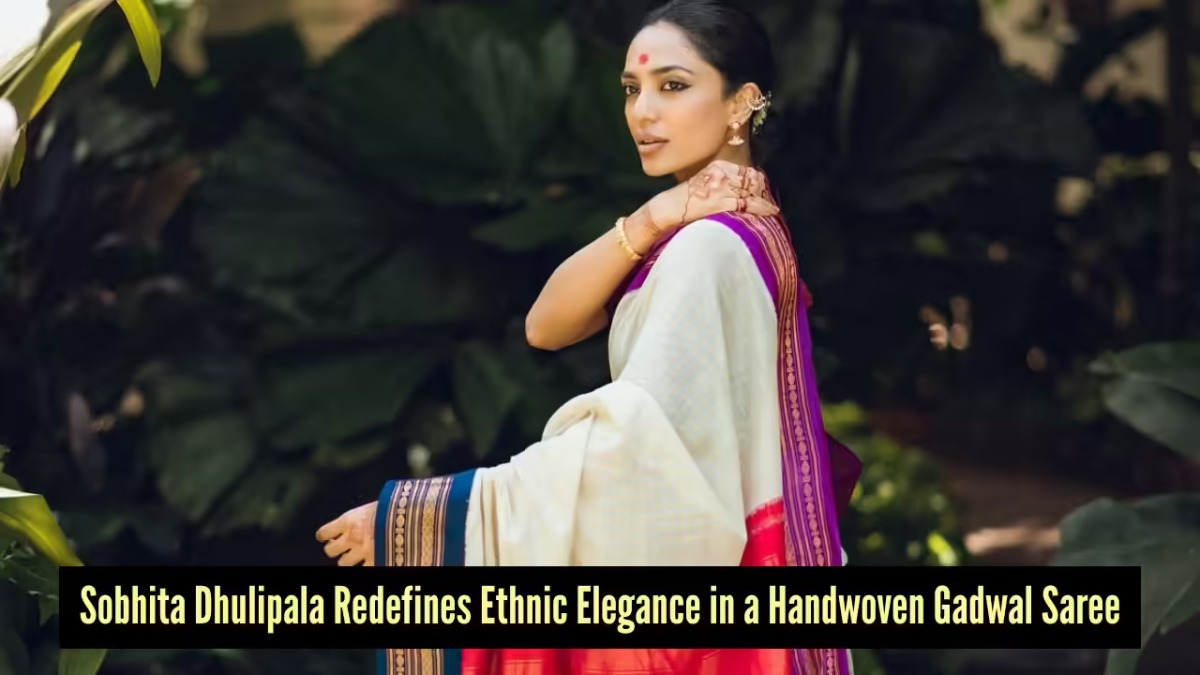
New Delhi, July 8, 2026: In an era dominated by fast fashion and fleeting internet aesthetics, actress Sobhita Dhulipala has firmly established herself as a passionate champion of Indian handlooms. Known for her impeccable sartorial choices, the Made in Heaven star recently took to social media to showcase a stunning new ethnic look, celebrating homegrown luxury in a classic, handwoven Gadwal saree. Collaborating with artisanal textile platform Aadyam Handwoven, Sobhita’s latest look gracefully highlights the deep cultural roots and meticulous craftsmanship of traditional Indian weavers.
The photoshoot, which instantly went viral across platforms like Instagram, captures Sobhita looking like a living portrait straight out of a Raja Ravi Varma painting. Rather than opting for contemporary, heavily embellished fusion wear, she chose to let the structural brilliance of the centuries-old weave take center stage.
The Anatomy of the Ensemble
The cornerstone of Sobhita’s look is an exquisite ivory-hued Gadwal drape, featuring a classic “Ganga Jamuna” design approach. This technique utilizes distinct, contrasting colors on either side of the saree border, creating a visually compelling dynamic. Her drape boasts a magnificent, multi-hued border balancing deep magenta, vibrant crimson, and rich navy tones. The borders are further elevated by intricate gold zari (metallic thread) detailing, a hallmark of high-quality handloom textiles.
To keep the focus on the handwoven fabric, Sobhita paired the saree with a simple, jewel-toned elbow-length blouse in a deep berry color. This choice masterfully complemented the crimson hues of the border without overpowering the design.
Understanding the Craft: What Makes Gadwal Special?
Hailing primarily from the Jogulamba Gadwal district in Telangana, Gadwal sarees represent a unique pinnacle of Indian weaving ingenuity. Originating as a historical craft protected by local royalty, the true genius of a classic Gadwal saree lies in its hybrid construction.
- The Body: The main body of the saree is traditionally woven using fine, locally spun cotton threads, making the garment incredibly lightweight, breathable, and comfortable to wear in tropical climates.
- The Border and Pallu: The heavy, decorative border and the pallu (the decorative end of the saree) are woven separately using pure silk threads and metallic zari.
- The Suture (Kuttu): Master artisans then use a highly skilled, manual interlocking technique known as Kuttu to seamlessly join the cotton body with the silk borders.
This intricate fusion gives the wearer the best of both worlds—the breezy comfort of cotton combined with the rich, rigid opulence of festive silk. For centuries, these sarees have been celebrated because they fold down compactly while unfolding into grand, ceremonial attire.
Old-World Styling and Beauty Elements
Sobhita’s styling choices heavily leaned into vintage Indian glamour, pulling inspiration from classic Telugu traditions and historical aesthetics.
The Jewelry
She paired the traditional ensemble with heavily curated heritage jewelry notes. This included a statement antique gold choker resting against her collarbone, beautifully juxtaposed against a long, cascading pearl maharani haar (queen’s necklace). To frame her face, she chose traditional statement jhumkas (bell-shaped hanging earrings) paired with an elaborate ear cuff. Observers also quickly noted her signature cartilage piercing, which added a subtle hint of modern individuality to an otherwise historic look.
Hair and Makeup
Her beauty philosophy for the shoot mirrored the organic simplicity of the fabric. Sobhita opted for a fresh, luminous dewy base with softly highlighted cheeks and precisely defined eyebrows. Her eyes were emphasized using a classic kohl-rimmed technique paired with a sharp winged eyeliner, mimicking vintage cinematic heroines. The look was tied together with a soft nude tint on her lips, a classic center-parted sleek low bun, and a bold red bindi that grounded the entire look in traditional heritage.
A Growing Obsession with Handlooms
This isn’t a one-off style statement for the actress; her relationship with traditional textiles has notably deepened following her recent high-profile wedding to actor Naga Chaitanya. Sobhita has consistently utilized her massive public platform to spotlight dying art forms and rural weaving clusters. Just weeks prior, she made headlines for expressing her deep admiration for Ponduru Khadi—an incredibly labor-intensive form of handspun cotton from Andhra Pradesh that still utilizes a 24-spoke Gandhi charkha (spinning wheel) and a unique fish-jaw bone refinement technique.
Setting a Trend for Conscious Fashion
Industry experts note that celebrity endorsements of this caliber do much more than simply rack up social media likes. By opting for authentic, artisan-made drapes over commercial fast fashion, public figures like Sobhita help stimulate local economies and drive vital consumer awareness toward sustainable fashion choices. Younger demographics, including Gen Z and Millennials, are increasingly taking cues from these looks—viewing heritage weaves not as outdated or grandmotherly, but as the ultimate statement of mindful luxury and individuality.
Through this breathtaking tribute to the Gadwal weave, Sobhita Dhulipala has once again proven that true style does not require constant reinvention. Instead, it lies in honoring the timeless craftsmanship, rich history, and quiet luxury deeply woven into India’s textile heritage.