

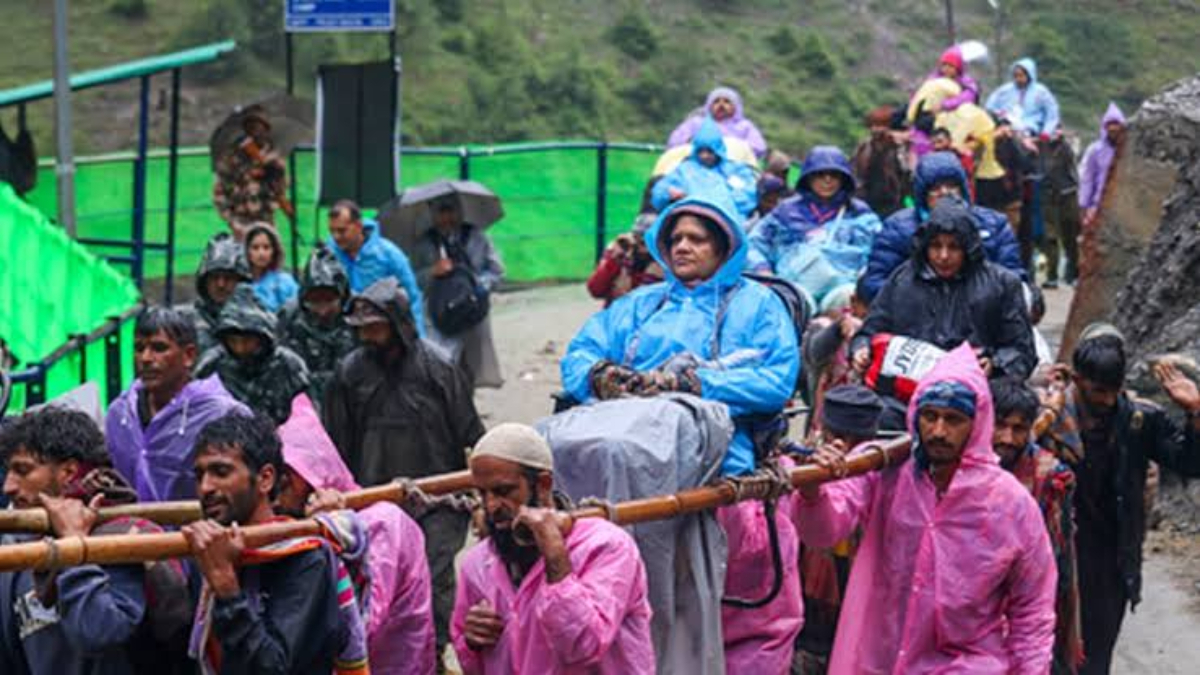
July 8, 2026 — The annual Shri Amarnath Ji Yatra 2026 has witnessed an unprecedented surge in its opening phase. More than 85,000 devotees successfully paid obeisance at the holy cave shrine of Lord Shiva within the first four days of the pilgrimage. According to official figures released by the Jammu and Kashmir administration, exactly 85,779 yatris (pilgrims) performed darshan (sacred viewing) by Tuesday morning, putting the total turnout well on track to cross the milestone 1-lakh mark ahead of schedule.
The 57-day pilgrimage officially commenced on July 3, 2026, and is scheduled to conclude on August 28, 2026, coinciding with the auspicious festival of Raksha Bandhan. The massive influx of devotees within the first 96 hours underscores the profound spiritual significance of this Himalayan pilgrimage and highlights the expansive logistical arrangements functioning across the region.
Single-Day Surge Defies Adverse Weather
The momentum of the pilgrimage peaked significantly on Monday, when a staggering 28,818 devotees offered prayers at the 3,880-meter-high cave shrine in a single day. This massive single-day turnout occurred despite challenging weather conditions across the Kashmir valley.
Heavy rainfall lashed both of the primary tracking routes during the day, making the mountain trails slick and physically demanding. However, the spiritual fervor of the yatris remained undeterred. Chanting religious hymns and slogans like “Bam Bam Bhole,” thousands of pilgrims continued their upward journey from both base camps to the naturally formed ice stalactite, revered by Hindus as a manifestation of Lord Shiva.
Logistical Adjustments: The Shift Toward Baltal
The Amarnath Yatra operates via two distinct mountain tracks: the traditional, longer route from Nunwan in Pahalgam (South Kashmir) and the steeper, shorter route from Baltal in Sonamarg (Central Kashmir).
With the sudden spike in pilgrim numbers, local officials have noted a tactical shift in how devotees are managing their return journeys. While many choose to ascend via the scenic Pahalgam track—a journey that typically takes three to four days to reach the holy cave—an increasing number of pilgrims are preferring to return via the Baltal route. Because the Baltal track allows yatris to descend back to the base camp on the very same day after performing darshan, it has become the preferred choice for minimizing exposure to harsh alpine weather and reducing physical fatigue.
The local administration reported that all pilgrims who completed their darshan on Monday evening returned safely to the Baltal base camp, where comprehensive medical and overnight facilities were waiting to receive them.
Elaborate Infrastructure and ‘Langars’ Active Across Routes
To support the heavy influx of visitors, the Shri Amarnathji Shrine Board (SASB) and the civil administration have turned the mountain corridors into highly organized temporary townships. Thousands of waterproof tented accommodations have been pitched from the twin base camps all the way up to the holy cave’s perimeter.
Socio-religious organizations from across India have set up hundreds of community kitchens, known as langars, along the routes. These langars provide free, round-the-clock hot meals, clean drinking water, and resting spaces for tired travelers. Additionally, the administration has deployed public address systems at regular intervals along the tracks to keep pilgrims updated with real-time weather forecasts and safety announcements.
Strict Implementation of a Four-Tier Security Grid
Security remains a primary focus for the 2026 pilgrimage. A robust, four-tier security system has been put in place to ensure a seamless and safe passage for the thousands traveling daily.
- Upper Reaches and Mountain Tracks: Handled by specialized units of the Indian Army and the Inner Tibetan Border Police (ITBP), who monitor the rugged terrains and high-altitude passes.
- Base Camps and Transits: Managed by the Central Reserve Police Force (CRPF) in close, real-time coordination with the Jammu and Kashmir Police.
- National Highway Protection: Multi-layered security escorts shield the convoys traveling from Jammu’s Bhagwati Nagar Yatri Niwas along the Jammu-Srinagar National Highway.
Registration and RFID Security Enforcement
As thousands more arrive in Jammu via trains, buses, and flights daily, long queues have formed at the dynamic token and registration counters located at the Tawi Riverfront, Ram Mandir, Purani Mandi, and Geeta Bhawan.
However, authorities are maintaining strict regulatory guardrails to prevent overcrowding and ensure public safety on the narrow mountain paths. Officials have reiterated a strict “No Registration, No Entry” policy, mandating that every yatri must travel only on their designated, pre-registered date.
With more batches departing Jammu daily under heavily escorted convoys, the 2026 Amarnath Yatra is shaping up to be one of the most highly attended and tightly managed spiritual gatherings in recent years.