

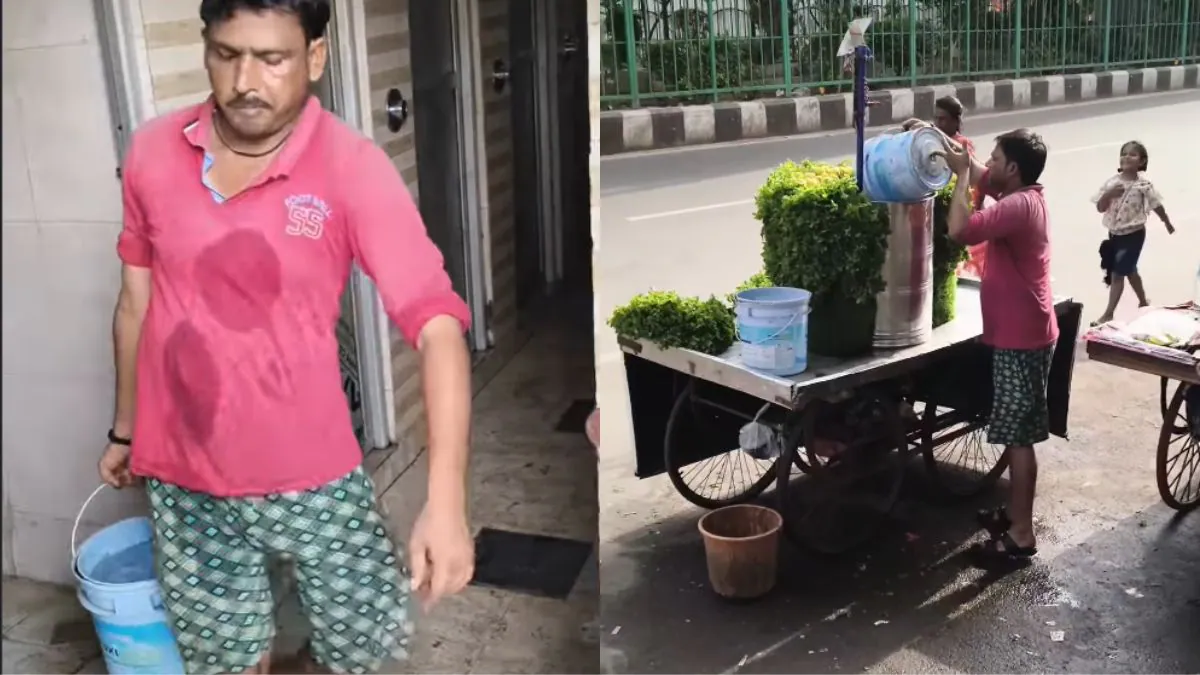
New Delhi, July 18, 2026 — Street food is the beating heart of India’s culinary culture, but a recent viral video has turned the stomachs of millions and brought the pressing issue of street-side hygiene back into the spotlight.
A shocking video circulating across social media platforms—which has rapidly amassed millions of views—allegedly captures a roadside shikanji (traditional Indian lemonade) vendor utilizing water from a public toilet to prepare the refreshing summer drink. The incident has sparked a fierce public outrage, prompting citizen demands for immediate crackdowns on food safety violations.
The Video That Shocked the Internet
The video, which reportedly emerged from the busy Station Road area near the Lucknow Municipal Corporation’s public toilet—just a stone’s throw from the Charbagh railway station—presents a highly distressing sequence of events.
In the brief clip, a street vendor is seen operating a typical roadside beverage cart. Moments later, the individual walks into an adjacent Sulabh Shauchalay (public toilet complex) carrying an empty bucket. The camera tracks him filling the container directly from a tap located inside the facility. Shockingly, the vendor then walks back out to his commercial cart and pours the water straight into the large container housing the shikanji base meant for unsuspecting customers.
The caption accompanying one of the widely shared versions of the video sarcastically read: “Drink shikanji, friends. Don’t forget to drink the shikanji made with pure RO water from the Sulabh public toilet”. The visual evidence immediately triggered severe disgust and panic among internet users who frequent local street stalls.
Social Media Erupts in Anger
As the video gained massive traction on Instagram, X (formerly Twitter), and YouTube, the reaction from the public was swift and unforgiving. Thousands of citizens took to the comment sections to vent their frustration, with many actively tagging the Uttar Pradesh Police and the Food Safety and Standards Authority of India (FSSAI) to demand the immediate arrest of the vendor.
Many users pointed out that this incident highlighted a broader, structural issue with street food safety in high-traffic zones like railway stations.
- “This is exactly why I completely avoid food and tea near railway stations. You never know where the water is sourced from,” one netizen commented.
- Another user noted, “Every time we eat at one of these unauthorized street stalls, we are signing away our basic health and well-being.”
Beyond the immediate disgust, the clip ignited serious debates regarding the lack of clean, potable water access for unauthorized street vendors, many of whom resort to illegal or highly unhygienic sources to sustain their daily businesses.
The Reality Behind the Tap: RO Water Claims
Amidst the raging controversy, some local online reports and digital platforms have attempted to offer context regarding the water source. It has been noted that certain upgraded public toilet complexes in urban areas have been equipped with commercial Reverse Osmosis (RO) water plants to provide clean drinking water to commuters at nominal rates.
However, food safety experts and furious consumers argue that even if the tap inside the building was technically connected to an RO system, the sheer proximity to a public restroom creates a massive cross-contamination hazard. A public toilet environment is inherently filled with airborne pathogens, bacteria, and fecal matter. Fetching water in an open bucket from such premises to prepare an unboiled, cold beverage like shikanji violates every fundamental rule of food sanitation.
Official statements regarding the exact credentials of the vendor and the precise nature of the water hookup are still awaited from local municipal authorities, but public sentiment remains firmly against the vendor’s practices.
The Growing Crisis of Street Food Hygiene
This viral shikanji incident is far from an isolated case. Over the last couple of years, social media has been flooded with “food vlogger” videos that accidentally catch unhygienic practices in the background—ranging from workers kneading dough with their feet, using contaminated canal water for washing dishes, to storing raw ingredients next to open drains.
While street food provides affordable meals to millions and generates significant employment, the absence of stringent, on-the-ground monitoring remains a major public health loophole. Contaminated water used in street beverages is a primary vector for severe waterborne illnesses, including:
- Typhoid fever
- Cholera
- Gastroenteritis
- Hepatitis A and E
During the sweltering summer and monsoon months, the risk of outbreaks escalates dramatically, making food preparation lapses potentially life-threatening for consumers with weaker immune systems.
What Needs to Change?
The public outrage surrounding the Lucknow shikanji video underscores the urgent need for structural reforms in how India manages its vast informal food sector. Experts suggest that merely arresting an individual vendor after a video goes viral is a temporary Band-Aid on a systemic wound.
Instead, municipal corporations and the FSSAI need to roll out comprehensive, localized solutions. First, there must be mandatory registration and basic hygiene training for all street food handlers. Vendors should be educated on the absolute necessity of using clean ice, wearing gloves, and sourcing potable water.
Second, city administrations must install designated “Street Food Zones” equipped with dedicated clean water taps and proper waste disposal systems. If vendors have easy, legal access to clean water, the temptation to fetch water from public toilets or questionable public taps will naturally drop. Until such systemic changes are enforced, consumers are strongly advised to exercise extreme caution and prioritize their health over roadside convenience.