

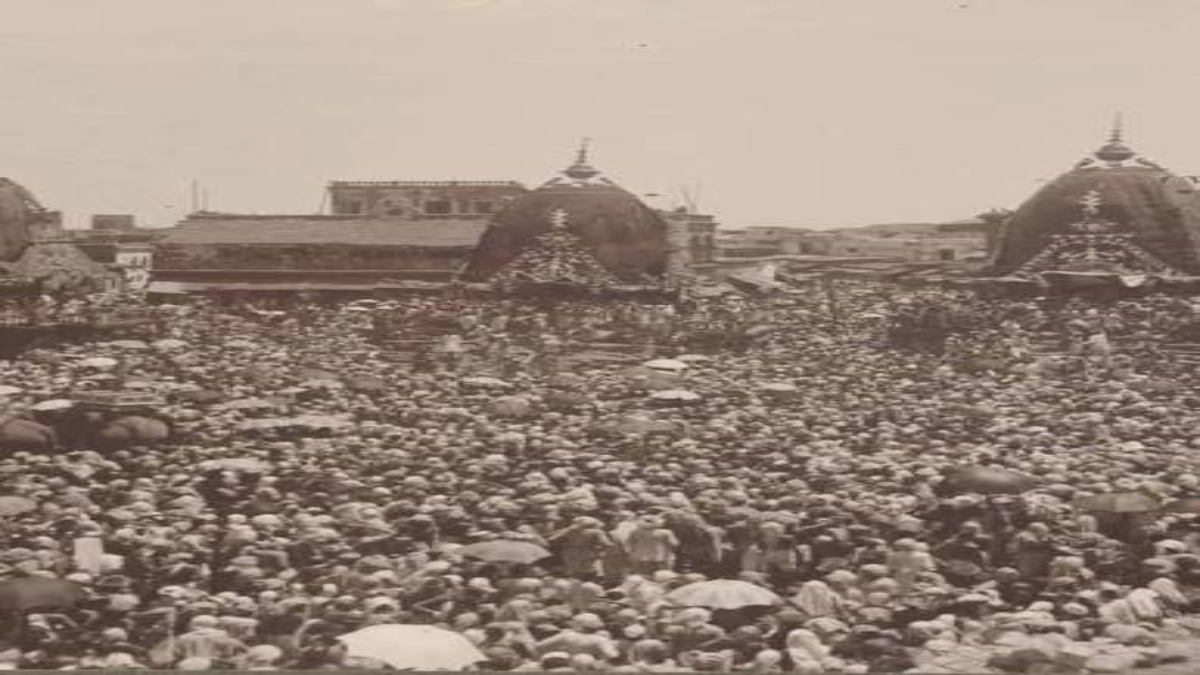
New Delhi, July 18, 2026 — In an era dominated by instantaneous digital updates and high-definition live streams, a black-and-white window into the past has taken the internet by storm. A rare, archival newsreel documenting the iconic Puri Rath Yatra, claiming to date back to 1932, has gone viral across multiple social media platforms. Pulling at the heartstrings of millions of devotees and history enthusiasts alike, the footage offers a fascinating glimpse into how one of the world’s largest religious congregations was celebrated nearly a century ago.
The vintage clip, originally captured by the legendary British Pathé newsreel archive under the title “Hinduism’s Greatest Festival (1932)”, provides an extraordinary visual record of the timeless devotion surrounding Lord Jagannath, his brother Balabhadra, and his sister Subhadra. Amidst modern-day festivities, the re-emergence of this rare clip has sparked widespread nostalgia, prompting viewers to marvel at how the core spirit of the Chariot Festival has remained beautifully unchanged, even as the world around it transformed completely.
A Captivating Window into 1932
The viral video clip transports viewers back to a hot summer day in pre-independence India. Shot from unique high-angle viewpoints, the camera pans across a sea of thousands of pilgrims gathered along the Bada Danda (the Grand Avenue) in Puri, Odisha. Despite the technological limitations of the 1930s, the raw energy, scale, and spiritual fervor of the festival pierce through the grainy, colorless frames.
The original catalog description from British Pathé notes that approximately 12,000 pilgrims from all parts of the country had traveled to the East Coast of India to pay tribute to the deity they termed “the Lord of the World”. While 12,000 was a massive crowd for long-distance travel in 1932, modern-day Rath Yatras regularly draw over a million people, highlighting the massive expansion of infrastructure and travel over the decades.
The video features striking scenes of traditional musicians drumming rhythmically, devotees waving large, round banners, and ecstatic crowds moving cohesively through massive temple gates. The climax of the vintage footage showcases the “Juggernaut”—the anglicized term derived directly from “Jagannath”—as the massive, heavy-wheeled wooden platform is hauled forward exclusively by the sheer muscle and devotion of the massive crowd.
Why the Footage is Winning Hearts Online
As the video circulated widely on platforms like X (formerly Twitter), YouTube, and Instagram, it immediately triggered a wave of emotional reactions. For many viewers, seeing the same rituals, the same architecture of the ancient Jagannath Temple, and the identical design of the sacred chariots from 94 years ago felt like a profound spiritual reassurance.
The Historical Context of British Pathé in India
During the early to mid-20th century, before the advent of television, news agencies like British Pathé were the primary source of global visual journalism. Cameramen traveled across the British Empire to capture events that would captivate audiences in movie theaters back in Europe and metropolitan cities.
The Puri Rath Yatra, with its staggering crowds, gigantic wooden structures, and unparalleled religious devotion, was a frequent subject of awe for foreign documentarians. Beyond the 1932 film, British Pathé archives hold multiple recordings of the festival spanning from the late 1920s through the post-independence era of the 1960s. These reels serve as crucial anthropological and historical tools, showcasing the sociocultural fabric of Odisha under colonial rule and documenting how local traditions actively resisted Western cultural dilution.
Navigating Truth in the Digital Era
While this specific 1932 video has been verified as completely genuine archival material from British Pathé, its viral success comes at a time when digital manipulation is raising red flags for temple authorities. Media literacy experts note that the public’s hunger for historic and spiritual content often makes vintage clips prime targets for misinformation or mislabeling.
Interestingly, the viral run of the 1932 vintage video happened almost simultaneously with an entirely different controversy involving modern technology. A highly realistic video depicting a massive, dazzling drone light show forming the image of Lord Jagannath directly over the Puri Temple went viral. Fact-checkers quickly stepped in to clarify that the drone video was entirely AI-generated. The regional administration had actually enforced a strict “No Flying Zone” around the monument for security reasons, making a real drone show impossible.
The contrast between the two viral videos is stark: while the public aggressively debunked the artificial flashiness of the AI drone show, they collectively embraced the authentic, unedited historical weight of the 1932 black-and-white film. It highlights a unique societal trend where digital audiences value genuine historical heritage over artificial spectacle.
A Living Tradition that Defies Time
The Rath Yatra commemorates the annual journey of Lord Jagannath and his siblings to the Gundicha Temple. As the viral video beautifully demonstrates, empires, governments, and technologies change, but the core essence of this festival remains completely untouched by time.
The 1932 newsreel stands as a powerful testament to India’s living heritage. It serves as a reminder that the sea of humanity currently filling the streets of Puri is merely continuing a sacred walk that their ancestors walked a century ago, driven by the exact same unshakeable faith. As the video continues to gather millions of views, it bridges the gap between the past and the present, ensuring that the legacy of the Chariot Festival continues to inspire generations to come.