

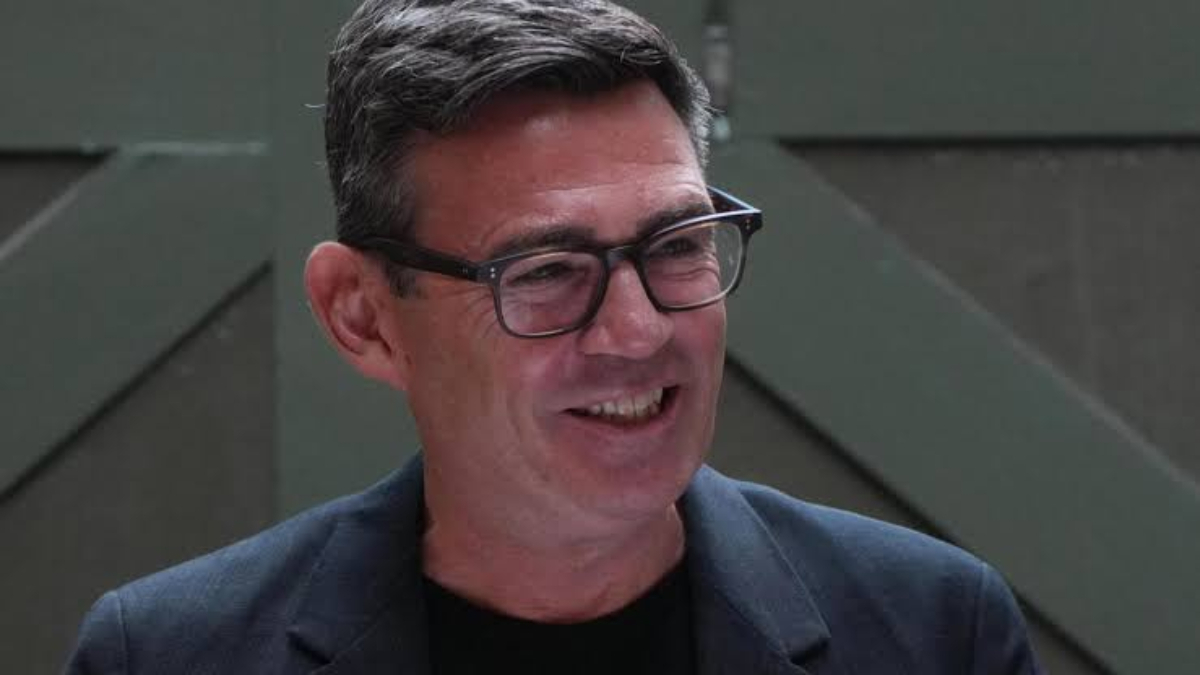
New Delhi, July 18, 2026 — In what is being hailed as the most dramatic political redirection in modern British history, Andy Burnham has officially been declared the new leader of the governing Labour Party. Running unopposed after capturing a historic 94% of nominations from his parliamentary colleagues, the veteran politician has effectively sealed a jaw-dropping, decade-long comeback. Following the collapse of Sir Keir Starmer’s embattled administration, Burnham is scheduled to visit King Charles III on Monday, July 20, 2026, to be formally invited to form a government, officially making him the United Kingdom’s 59th Prime Minister.
Burnham’s spectacular ascent represents a complete departure from the traditional pathways of Westminster power. Just months ago, he was completely outside the legislative chambers, serving his third term as the high-profile Metro Mayor of Greater Manchester. Because Labour Party rules mandate that only sitting Members of Parliament (MPs) can challenge for the leadership, his path to Number 10 initially appeared firmly blocked. However, as public dissatisfaction with Starmer’s administration deepened due to intense party infighting, policy reversals, and devastating local election defeats in May, a calculated gamble was set in motion. Burnham successfully engineered a return to Parliament by winning the June by-election in Makerfield after the sitting MP stepped aside to allow him to run. When Starmer announced his resignation just days later, Burnham immediately positioned himself as the unifying figure the fractured party desperately needed, triggering an unstoppable coronation.
Addressing an energized crowd of lawmakers, activists, and trade union leaders at a special party conference in central London, Burnham described the moment as the most significant political shift the country has seen in 40 years. Jubilant yet measured, he pledged to move past the rigid factional wars that have crippled British governance, promising an era focused on “bringing back hope” and rebuilding consensus. In a direct nod to his unique background, the Prime Minister-in-waiting took aiming shots at the centralized nature of British political power, famously vowing to establish a “Number 10 North” to strip away power from Westminster and redistribute decision-making and economic growth directly to the local regions where people live.
For Burnham, this triumph caps off an extraordinary arc of political resilience. Often labeled “third time lucky” by commentators, his journey to the pinnacle of British politics is a masterclass in professional reinvention. In 2010, he ran as a youthful, Blairite-adjacent cabinet minister, placing a marker for the future but ultimately falling short. When he tried again in 2015, his campaign was entirely derailed by the sudden left-wing populist surge of Jeremy Corbyn. Bruised by Westminster infighting, he walked away from Parliament in 2017 to rebuild his image in the North of England. Away from the capital, he transformed himself into the widely recognized “King of the North”—a politician who successfully championed public control of regional transport and fiercely advocated for communities that felt forgotten by London. By stepping outside the toxic bubble of Parliament, Burnham developed the exact authentic, empathetic connection with everyday voters that his predecessors lacked.
Despite the triumphant atmosphere of his coronation, Burnham inherits a nation gripped by profound systemic challenges. He will be the UK’s seventh Prime Minister in a turbulent decade marked by the fallout of Brexit, post-pandemic inflation, and staggering public sector fatigue. The broader economic backdrop is particularly grim: national debt is cripplingly high, economic growth remains subdued, and public services—most notably the National Health Service (NHS)—are under tremendous strain. Furthermore, the financial markets are already closely watching his next moves, anxious to see how the new administration intends to balance Burnham’s reputation for expansive public spending with the harsh fiscal reality of a highly leveraged treasury.
In his acceptance speech, the PM-designate outlined five core priorities designed to signal a “distinctively Labour” path forward, rejecting both the conservative-leaning economic models of the past and the urge to chase radical fringes. He placed an immediate focus on ending the “insidious briefing culture” and media leaks that routinely destabilize Downing Street operations. Crucially, Burnham announced that he would not punish Labour MPs who hold dissenting views, vowing to end the practice of suspending lawmakers who break party lines on specific legislation—a direct break from Starmer’s highly disciplined, yet alienating, style of management. On the policy front, he hinted at a massive push toward increasing public control over critical utilities and housing, asserting that the UK took a wrong turn decades ago when it completely surrendered its essentials to the private sector.
As the country prepares for the keys of Number 10 to change hands on Monday, the political landscape feels fundamentally altered. Burnham’s arrival signals a profound structural experiment: whether a leader who sharpened his skills through local government can successfully scale up those ideas to fix a broken national system. While his political allies celebrate a comeback that many thought impossible, the ultimate test for the former Manchester Mayor begins now. The British electorate, exhausted by years of political revolving doors and economic stagnation, will be watching closely to see if Burnham can convert his message of regional hope into the concrete national stability the country so desperately craves.