

New Delhi, June 5, 2026: The global premium SUV market is preparing for a monumental shift as Audi officially signals the arrival of its highly anticipated, third-generation Q7. After commanding the luxury three-row segment for more than a decade with its second-generation model, the German automaker has released its first official teaser, confirming that the all-new Q7 will make its global debut this June. This strategic unveiling marks a critical transition point for the Ingolstadt-based brand, as it rolls out the new midsize luxury titan just months before introducing an even larger, ultra-luxurious flagship sibling—the first-ever Audi Q9. Together, these launches represent Audi’s comprehensive overhaul of its premium combustion-engine portfolio, setting the stage for an intense competitive battle against seasoned rivals.
A Long-Overdue Transformation
The outgoing second-generation Audi Q7 (internal code ‘4M’) has enjoyed an extraordinarily long lifecycle since its global launch in 2015. While extensive mid-cycle facelifts in 2020 and 2024 successfully integrated modern infotainment systems and kept the vehicle looking sharp, the underlying platform has been stretched to its absolute limits. Recognizing the urgent need to reclaim its pioneering status in a segment populated by the BMW X5 and Mercedes-Benz GLE, Audi has engineered a ground-up reinvention. The decision to debut the third-generation Q7 in June underscores a calculated marketing strategy: secure the core multi-passenger family demographic first, establish the updated design language, and then utilize that momentum to launch the monolithic Q9 to target the full-size luxury space currently dominated by the BMW X7 and Mercedes GLS.
Decoding the Teaser: Sophisticated and Practical Design
Audi’s initial teaser image offers a calculated glimpse of the SUV’s flank, revealing key structural choices that balance cutting-edge styling with everyday practicality. Strikingly finished in an elegant, ocean-inspired hue dubbed “Alopias Blue Metallic”—named after the genus of the thresher shark—the teaser highlights a prominent “S Line” fender badge, confirming that Audi’s popular, sport-oriented trim will be available from launch.
Crucially, the image puts an end to widespread industry speculation regarding the door architecture. While many contemporary luxury automakers have rushed to adopt retractable, flush-mounted electronic door handles to maximize aerodynamics, Audi has opted for robust, conventional pull-type handles. This choice emphasizes mechanical reliability, tactile familiarity, and ease of maintenance, particularly in colder climates and global markets like China, where electronic components face severe environmental extremes. The teaser also showcases redesigned outside rearview mirrors, which neatly incorporate sleek LED turn signals alongside high-definition cameras for a comprehensive 360-degree aerial vehicle view.
Leaks and Spy Shots Reveal a Bold New Identity
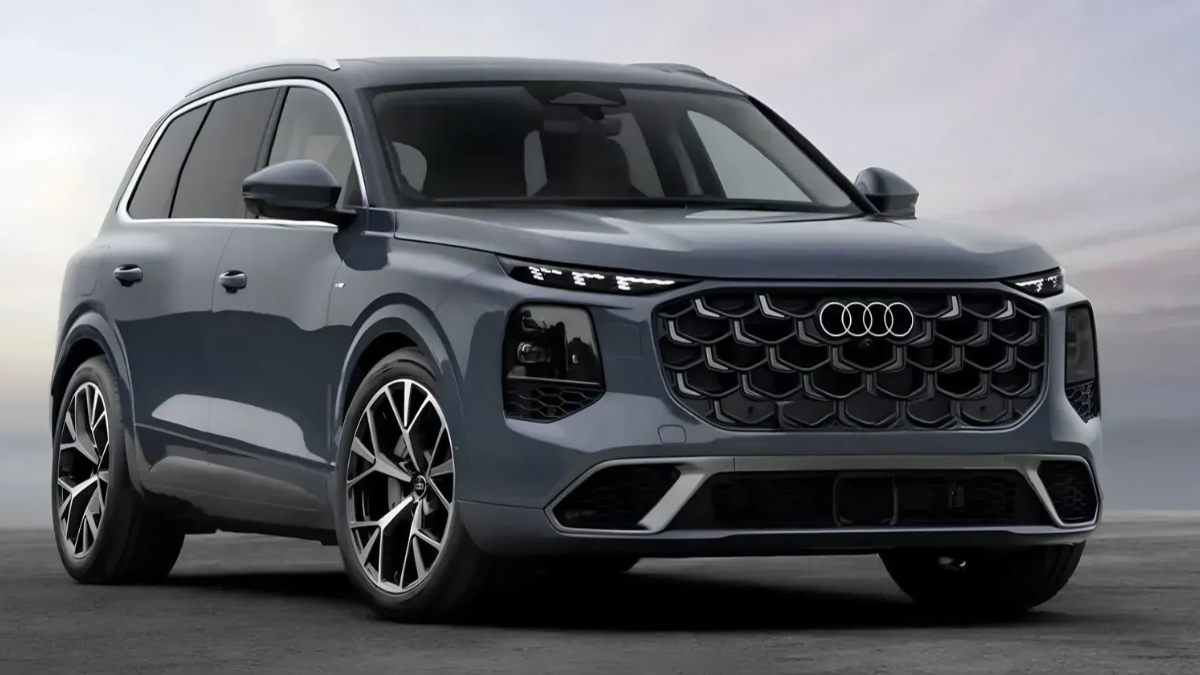
While Audi is keeping official full-body imagery under wraps, recent high-resolution spy shots and online leaks have effectively painted a complete picture of the SUV’s dramatic new exterior. The third-generation Q7 adopts a radically distinct, aggressive front fascia inspired by Audi’s newest crossover lineup. Up front, a significantly wider, more commanding single-frame grille dominates the view, filled with a complex, high-gloss black honeycomb mesh pattern.
Flanking this massive grille is a controversial split-headlight setup. High-mounted, ultra-slim daytime running lights (DRLs) sit flush along the hood line, handling structural signaling and customizable light signatures. Positioned lower down within the rugged front bumper are the primary matrix LED high- and low-beam headlight clusters. This layout not only enhances nighttime visibility but also lends the vehicle a more planted, imposing road presence. Moving toward the rear, the Q7 ditches its older, blocky taillights in favor of a continuous, full-width LED light bar that stretches across a heavily sculpted, upright tailgate, neatly capped off by an integrated roof spoiler and an aerodynamic lower diffuser with hidden exhaust outlets.
Moving to the Advanced PPC Architecture
Beneath the striking sheet metal lies the truest testament to the Q7’s generational leap. The vehicle bids farewell to the aging MLB platform, transitioning instead to the Volkswagen Group’s state-of-the-art Premium Platform Combustion (PPC) architecture. Shared with the newly minted Audi A6, the PPC chassis represents the pinnacle of modern internal combustion engineering.
By utilizing advanced high-strength steels and lightweight aluminum composites, this new foundation significantly increases structural rigidity while shedding dead weight. The immediate benefits for prospective buyers include vastly improved acoustic isolation, sharper steering response, and a more compliant ride. Audi’s signature Quattro all-wheel-drive system remains standard equipment across the entire range, working in perfect harmony with a newly tuned adaptive air suspension system that automatically alters ride height and dampening stiffens based on terrain and real-time vehicle velocity.
Revolutionized Powertrains: The Hybrid Era Arrives
The transition to the PPC architecture unlocks an entirely new realm of powertrain efficiency and performance. While Audi remains fully committed to an electric future, the brand acknowledges that global infrastructure requires robust, long-range alternatives. As a result, the third-generation Q7 will offer heavily electrified internal combustion engines.
Base models will feature 48-volt mild-hybrid technology integrated into updated turbocharged four-cylinder and smooth V6 petrol and diesel engines, designed to recover energy during deceleration and provide seamless start-stop transitions. However, the true showstoppers will be the next-generation Plug-in Hybrid (PHEV) variants. Leveraging battery advancements shared with its corporate cousin, the Porsche Cayenne, the Q7 PHEV is expected to support massive battery capacities capable of delivering an all-electric driving range of over 80 to 100 kilometers on a single charge. Furthermore, high-performance enthusiasts can rest easy; rumors persist that a twin-turbocharged V8 engine will return later in the product cycle to power the high-performance SQ7 variant, delivering effortless, tire-shredding performance.
A Digital Sanctuary: Cabin and Interior Tech
Step inside, and the third-generation Q7 completely redefines the luxury multi-passenger experience. Moving away from the austere, screen-heavy minimalism that drew criticism in previous luxury cars, Audi is introducing a “Digital Stage” dashboard layout, beautifully accented by natural open-pore wood inlays and brushed aluminum trim. The driver is greeted by a high-definition Virtual Cockpit instrument cluster, seamlessly complemented by a sprawling central MMI touchscreen infotainment system running an Android Automotive-based operating system with integrated app support.
Interestingly, following direct consumer feedback demanding better ergonomics, Audi has reintroduced physical, tactile switchgear for critical climate control and audio functions, avoiding total reliance on touch interfaces. Front passengers can also enjoy an optional dedicated entertainment display screen, allowing them to stream media or navigate routes independently without distracting the driver. The vehicle will continue to offer a highly flexible three-row seating configuration, accommodating up to seven passengers, with optional second-row captain’s chairs transforming the cabin into an ultra-premium six-seater mobile lounge complete with heating, ventilation, and massage functions.
Market Positioning and Final Count Down
The launch of this third-generation Q7 is a vital defensive and offensive play for Audi. Historically, the Q7 has been an immense global success story, with the first generation racking up 550,000 units and the second iteration exceeding 780,000 sales globally. By positioning the heavily updated, midsize Q7 directly below the upcoming ultra-luxury Q9 flagship, Audi has created a perfect “Goldilocks” product strategy. Families and executive buyers looking for an agile, technologically advanced, and eco-conscious premium three-row SUV will find the Q7 to be the ultimate sweet spot. With the official global reveal just weeks away, luxury car buyers won’t have to wait long to see how Audi intends to reshape the premium automotive landscape for the decade to come.