

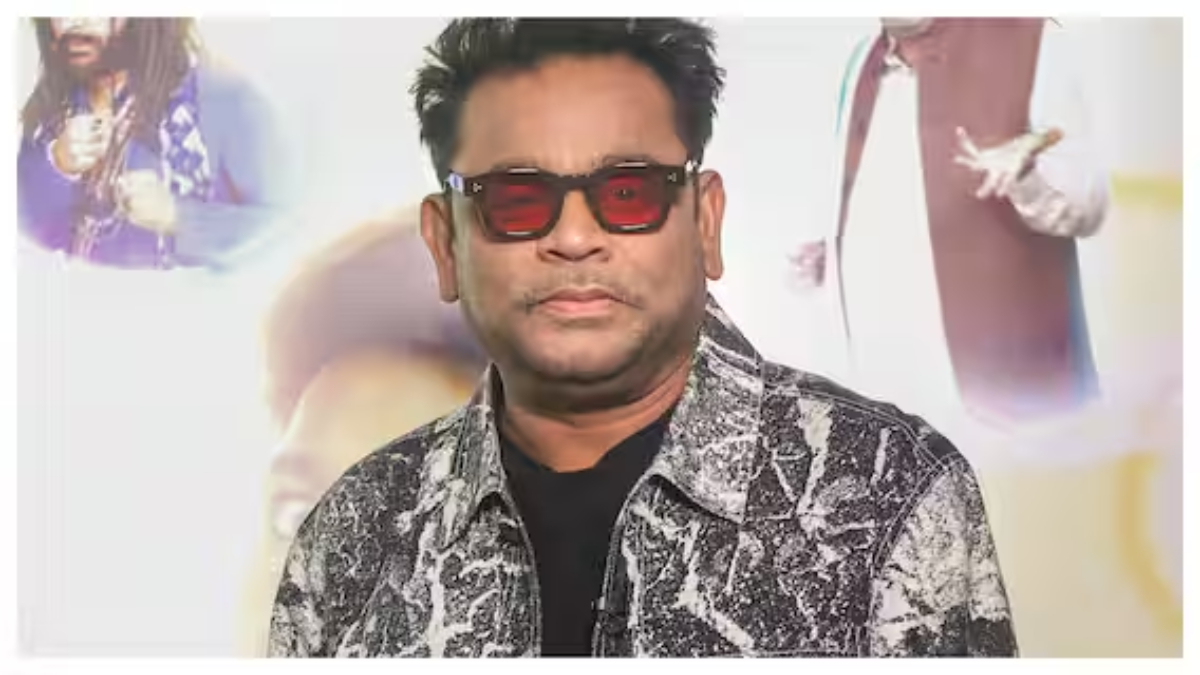
New Delhi, january 16, 2026: In a candid and rare reflection on the internal mechanics of the Hindi film industry, legendary music composer A.R. Rahman has addressed what he describes as a significant “power shift” in Bollywood over the last eight years. Speaking in an interview with the BBC Asian Network in January 2026, the Oscar and Grammy-winning maestro hinted that this shift has not only changed how projects are greenlit but may also have a “communal” undertone.
The Shift from Creators to Decision-Makers
Rahman, often celebrated for his transcendental music that bridged the North-South divide in India, noted that the industry’s landscape has undergone a transformation since 2018. According to the composer, the agency that once rested with directors and creative minds has now moved into the hands of “non-creative” entities, such as music labels and corporate executives.
“Maybe in the past eight years, because a power shift has happened and people who are not creative have the power now to decide things,” Rahman remarked.
He elaborated that while he hasn’t faced blatant prejudice, he often hears of projects being diverted through “Chinese whispers.” He shared instances where he was supposedly booked for a film, only for the music company to later hire a team of five different composers instead.
“Could Be a Communal Thing”
When asked if he felt any regional or cultural bias—specifically as a Tamil artist in a Hindi-dominated industry—Rahman’s response was nuanced. While he maintained that he never felt such discrimination “in his face” during his early years, he suggested the current climate might be different.
“It might have been a communal thing also, but not in my face,” he stated, adding that he remains largely unaffected by these maneuvers. “I say good, I have more time to chill with my family. I am not in search of work; I want work to come to me.”
Key Milestones in Rahman’s Bollywood Journey
Rahman also looked back at his career, admitting that despite the massive success of films like Roja (1992) and Bombay (1995), he felt like an “outsider” for nearly a decade.
| Period | Milestone | Impact |
| Early 90s | Debut with Roja | Introduced a new sound but felt like an “outsider.” |
| 1999 | Release of Taal | “Entered the kitchens of North India”; became a household name. |
| 2009 | Oscar for Slumdog Millionaire | Global recognition and shift toward international projects. |
| 2018-2026 | Recent Power Shift | Fewer Bollywood projects; focus on “sincerity” over “chasing work.” |
Reflections on Chhaava and Historical “Divisiveness”
The interview also touched upon Rahman’s work on the 2025 blockbuster Chhaava, a historical epic based on the life of Chhatrapati Sambhaji Maharaj. Despite the film’s massive box office success (earning approximately ₹700 crore), it faced criticism for being “divisive” and allegedly distorting history regarding the Mughal emperor Aurangzeb.
Rahman admitted he questioned the director about why he was needed for such a project. However, he expressed faith in the audience’s intelligence: “I think people are smarter than that… They have an internal conscience which knows what the truth is and what manipulation is.”
What’s Next for the Maestro?
Despite the “jinx” of the current Bollywood power dynamics, Rahman’s slate remains prestigious. He is currently working on:
- Gandhi Talks: A silent drama starring Vijay Sethupathi and Arvind Swamy (scheduled for January 30, 2026).
- Ramayana: A highly anticipated collaboration with legendary composer Hans Zimmer for Nitesh Tiwari’s epic, slated for Diwali 2026.
Rahman concluded the discussion by emphasizing his philosophy of artistic peace. Rather than fighting for space in an industry driven by music companies, he prefers to let his “sincerity earn the work,” ensuring that he only associates with projects made with “good intentions.”