

New Delhi, May 14, 2026: In the glitzy, often over-the-top world of Bollywood, movie deals are usually struck in plush vanity vans, high-end restaurants, or corporate boardrooms. But for Ajay Devgn, his first National Award-winning role started in a much humbler—and wetter—setting: his bathroom.
Decades after the release of the cult classic Zakhm (1998), the story of how director Mahesh Bhatt pitched the film to Devgn remains one of the most legendary “behind-the-scenes” anecdotes in Indian cinema. It wasn’t a formal meeting with a script bound in leather; it was a desperate, passionate plea delivered while the actor was literally mid-shower.
A Knock at the Door (and the Shower Curtain)
The year was 1997. Ajay Devgn was already a established action star, known for his brooding intensity and gravity-defying stunts. Mahesh Bhatt, on the other hand, was looking to tell his most personal story yet—a semi-autobiographical tale about his mother, religious identity, and the communal tensions of the 1993 Mumbai riots.
Recalling the incident in recent interviews, Devgn shared the hilarious yet pivotal moment.
“I was in the shower when I heard a loud banging on my door. I yelled out that I was bathing, but Bhatt Sahab being Bhatt Sahab, he didn’t care. He walked right into the bathroom and started narrating the idea for Zakhm through the steam.”
Bhatt didn’t wait for Devgn to dry off or put on a bathrobe. He knew he had found his lead actor, and he wasn’t going to let a little thing like hygiene get in the way of a masterpiece.
Why ‘Zakhm’ Was a Gamble
At the time, Devgn was the “Action King.” Shifting to a deeply emotional, socio-political drama was a significant risk. Zakhm dealt with sensitive themes:
- Identity: A son discovering his mother’s secret religious identity.
- Communal Harmony: Set against the backdrop of the bloody 1993 riots.
- Personal Grief: Based on Mahesh Bhatt’s own life and his relationship with his mother, Shirin Mohammed Ali.
Bhatt reportedly told Devgn, “I don’t want the action star; I want the man I see in your eyes.” By the time Devgn stepped out of the shower and dried himself off, he was sold. He didn’t need to read a formal script; the raw emotion in Bhatt’s “shower pitch” was enough.
The Performance of a Lifetime
When Zakhm finally hit screens in 1998, it stunned critics. Ajay Devgn delivered a performance that was the polar opposite of his “stuntman” persona. As Ajay R. Desai, a man struggling to bury his mother according to her secret wishes amidst a city on fire, Devgn used his eyes to convey a lifetime of pain, conflict, and quiet resilience.
The film was a massive critical success, eventually earning:
- The Nargis Dutt Award for Best Feature Film on National Integration.
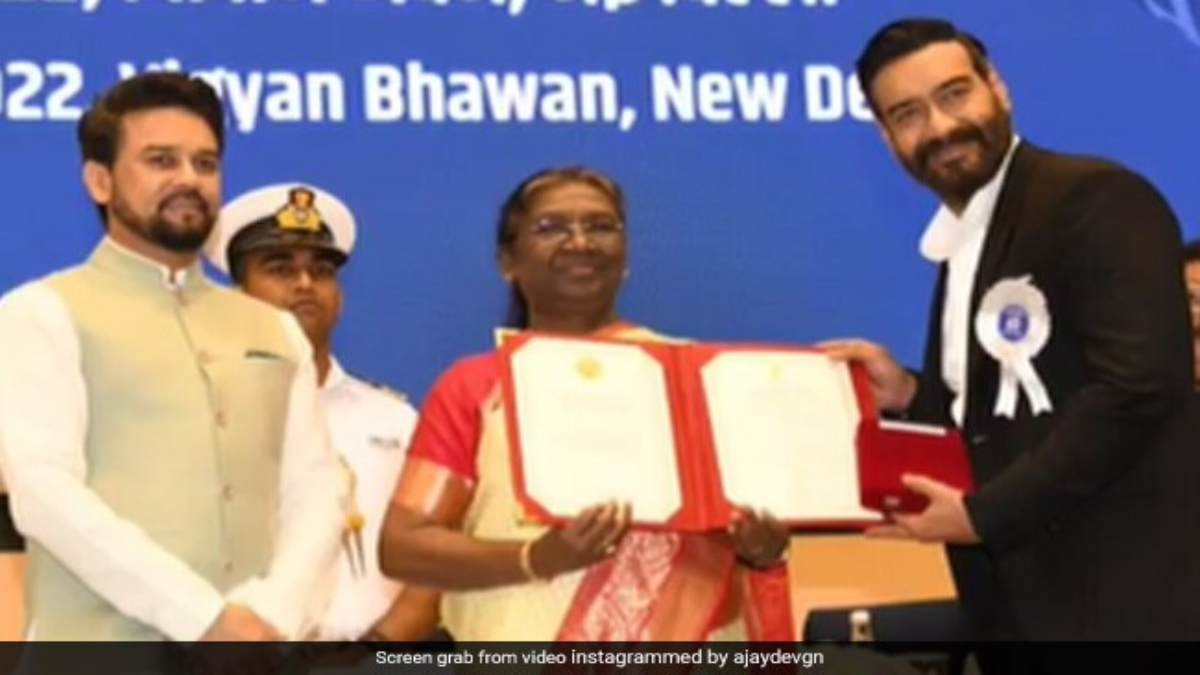
- The National Film Award for Best Actor for Ajay Devgn.
This was Devgn’s first National Award, a milestone that silenced skeptics and proved he was one of the finest actors of his generation. He would later go on to win two more (for The Legend of Bhagat Singh and Tanhaji), but he often maintains that the first one, born from that bathroom encounter, remains the most special.
The Mahesh Bhatt Method: Raw and Unfiltered
Mahesh Bhatt has always been known as a “maverick” filmmaker. His approach to Zakhm was visceral because the story was his own truth. This wasn’t just a movie; it was his catharsis.
Industry insiders suggest that Bhatt chose the bathroom pitch because he wanted to catch Devgn in his most “unguarded” state. In a world of PR and filtered conversations, the bathroom is perhaps the only place where a person is truly themselves. Bhatt wanted that raw, unfiltered human being for his film.
| Film Detail | Information |
| Director | Mahesh Bhatt |
| Lead Actor | Ajay Devgn |
| Release Year | 1998 |
| Key Theme | Communal Harmony & Personal Identity |
| Major Win | National Film Award for Best Actor |
Legacy of the “Mid-Shower Pitch”
Today, Zakhm is regarded as a landmark in Indian parallel cinema. It bridged the gap between commercial appeal and artistic depth. For Ajay Devgn, it was the turning point that allowed him to transition from a “star” to an “actor.”
The story serves as a reminder of a bygone era of Bollywood—an era where passion trumped protocol. Nowadays, getting an actor of Devgn’s stature for a film involves months of “talent management” emails, legal contracts, and scheduled Zoom calls.
But as the story of Zakhm proves, sometimes all you need to create a masterpiece is a powerful story, a persistent director, and an actor who doesn’t mind a little company while they’re taking a bath.
The Impact on Modern Cinema
Even in 2026, the resonance of Zakhm is felt. In an age where communal narratives are often polarized, Bhatt’s film remains a gold standard for nuanced storytelling. Devgn’s career trajectory, which now spans over three decades, owes a debt of gratitude to that one morning in the 90s.
It reminds us that the best collaborations aren’t always planned; they are felt. And sometimes, the most prestigious awards in the country start with a simple knock on a bathroom door.