
 environmental advocate Bhumi Pednekar has expressed)
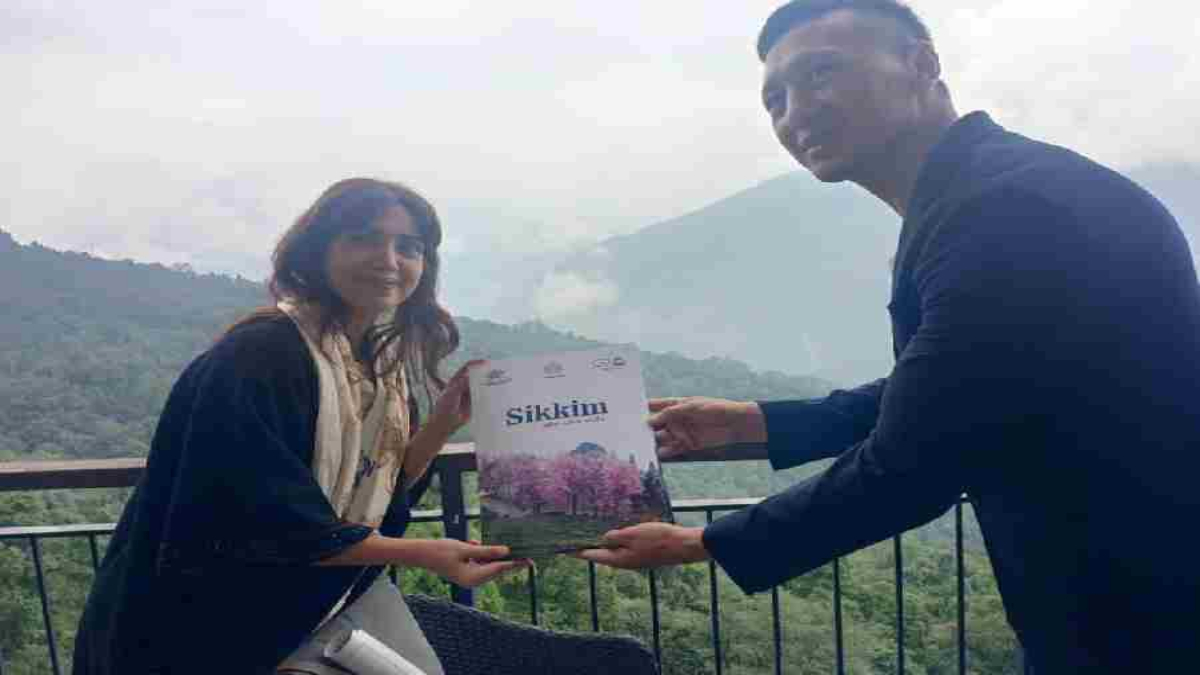
New Delhi, June 12, 2026— Acclaimed Bollywood actor and United Nations Development Programme (UNDP) environmental advocate Bhumi Pednekar has expressed a profound sense of pride and humility following an emotional visit to India’s high-altitude border in Sikkim. Standing at the freezing, snow-capped heights of Nathu La—a strategic mountain pass that marks the frontier between India and China—Pednekar stated she feels “deeply indebted” to the men and women of the Indian Armed Forces, admitting that civilians often fail to fully comprehend or reciprocate the staggering sacrifices made to keep the nation safe.
The actor arrived in the Himalayan state on a special three-day familiarization and tourism promotion tour at the official invitation of the Sikkim Tourism and Civil Aviation Department. While the visit was primarily framed around advocating for eco-conscious travel, it quickly evolved into a deeply personal journey of patriotism, reverence, and spiritual reflection for the Bhakshak star.
Standing on the Edge: The Nathu La Experience
For an actor known for choosing gritty, socially conscious roles on screen, confronting the realities of border deployment at an altitude of over 14,000 feet was a grounding experience. Amid sub-zero temperatures and breathtakingly stark landscapes, Pednekar spent hours interacting with soldiers and senior officers stationed at Nathu La, listening to historical accounts of past conflicts and learning about the brutal daily routines required to secure the terrain.
“To begin with, I’m a very, very patriotic person, and I was very excited about visiting the border,” Pednekar shared during a media interaction in Gangtok. “But once you actually go there, you just realize how much our armed forces truly do for us. It hits you that we, as civilians, don’t really do that much back for them.”
The actor described looking across the heavily guarded perimeter, realizing she was staring directly at Chinese territory, an experience that evoked a rush of overwhelming emotion.
A Journey of Faith and Folklore
Beyond the military outposts, Pednekar’s itinerary wound through some of Sikkim’s most culturally significant and ecologically fragile landmarks. Among her stops was the famous Tsomgo (Changu) Lake and the uniquely revered Baba Harbhajan Singh Mandir. The shrine is dedicated to an Indian Army soldier who died in 1968 near the Nathu La Pass, and who folklore dictates still guards the border in spirit, warning soldiers of impending dangers.
Reflecting on the unique spiritual tapestry of the region, Pednekar noted the profound sense of reverence that permeates the mountains. “What I love the most is that every part of Sikkim has a story, has a folklore,” she remarked. “We went to Baba Harbhajan Singh Mandir, and there is just so much pure faith everywhere.”
The cultural immersion continued with a visit to the ancient Rumtek Monastery, where the actor spent time meditating under the guidance of the resident monks. Pednekar described the spiritual environment as transformative, noting that the serene atmosphere allowed for an unusually intense moment of internal quietude. “I was very, very lucky that I got to spend a lot of time and learn about the history and what the monastery stands for,” she said. “The energy and vibration were so incredible. It was probably one of my quickest and strongest meditation sessions because of the sheer spiritual weight that the place carries.”
Aligning Passions: Sikkim’s ‘Climate-First’ Philosophy
As a prominent voice in India’s sustainability movement, Pednekar’s admiration extended beyond the borders and into the state’s pioneering environmental legislation. Sikkim, which became the world’s first fully organic state and has long maintained strict bans on single-use plastics, served as a massive source of inspiration for the actor.
She lauded both the local populace and the state government for their uncompromising stance on environmental conservation, explicitly describing Sikkim as a “climate-first, environment-first, green first” destination.
“For somebody like me, my life’s passion is sustainability, working around climate change, and environmental conservation,” Pednekar explained. “So for me, I resonated very deeply with everything that the state stands for. It is just so beautiful, not just visually, but in its core philosophy.”
She urged policymakers and citizens across other Indian states to look toward the Northeast for blueprints on eco-friendly governance, particularly noting the community’s innate respect for the natural world. “I want to congratulate everybody over here—the citizens and the people in places of power who are deciding what policy, infrastructure, and legislation in Sikkim should look like. Now more than ever, we need climate-first policies. I truly hope that other parts of the world, not just India, get inspired by it.”
The Call for ‘Responsible Tourism’
With Sikkim’s popularity surging among global and domestic travelers seeking wellness, adventure, and spirituality, Pednekar used her platform to deliver a stern message regarding tourist behavior and ethical travel.
Defining “responsible tourism” through a simple, relatable analogy, she challenged travelers to respect local ecosystems rather than exploit them for leisure.
Preserving the Ancestral Palette
No exploration of Sikkim is complete without experiencing its unique culinary heritage, and Pednekar, a self-proclaimed lover of nature and heritage, expressed delight over the traditional cuisine prepared for her by members of the local Bhutia community.
The actress was treated to an authentic, completely vegetarian thali featuring indigenous ingredients and cooking methods designed to sustain life in harsh alpine climates. The spread included:
- Millet Momos: A nutrient-dense, gluten-free twist on the region’s staple dumpling.
- Ema Datshi: A fiery, comforting stew made of local chilies and specialized yak cheese.
- Fiddlehead Ferns & Bamboo Shoots: Wild-foraged greens central to Himalayan mountain diets.
- Corn Rice & Native Mustard Greens: Locally harvested grains cultivated using ancestral organic farming techniques.
“One of my best meals ever was right here,” she said, visibly enthusiastic about the culinary experience. “What I particularly loved about the meal is that these are historic recipes and techniques that our ancestors thought of. They are actively trying to preserve them here, which I think is incredible.”
Looking Ahead: A Cinematic Future in the Hills
As her three-day tour concluded, Pednekar admitted that the emotional weight of her interactions with the armed forces, combined with the pristine natural beauty of the state, had left a lasting mark on her creative aspirations. Expressing a strong desire to return to the region not just as a traveler or an advocate, but as an artist, she revealed her hopes of filming a future cinematic project against the backdrop of Sikkim’s dramatic landscape.
“To me, as somebody who’s a nature lover, I think I’m going to keep coming back to Sikkim,” she concluded. “One of the biggest reasons is the way people here worship nature. I really pray that I get to do a film over here. I really hope that there’s a script that brings me back so we can shoot amid these mountains.”