

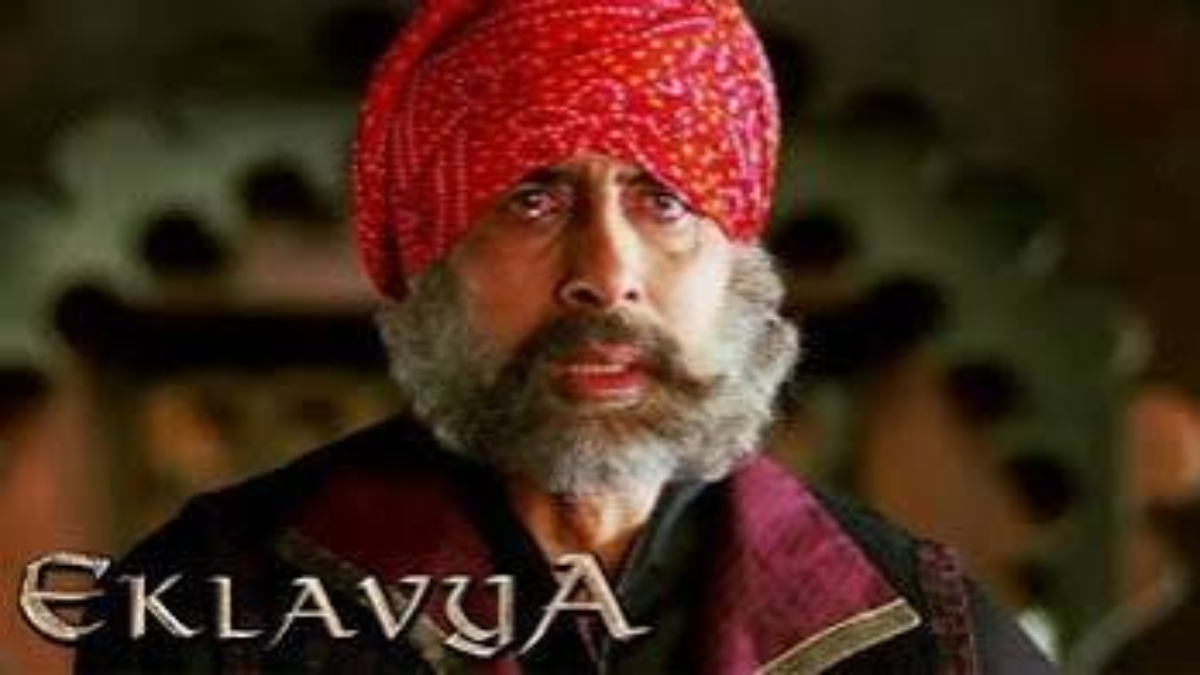
New Delhi, June 19, 2026: The fascinating dynamics of Bollywood film production often hide behind the glitz and glamour seen onscreen. Among the industry’s most legendary tales of dedication and creative friction is the making of the 2007 cinematic drama Eklavya: The Royal Guard. Directed and produced by the notoriously uncompromising filmmaker Vidhu Vinod Chopra, the film brought together an ensemble cast led by the ultimate megastar of Indian cinema, Amitabh Bachchan. Years after its release, Chopra shared an extraordinary revelation that stands as a staggering testament to Bachchan’s unparalleled discipline and financial grace: the legendary actor did not charge a single rupee for his title role, and instead dipped into his own pocket to cover production constraints.
The Budget Crisis in Rajasthan
When Eklavya entered production, Vidhu Vinod Chopra was determined to create a highly atmospheric, meticulously crafted cinematic experience on a tightly controlled budget. Filming was planned for a swift 37-day schedule across real palace locations in Rajasthan. To maintain production efficiency and equity on set, Chopra chose not to extend extravagant, asymmetrical perks to individual stars, ensuring the financial resources stayed directly onscreen.
The production structure faced its first logistical test when Amitabh Bachchan’s administrative team requested a premium hotel suite in Rajasthan. The cost of the accommodation exceeded the film’s strict per-day lodging budget by ₹65,000. Rather than making an exception and risking a budget overspread that would impact co-stars Saif Ali Khan or Sanjay Dutt, Chopra held his ground. He directly informed Bachchan’s team that the production could not absorb the additional cost.
Demonstrating a level of humility rarely seen among top-tier stars, Bachchan chose not to compromise the director’s financial vision or throw a tantrum. Instead, the veteran actor quietly chose to bridge the difference entirely out of his own pocket.
Charting Private Flights on a Personal Dime
The star’s willingness to absorb logistics costs did not stop at hotel rooms. Once the rigorous shooting schedule wrapped up in Jodhpur, Bachchan required a private charter flight to return swiftly to Mumbai. Recognizing the absolute ceiling of the movie’s tight post-production numbers, Chopra again explained that stretching the budget for a chartered plane was out of the question.
Without missing a beat, Bachchan personally chartered a private aircraft from Jodhpur using his own financial resources. In a final twist of generosity, the megastar did not fly back alone; he invited Vidhu Vinod Chopra and his wife, prominent film critic Anupama Chopra, to hitch a ride back to Mumbai with him. Reflecting on this in his co-authored book Unscripted: Conversations on Life and Cinema, Chopra remarked with fond irony that despite not paying the legendary actor an upfront acting fee, it was Bachchan who ultimately gifted him one of his very first rides in a private jet.
Jaya Bachchan’s Prophecy and On-Set Fireworks
The sheer grace Bachchan displayed off-camera stood in sharp contrast to the high-voltage creative friction that unfolded during the shoot. Before filming even began, Bachchan’s wife, Jaya Bachchan, had predicted that two of the industry’s most headstrong personalities would inevitably clash. When Bachchan arrived in Rajasthan for the month-long schedule carrying incredibly light luggage, a curious Chopra asked him why he traveled so light. Bachchan dryly responded that Jaya was convinced the two would fight within a week and that he would be sent packing back home ahead of schedule.
That prophecy almost came true within the first three days. Known for his legendary punctuality, Bachchan unexpectedly arrived late to the set on day one, causing Chopra to miss the highly critical “magic hour” morning light. When the same delay happened on the second and third days, Chopra—furious at the disappearing light—completely lost his temper. Descending from a camera crane, he shouted outside Bachchan’s room, demanded to know how much money had been spent on the film so far, and told his line producer to completely write off the ₹1 crore loss because he was replacing Bachchan with Sanjay Dutt.
The brewing storm was defused by pure wit. Just as Chopra was fuming, Bachchan emerged from his room, walked past the director, and playfully asked Anupama Chopra, “How do you live with this madman? He is crazy.” The entire set broke into laughter, dissolving the immense tension.
Bachchan then explained the actual cause of the delay: the complex prosthetic beard required for his character was taking hours to apply, and the makeup room’s environment was highly uncomfortable. Chopra’s signature direct solution was to instruct the makeup staff to thoroughly sanitize with Dettol. The next morning, a dryly amused Bachchan was on set a full hour early, stating he simply wanted to play it safe to avoid being shouted at again.
A ₹4.5 Crore Token of Gratitude
While Eklavya: The Royal Guard received significant critical praise and was ultimately chosen as India’s official entry to the Academy Awards (Oscars) that year, it struggled to set the box office on fire. However, the financial outcome did not change Chopra’s profound gratitude for his leading man’s immense patience and economic concessions.
Years later, when Chopra found solid financial footing through subsequent blockbuster productions, he decided to properly honor Bachchan’s graceful handling of the Eklavya budget. He purchased a brand-new luxury Rolls-Royce Phantom worth ₹4.5 crore and drove to Bachchan’s residence to surprise him with the keys.
Chopra beautifully summarized the gesture by explaining that the multi-crore car was a token of appreciation because a star of Bachchan’s unparalleled stature had tolerated his intense working style, accommodated the production’s hard financial lines, and stayed committed to delivering a stellar performance without ever letting ego get in the way.