

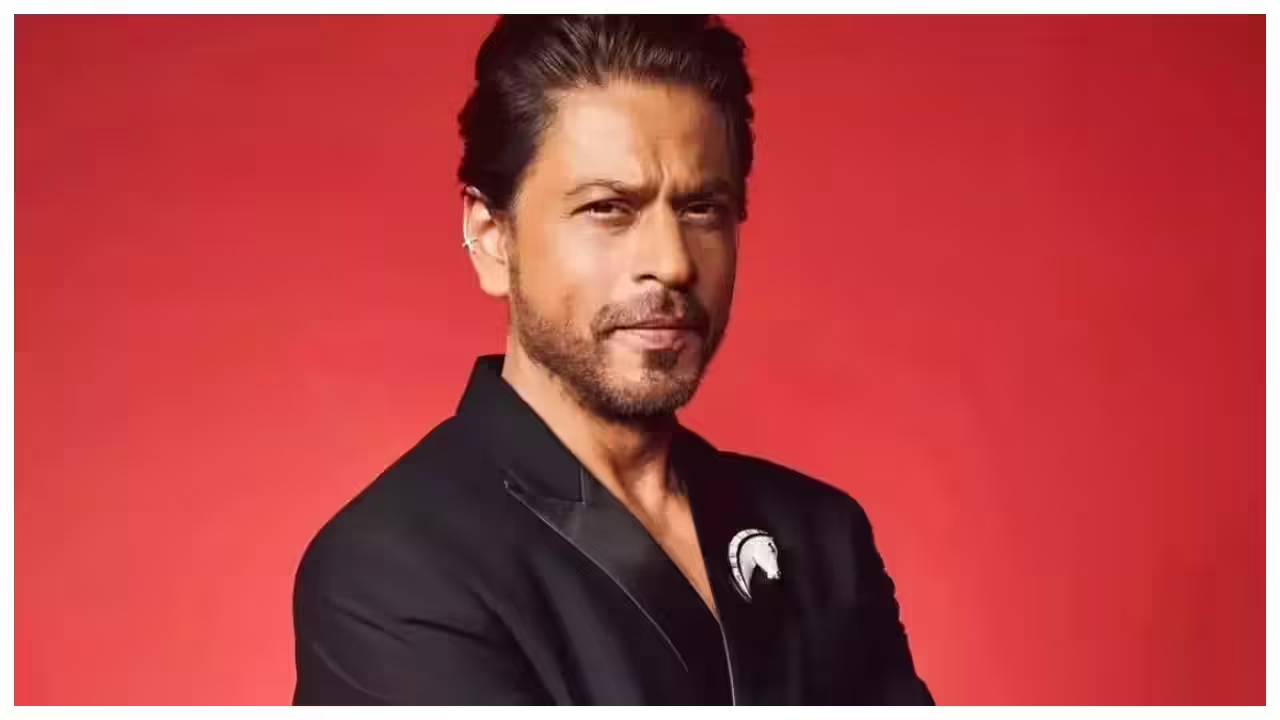
New Delhi, October 17, 2025: A decades-old interview clip featuring Bollywood superstar Shah Rukh Khan has been circulated widely across social media, coinciding with recent public criticism levied against him for endorsing a prominent paan masala brand. The resurfaced video is being used as a response to questions about the ethical responsibilities of celebrities who promote products widely considered detrimental to public health.
The Viral Critique
The recent controversy was triggered by a popular YouTuber, Dhruv Rathee, whose video sharply questioned the actor’s endorsement choices. Rathee’s critique was primarily focused on the immense wealth of Shah Rukh Khan, whose net worth has recently been reported as reaching billionaire status. A calculation was presented suggesting that the actor’s massive fortune is capable of generating hundreds of crores in passive income annually.
The question was posed as to why, given his immense financial security, was the actor still compelled to accept endorsement deals for products like paan masala, which are often linked to serious health risks. The potential impact was highlighted that the nation’s top actor could have by refraining from such endorsements.
Also Read: Priyanka Chopra’s Red-Hot Look Lights Up London Diwali Ball
The Actor’s Defense From the Past
In a timely manner, an old clip from an interview was shared by the actor’s fans in defense of his commercial decisions. The original interview, which was conducted many years ago, showed Shah Rukh Khan responding to criticism concerning his advertisements for a soft drink brand.
In the clip, the actor is heard making a direct appeal to the authorities. It was argued by Khan that if certain products are deemed harmful or unsuitable for public consumption, they should be banned entirely by the government. His stance was clearly articulated that the production of cigarettes should be stopped if smoking is considered bad, and the manufacturing of cold drinks should be prevented if they are believed to be unhealthy.
The actor’s core logical point was established when he stated that products are not stopped because they are a source of government revenue. A retort was then delivered by him: “Then don’t stop my revenue,” suggesting that actors should not be condemned for earning their living from products that are legally permitted to be sold in the country.
Public Discourse Re-ignited
The simultaneous circulation of the critique and the old defense has re-ignited a significant public debate. The discussion is now centered not only on the moral accountability of celebrities but also on the inconsistent regulatory framework regarding products known to pose health risks.
While the superstar’s candid response is seen by many of his supporters as a practical and rational argument, the fundamental question about a public figure’s influence on the masses is being raised again by critics. The controversy is likely to continue as the issue of celebrity endorsement ethics remains a sensitive topic in India.