

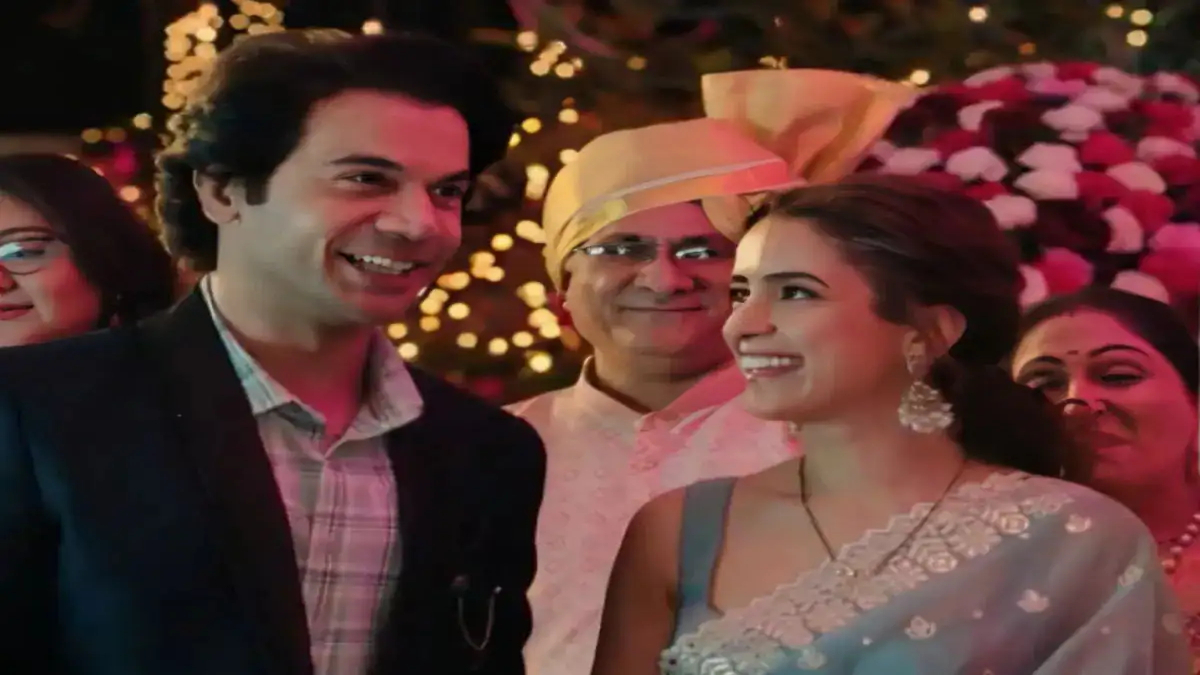
New Delhi, April 18, 2026: In a candid conversation that has sent shockwaves across the Indian film industry, the cast of the upcoming film Toaster—including Rajkummar Rao, Sanya Malhotra, and Abhishek Banerjee—has joined veteran actress Archana Puran Singh to call out a disturbing trend that has long plagued Bollywood film sets: the rationing of food.
The discussion, which touched upon the “kanjoosi” (stinginess) of certain production houses, highlighted how the cost-cutting measures often come at the expense of basic human dignity for crew members.
The Origin of the ‘Ek Boti, Do Roti’ Narrative
The conversation was sparked by a striking anecdote shared by Archana Puran Singh. Recalling her experiences with notoriously tight-fisted production houses, she shared a label that many crew members use behind closed doors.
“We used to call them ‘Ek boti, do roti’ (One piece of meat, two rotis),” Archana revealed. She explained that at the lunch tables of these specific production houses, food was strictly rationed. Crew members were often limited to a specific number of rotis and a single serving of the non-vegetarian item.
For Archana, this isn’t just about food; it is a mindset. “It’s a kind of kanjoosi (stinginess). If you are stingy, you are stingy in every aspect,” she noted, pointing out how production houses often demand 12 to 14-hour shifts while simultaneously denying staff their basic right to a proper, uninterrupted lunch break. She specifically questioned the treatment of crew members like light men, who spend hours under the harsh sun and are rarely afforded the same courtesies as the talent.
Beyond the Plate: Actors Weigh In
The discussion resonated deeply with the Toaster team, who used the platform to advocate for better treatment of the entire production crew.
Rajkummar Rao, known for his grounded approach, questioned the logistical failures that lead to these conditions. He highlighted that skipping lunch breaks is often a management failure rather than a necessity.
“I wonder why lunch breaks are not given,” Rajkummar said. “If the shoot begins at 12:30 pm, they expect us to keep at it till 3:30 pm. They could instead let everyone have their lunch and start the shoot at 1:30 pm. They should think about crew members as well.”
He emphasized that while actors might have personal assistants who can step in to provide food, the crew is often left to fend for themselves or settle for what is provided by the production, often with no alternatives. For him, the solution costs nothing but a bit of empathy and better scheduling.
Also Read: Inside the Viral Video of Ravi Kishan Touching His Wife’s Feet
A Plea for Dignity
Sanya Malhotra echoed these sentiments, noting that the issue of denying lunch breaks affects the entire set, not just the stars. She noted that while she has been fortunate enough to work on sets where the well-being of the crew is prioritized, the industry-wide problem remains systemic.
Adding to the conversation, Abhishek Banerjee framed the issue as a matter of respect. “Chhoti chhoti cheezon mein na, samajh mein aa jaata hai kanjoosi (You can see the stinginess in small things),” he observed. He criticized producers who attempt to save money by compromising on the basic needs of their workers, arguing that these decisions show a fundamental lack of respect for the people who make the film possible.
The Bigger Picture
This conversation is part of a growing movement within the Indian film industry to address the working conditions of below-the-line crew members. While film sets are often romanticized as glitzy, high-energy environments, the reality—as highlighted by these stars—can be grueling.
The “one piece of meat, two rotis” phenomenon is a metaphor for a larger culture of exploitation that puts profit margins over the welfare of those working behind the camera. By speaking out, these A-list actors are leveraging their platforms to push for a more humane, professional standard on sets, where food, rest, and dignity are seen as basic rights rather than privileges.
As the industry continues to evolve, the message from the Toaster cast is clear: filmmaking is a collective effort, and a successful production shouldn’t come at the cost of the crew’s well-being.