

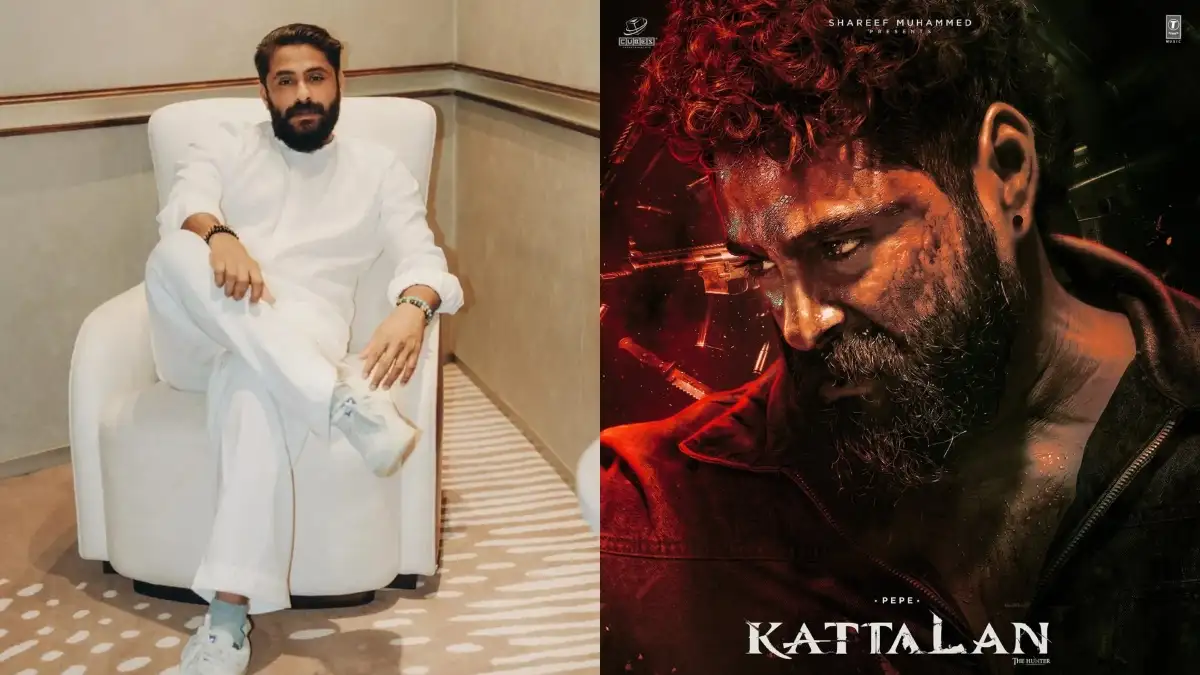
New Delhi, May 30, 2026: The landscape of regional Indian cinema—particularly Malayalam cinema—has undergone an aggressive transformation. Driven by the explosive democratization of high-definition smartphone cameras and social media, a new aesthetic has trickled upward from our phone screens straight into multi-crore film productions. This cultural collision takes center stage in the critical reception of Kattalan, the latest high-octane actioner starring Antony Varghese, affectionately known to his fanbase as “Pepe.” While the film arrives with the promise of bone-crunching choreography and the raw, unhinged energy that catapulted Varghese to stardom in landmark movies like Angamaly Diaries and RDX, the final product has sparked an intense debate among critics and casual moviegoers alike. The consensus forming around Kattalan points to a frustrating trend in modern commercial filmmaking: an enterprise where structural storytelling is sacrificed at the altar of bite-sized, algorithm-friendly aesthetic moments, ultimately making the film feel less like a cohesive cinematic achievement and more like a loose compilation of social media reels.
The Rise of the “Algorithm Aesthetic”
To understand the core criticism surrounding Kattalan, one must look at how the visual vocabulary of short-form content has hijacked feature-length scripts. For the past few years, social media platforms have conditioned audiences and creators to prioritize rapid validation—instant hook, brief escalation, and a stylized payoff, all packaged within a 30-to-60-second window. When this logic is applied directly to a two-hour theatrical release, the traditional architecture of cinema begins to fracture.
Critics observing Kattalan point out that the film completely bypasses organic world-building. Instead of anchoring Antony Varghese’s character within a carefully textured narrative universe, the movie functions as a delivery mechanism for isolated “mass” moments. A standard narrative scene—whether it is a family interaction or a romantic subplot—feels like mere filler text designed to occupy space until the next high-speed camera setup kicks in. This episodic, highly fragmented pacing mirrors the exact sensation of scrolling through an infinite video feed. The moment one flashy sequence ends, the next begins with minimal connective tissue, treating the audience’s attention span not as something to be nurtured through emotional investment, but as something to be perpetually startled by sudden spikes of audio and kinetic movement.
Characterization Cut Short
This algorithmic approach proves catastrophic for the film’s character arcs and emotional resonance. Antony Varghese has long established himself as an actor capable of projecting fierce, localized vulnerability—he excels at playing the hot-headed neighborhood youth caught in circumstances far larger than himself. However, Kattalan strips away the psychological nuances that made his early roles so magnetic. Here, his character is introduced not with a distinct personality, but with an assortment of visual tics, costume changes, and curated slow-motion walks designed specifically to look spectacular in a vertical smartphone format.
The supporting cast fares even worse. Characters appear and disappear with the jarring abruptness of a guest cameo in an online sketch. Antagonists are presented with thunderous background scores and menacing close-ups, yet they lack any real ideological threat or narrative weight; they exist solely to be spectacular punching bags in the next choreographed sequence. Because the script refuses to slow down and allow its characters to breathe, converse, or exhibit genuine human frailty, the stakes remain incredibly low. When a protagonist undergoes a personal tragedy or scores a massive victory, the emotional payoff falls flat because the film has not spent the necessary narrative currency to make the audience care. It is a cinematic landscape made entirely of peaks with no valleys, leaving the viewers overstimulated but emotionally starved.
Technical Prowess vs. Cohesive Direction
From a purely technical perspective, Kattalan cannot be accused of being cheap or poorly made. The cinematography is razor-sharp, boasting vibrant color grading, complex camera tracking shots, and heavily stylized lighting that rivals international action standard. The stunt choreography is executed with relentless precision, utilizing the raw physical prowess that Varghese is famous for. Yet, it is precisely this technical polish that highlights the film’s underlying vacuum.
The direction consistently prioritizes individual frames over the collective flow of the scene. Fight sequences are broken up by aggressive hyper-editing, sudden speed-ramping (switching from normal speed to extreme slow-motion within a split second), and thunderous sound design meant to manufacture an artificial sense of hype. While these techniques are wildly effective when viewed as isolated clips on a digital feed, their continuous application over a feature runtime becomes exhausting. The cinematic eye requires rhythm; it needs a balance of wide composition to establish space and tight editing to convey chaos. Kattalan operates exclusively in tight, hyper-stylized bursts, disorienting the viewer and stripping the action of its geographical context. You rarely understand where characters are standing in relation to one another, transforming what should be an immersive action experience into an abstract exercise in stunt coordination.
The Wider Crisis in Commercial Cinema
The critique that Kattalan is merely “reels disguised as a movie” speaks to a much wider structural crisis gripping contemporary mass-entertainment cinema across various industries. Writers and directors are increasingly drafting scripts with one eye on the box office and the other on post-release digital marketing trends. Scenes are explicitly written to generate “viral audio loops” or trend-worthy dance steps, turning the theatre into a mere testing ground for content meant to achieve longevity on personal devices.
While this strategy might guarantee short-term digital engagement and healthy streaming metrics, it severely damages the intrinsic value of the theatrical experience. Cinema’s greatest strength lies in its ability to lock an audience in a dark room and sweep them away into a sustained, immersive reality. When a film constantly winks at the digital ecosystem outside the theater doors—structuring itself around moments meant to be clipped, cropped, and shared on social media—it betrays its own medium.
Final Thoughts: A Missed Opportunity for Pepe
Ultimately, Kattalan serves as a cautionary tale of what happens when a movie prioritizes style entirely over substance. Antony Varghese remains an incredibly charismatic screen presence, and his dedication to high-intensity physical performance is as undeniable as ever. He possesses the rare, authentic grit required to anchor great action cinema. However, he is severely let down by a directorial vision that treats him as a digital content creator rather than a cinematic leading man.
For an action film to truly stand the test of time, the flying fists must be backed by a beating heart. Kattalan forgets that the most memorable action sequences in film history are celebrated because of why the characters are fighting, not just how stylish they look while doing it. As regional cinema continues to navigate the pressures of the digital age, one can only hope that creators realize a great film cannot be built out of temporary internet trends. Until then, projects like Kattalan will remain flashy, transient spectacles—perfectly engineered to capture a few seconds of a user’s attention span, but entirely unequipped to hold a lasting place in their memory.