

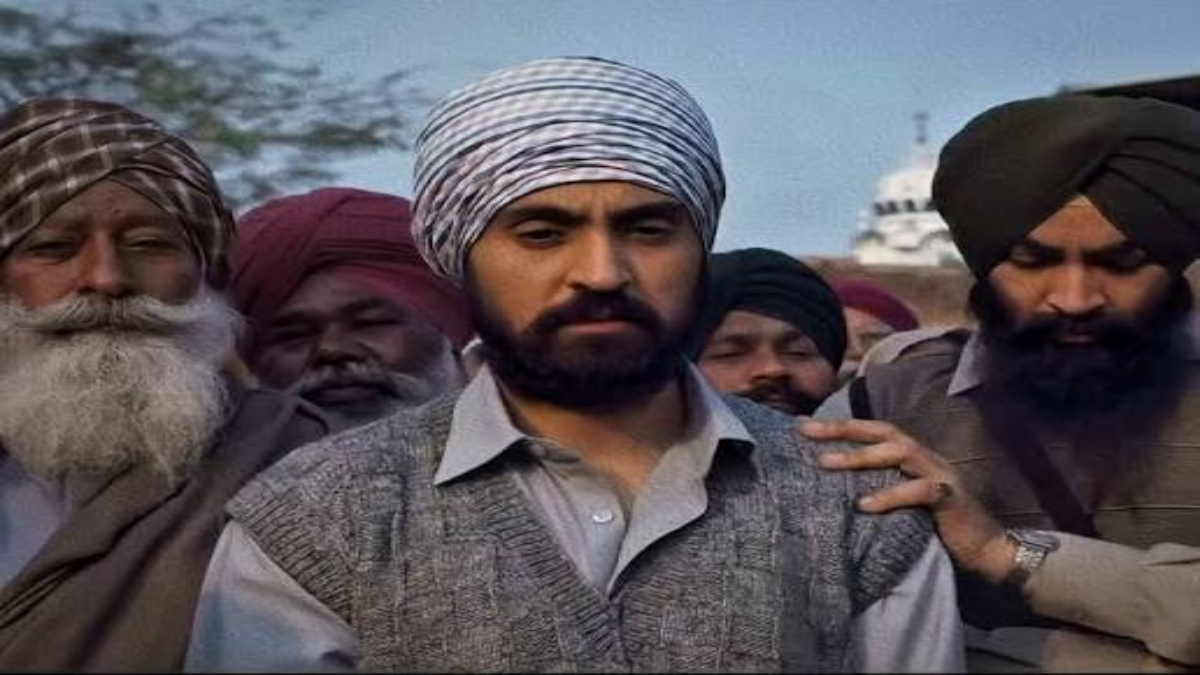
New Delhi, July 9, 2026 — The abrupt removal of the Diljit Dosanjh-starrer film Satluj from an online streaming platform just forty-eight hours after its release has reignited one of Punjab’s most painful historical wounds. The political storm surrounding the movie, which follows the tragic life of human rights activist Jaswant Singh Khalra, has brought the dark era of the 1980s and 1990s separatist militancy back to the absolute center of public discourse.
The unfolding controversy has prompted severe warnings from seasoned political figures, most notably former Union Law Minister and veteran Punjab politician Ashwani Kumar. Speaking on the developing situation, Kumar cautioned that the row could inflame historical passions and deepen radical undercurrents in a state that desperately requires social stability.
A Film Silenced by “Security Concerns”
The cinematic journey of Satluj—originally titled Punjab ’95—has been fraught with systemic resistance for over three years. Directed by Honey Trehan, the biographical drama chronicles Jaswant Singh Khalra’s harrowing, real-life crusade to expose the extrajudicial killings and mass illegal cremations of thousands of “unidentified” Sikh youths by state police forces during the height of the counter-insurgency operations.
When the filmmakers applied for theatrical certification, the Central Board of Film Certification (CBFC) demanded an astonishing 127 cuts. Most contentiously, the board reportedly ordered the deletion of Khalra’s actual name from the film—a directive Trehan publicly decried as “the deletion of a martyr from our history.” Seeking an alternative pathway to audiences, the producers bypassed the theatrical board and quietly released the film completely uncut on the ZEE5 streaming platform on July 3, 2026. Because digital streaming platforms operate under the Information Technology Rules of 2021 rather than the CBFC, the uncut release briefly succeeded.
However, the triumph was short-lived. Citing “security concerns” and regulatory obligations under the IT Rules, central authorities intervened. By Sunday evening, July 5, the film was scrubbed from the platform, triggering immediate outrage across Punjab and the global Sikh diaspora.
Ashwani Kumar Warns of Radical Sentiments
The swift government clampdown has polarized opinion, prompting acute warnings about the unintended psychological fallout across the state. In an interview, Ashwani Kumar noted that while the state authorities likely acted out of a genuine fear of social unrest, reopening these deep historical scars could backfire significantly.
However, Kumar also emphasized that imposing an outright digital ban is inherently counterproductive. In the internet age, heavy-handed censorship often breeds morbid curiosity, forcing viewers to seek out pirated copies through illicit channels, which only intensifies the narrative of state suppression. Kumar explicitly stated that the threat of radicalization in Punjab is not a hypothetical anxiety; it is an active risk. He noted that stoking raw religious and historical sensitivities provides fertile ground for extremist elements to exploit, a consequence the border state can ill afford.
The Ghost of Jaswant Singh Khalra
To understand why Satluj has provoked such an explosive reaction, one must understand the legacy of the man at its center. Jaswant Singh Khalra was not a militant or a political extremist; he was an ordinary bank employee and the human rights secretary for the Akali Dal. In the early 1990s, he began investigating the unexplained disappearances of local youths.
Through meticulous research of municipal cremation ground logs, Khalra uncovered a horrifying pattern: police forces were allegedly abducting youths, killing them in staged encounters, and secretly cremating the bodies as “unidentified” or “unclaimed” to avoid accountability. Khalra took his data to international forums, generating global scrutiny. In September 1995, shortly after returning from an overseas trip, Khalra was himself abducted from his home by police officials. He was tortured and murdered in custody. Years later, a shell-shocked Indian judiciary convicted several high-ranking police officers for his murder, cementing Khalra’s status as a tragic martyr for human rights.
By visualizing this dark history, Satluj forces the public to confront a period of history that mainstream Indian cinema has largely ignored or heavily sanitized.
Political Exploitation Ahead of the Elections
The cinematic controversy has quickly morphed into an aggressive political proxy war as political parties begin drafting their strategies for the upcoming Punjab Assembly elections. Mainstream political entities are trying to navigate the emotional fallout while simultaneously weaponizing the film’s narrative against their rivals.
- The Aam Aadmi Party (AAP): The ruling state government has used the film’s release to launch scathing attacks on both the Congress and the Shiromani Akali Dal (SAD). Senior AAP leaders point out that the systemic human rights violations depicted in the film occurred under historical Congress administrations, while subsequent Akali Dal-BJP coalitions promoted the very police officers accused of orchestrating the atrocities.
- The Shiromani Akali Dal (SAD): Attempting to reclaim its traditional pro-Sikh “Panthic” political base, the Akali Dal has fiercely condemned the ban. SAD President Sukhbir Singh Badal announced that the party intends to circumvent the digital block by organizing local screenings of Satluj in villages across Punjab, ensuring younger generations do not forget the state-sponsored violence of the past.
- The Congress Party: The situation has left the local Congress leadership in a highly uncomfortable defensive posture. While some figures like former Chief Minister Charanjit Singh Channi stated that a film shouldn’t be banned if it speaks the truth, other party insiders privately worry the film will decimate their electoral prospects by reminding voters of Operation Blue Star and the subsequent decade of state crackdowns.
A Fragile Peace at Stake
The timing of the Satluj controversy is particularly hazardous for Punjab. The state is already grappling with a delicate socio-political climate, highlighted by a mounting confrontation between Chief Minister Bhagwant Mann’s administration and the Akal Takht—the highest temporal seat of Sikh authority. The government’s dismissal of a controversial video as “doctored,” which the Akal Takht has strictly taken note of, has pushed relations to a knife-edge.
Ashwani Kumar warned that an open political confrontation between any sitting government and the Akal Takht is historically ominous for the state. He urged political leaders to exercise immense restraint, declaring that Punjab desperately needs economic stability, drug eradication, and structural peace rather than the dangerous polarization of religious and historical animosities.
As Satluj remains officially banned but widely discussed, Punjab sits at a familiar crossroad. The row proves that while the guns of the militancy era fell silent decades ago, the psychological wounds of that traumatic period remain entirely unhealed. If managed with political opportunism rather than historical sensitivity, the controversy risks transforming a painful memory into a modern catalyst for radicalization.
For a deeper look into the history of the film’s censorship battles and its subsequent online ban, you can view this comprehensive breakdown: The Satluj Controversy Explained. This video provides crucial context regarding the 127 cuts demanded by the censor board and the film’s sudden removal from streaming platforms.