

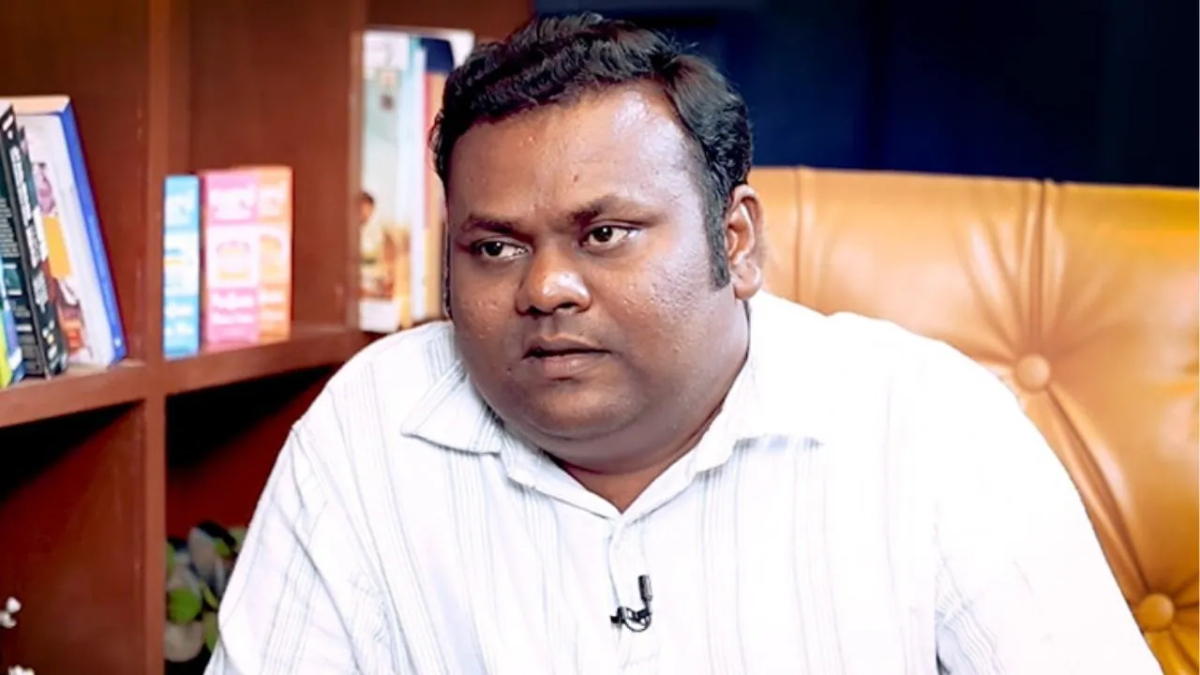
New Delhi, April 22, 2026: In the world of Indian entertainment, where glitz and glamour often dominate the headlines, the journey of an actor is frequently romanticized. However, the story of Vinod Suryavanshi, the actor who gained recognition for his role in the hit web series Panchayat, serves as a stark, necessary reminder of the brutal realities that exist beneath the surface.
In a deeply personal and harrowing account shared in April 2026, Suryavanshi has brought to light the realities of deep-seated caste discrimination in his native Karnataka, the pervasive color bias within the film industry, and the crushing poverty that defined his early years. His story is not just one of survival; it is a testament to the endurance required to break free from generational systemic oppression.
A Childhood Defined by Exclusion
For many, childhood is a time of carefree innocence. For Vinod Suryavanshi, it was a time of navigating a strictly stratified society. Speaking in a recent interview, he revealed that caste-based segregation remains a harsh reality in his village in Karnataka to this day.
“There are two areas in that village — one for the upper castes and one for the lower castes. The area where the Dalits live is separate from the village.”
He recounted an incident from when he was just 12 years old—a formative memory of institutionalized humiliation. During a visit to a hotel with his father, despite paying for their meal, they were forced to wash their own plates. This was not a one-off error but a consequence of his caste identity. Furthermore, he revealed that his family continues to be barred from entering certain temples and homes in his village, highlighting that for millions of Indians, the “modern” world remains shackled by ancient, discriminatory practices.
The Weight of Poverty and Domestic Turmoil
Suryavanshi’s struggle was compounded by extreme financial hardship at home. He painted a vivid, painful picture of a household where festive occasions were synonymous with sorrow.
“I have often seen my parents cry. When festivals came, I would wonder why they were coming at all—why Diwali was coming,” he shared. His mother worked as a domestic help, while his father, a construction mason, faced the uncertainty of daily-wage labor. When work was scarce, his father would return home intoxicated, leading to verbal and physical abuse that left deep emotional scars on the young actor.
The Grind: From Security Guard to Struggling Artist
Before the camera lights turned on him, Suryavanshi lived a life of anonymity and labor. His resume is a roadmap of resilience:
- The Lift Operator: His first job earned him a meager Rs 1,600 per month.
- The Security Guard: He worked 12-hour shifts, often standing for the entire duration. He described the physical toll of working in the rain, where water would seep into his shoes, causing agonizing blisters, all while facing verbal abuse.
- The Junior Artist: Transitioning into the film industry as a junior artist brought new forms of degradation. He recalled moments of extreme humiliation, including an incident where a senior person snatched a plate of food from his hands, telling him to eat where the “junior artists” were assigned.
“People say no work is small,” Suryavanshi reflected, “but I’ve learned that a person is judged by the level of work they do—the bigger the work, the more respect they get.”
The Industry’s Ugly Truth: Color Bias
Even after successfully entering the acting profession, Suryavanshi faced a hurdle that is notoriously unspoken in the Indian film industry: colorism.
The industry has long been criticized for its obsession with fair skin, often sidelining talented actors who do not fit a specific, colonial-era beauty standard. Suryavanshi revealed that he was frequently rejected for roles—even those of beggars or laborers—because he did not possess a “rich look” or “fair look.” He recounted a specific instance where he was finalized for a role, only to be rejected upon arrival when the creative director dismissed him with a callous, “He is dark-complexioned, pack him up.”
Also Read: SPMCIL Recruitment 2026: 534 Vacancies Announced
The Path to Recognition
Despite the systemic barriers—caste, poverty, and color bias—Suryavanshi’s talent eventually shone through. Through sheer persistence, he transitioned from a background performer to a face recognized by millions in Panchayat. His credits now include projects such as Jolly LLB 3, Janaawar, Thamma, and Satyameva Jayate.
His success is not just a personal victory; it is a challenge to the industry to do better. By sharing his raw and unfiltered story, Suryavanshi has forced a conversation about the kind of gatekeeping that prevents stories from diverse backgrounds from reaching the screen.
Why This Matters
Vinod Suryavanshi’s story is a mirror held up to society. It highlights that the “caste system” is not a historical artifact but an ongoing experience for many. It exposes the film industry’s colorism as a continuation of these societal biases.
As he continues to build his career, his legacy is already being shaped by his willingness to speak truth to power. He is no longer just the “new Sachiv ji” in a popular series; he is an advocate for the marginalized, a voice for those who have been told they don’t belong, and a reminder that talent often rises in spite of a system designed to keep it buried.
His journey from a village where he wasn’t allowed to enter a temple to the sets of major motion pictures is nothing short of heroic. It is a story of resilience, but more importantly, it is a call for systemic change.