

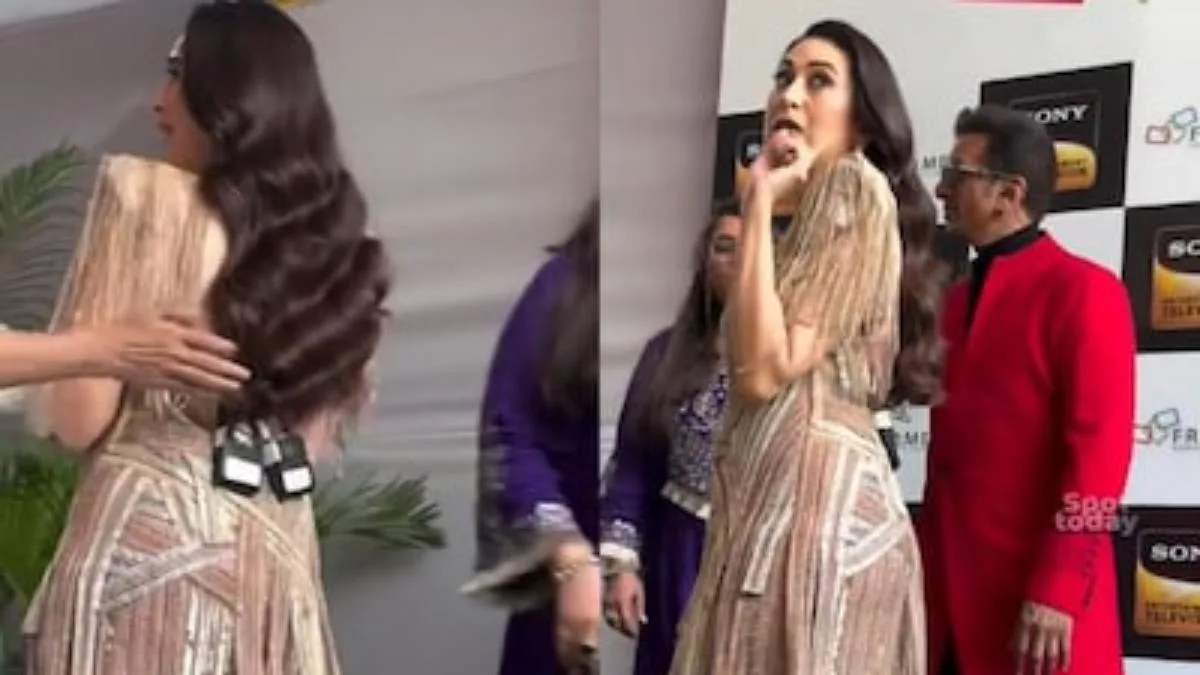
April 29, 2026: In an industry where the flash of a camera is often considered part of the job description, actress Karisma Kapoor has drawn a firm line. The 90s icon recently became the center of a viral conversation after a video surfaced showing her politely, yet firmly, requesting paparazzi to refrain from zooming in inappropriately while photographing her.
The incident occurred outside the sets of the highly anticipated India’s Best Dancer Season 5, where Kapoor is set to return as a judge alongside Geeta Kapur, Terence Lewis, and Jaaved Jaaferi. As the seasoned star concluded her photo-op and began to walk away, she turned back to the photographers and calmly articulated a simple request: “Zyada zoom mat karna” (Don’t zoom too much).
A Viral Moment and a Deeper Discussion
While the interaction was brief, the video has sent shockwaves across social media platforms, triggering a heated debate on the ethics of modern paparazzi culture. For many, the clip wasn’t just a fleeting celebrity moment; it was a stark reminder of the invasive nature of lens-based journalism in the digital age.
The footage, which has circulated widely on Reddit and X (formerly Twitter), has been met with overwhelming support from netizens. Many have pointed out the exhaustion felt by celebrities who must constantly navigate the fine line between being public figures and maintaining basic human dignity.
One viral comment on a social media thread succinctly captured the collective sentiment: “The fact that this needs to be told to grown-a* individuals is saddening. A mother, an established actress, and a woman should not have to remind professionals to be decent.”*
The Blurred Lines of Paparazzi Etiquette
Karisma’s intervention is part of a growing trend where Bollywood stars are increasingly vocal about their discomfort. The era of the “all-access” celebrity is facing pushback as stars demand boundaries that respect their privacy, especially during candid moments.
This incident has inevitably drawn comparisons to other prominent actors who have historically stood up against intrusive photography.
- Jaya Bachchan: Known for her unfiltered critiques of paparazzi, Bachchan has frequently questioned the ethics and behavior of photographers, often asking who they are representing and what kind of training they receive.
- Saif Ali Khan: In 2023, the actor famously lost his cool when photographers followed him and his wife, Kareena Kapoor Khan, into the lobby of their private residence at 2 AM, leading him to remark, “Do one thing, come in our bedroom too.”
- Preity Zinta: Just a day prior to this incident, Zinta took to social media to express her frustration, noting that while she understands the nature of the industry, the constant stalking outside her gym and home is “unnerving” and “scary.”
Why This Matters for the Industry
The “Zyada Zoom” incident highlights a critical shift in the power dynamic between Bollywood celebrities and the media. As mobile technology makes it easier for anyone to act as a paparazzo, the “public vs. private” barrier has become increasingly porous.
Industry observers suggest that while promotional events and public appearances are fair game for coverage, private moments—or the process of walking away after a scheduled photo-op—should be treated with respect.
“When an actor is posing, they are in character, prepared for the public eye,” says an industry source. “When they are walking away, the ‘job’ is effectively done. Zooming in on inappropriate angles during that transition is not journalism; it is invasive.”
The Larger Conversation: Respect vs. Content
The viral nature of this clip serves as a reminder that the audience is evolving. While there was a time when such content was consumed without question, today’s digital audiences are increasingly critical of “creepy” or disrespectful camera work.
Fans have been quick to defend Kapoor, not just as a star, but as a woman setting a standard for how she expects to be treated. The incident reinforces the idea that the “right to privacy” is not forfeited simply because one is a famous face.
Looking Ahead
As India’s Best Dancer Season 5 prepares for its grand premiere on May 9, 2026, the focus remains on the show’s promise of blending Bollywood flair with freestyle dance. However, the unexpected spotlight on Kapoor’s interaction with the press has reminded the entertainment world that even the biggest stars are watching how they are watched.
Karisma Kapoor, who continues to maintain a busy professional schedule—with the upcoming web series Brown also in the pipeline—has once again proven that while she may be a public figure, she is the one who decides where the lens should stop.
For the paparazzi community, the message is clear: The zoom lens is a tool, not a weapon of intrusion. And for fans, the support for Karisma’s stand is a clear signal that respect is the minimum expectation in the modern era of celebrity journalism.