

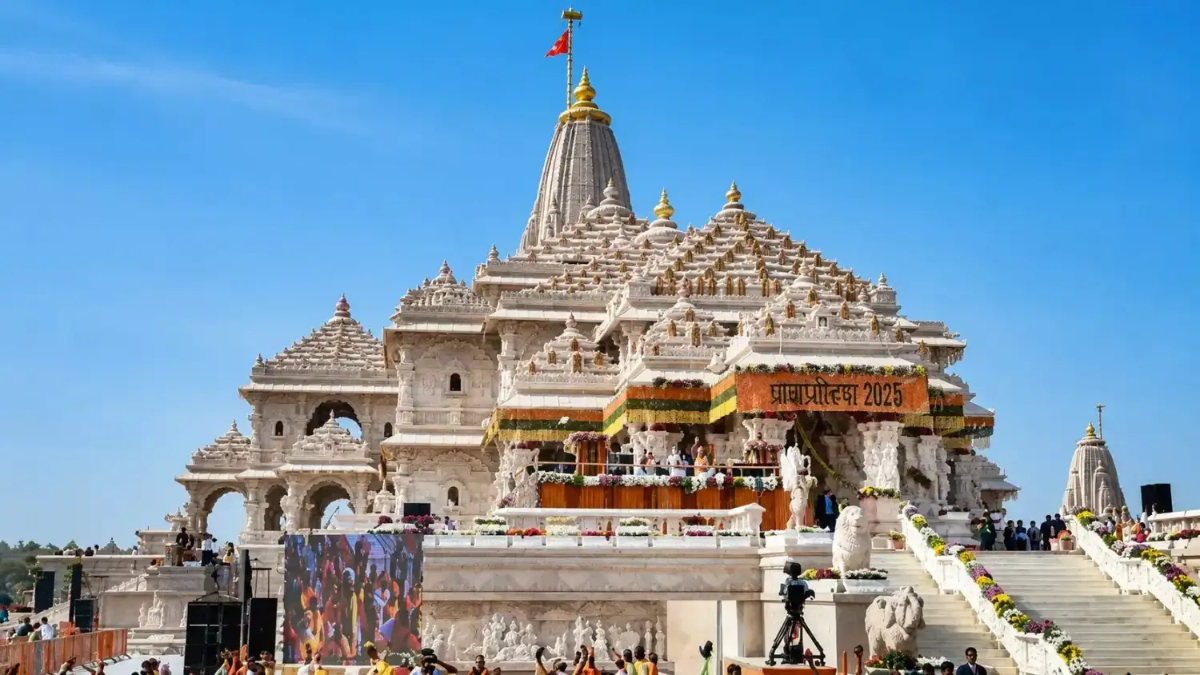
New Delhi, June 30, 2026 — The ongoing investigation into the alleged multi-crore donation fraud at the Shri Ram Janmabhoomi Temple has taken a dramatic legal and political turn. In a heated general body meeting, the Faizabad/Ayodhya Bar Association unanimously resolved that none of its members would legally represent the eight individuals arrested in connection with the embezzlement of temple offerings. To enforce this boycott, the lawyers’ body announced an unprecedented penalty, declaring that any advocate who defies the resolution and accepts a brief for the accused will be slapped with a heavy fine of ₹5 lakh.
The decision underscores the deep emotional and religious outrage within the local legal community over allegations that donations made by millions of devotees were systematically stolen. However, the sweeping boycott has also triggered a massive constitutional debate, drawing sharp criticism from legal experts and organizations who point out that denying legal representation directly violates basic human rights and long-standing Supreme Court mandates.
Outrage Over “Theft of Offerings” Sparks Unprecedented Boycott
The controversy stems from an ongoing investigation monitored by a Special Investigation Team (SIT) following a First Information Report (FIR) filed by the Shri Ram Janmabhoomi Teerth Kshetra Trust. The police have arrested eight individuals—identified as temple staffers and close aides tasked with counting cash and managing valuables donated by devotees. The accused face severe charges under the Bharatiya Nyaya Sanhita (BNS), including theft by a clerk or servant, criminal breach of trust, cheating, and criminal conspiracy.
Addressing the media after the decision, Bar Association Secretary Shailendra Jaiswal stated that the reports of corruption and the direct theft of sacred offerings had profoundly wounded the sentiments of the legal fraternity and the public. “The lawyers of Faizabad and Ayodhya have unanimously agreed that we will not lend our legal services to defend those who have allegedly betrayed the faith of millions,” Jaiswal said.
To ensure absolute compliance, Ayodhya Bar Association President Kalika Prasad Mishra confirmed that a formal committee of 15 to 20 office-bearers has been established to handle the prosecution’s side of the case, ensuring that the accused face a rigorous legal trial without local defense representation. Mishra noted that any lawyer wishing to break the boycott would not only have to apply for special permission but also deposit the ₹5 lakh penalty upfront, which the Bar intends to use to fund the prosecution.
Three-Day Ultimatum Issued to Former Trust Officials
The resolution passed by the Bar Association did not stop at a legal boycott. In a significant escalation, the lawyers directed their fury toward the top brass of the Ram Temple Trust management, demanding the immediate exit of prominent functionaries. The Bar issued a strict three-day ultimatum to Champat Rai (the former General Secretary of the Trust), Anil Mishra (trustee), and Gopal Rao (temple construction in-charge), warning them to leave the city of Ayodhya.
The lawyers threatened that if the trio fails to leave within three days, the legal community will orchestrate a city-wide blockade, shutting down entry points into the temple town. While none of these senior officials have been named as accused in the primary FIR, the Bar Association alleges that an embezzlement of this scale could not have taken place without their knowledge or administrative oversight. Notably, both Champat Rai and Anil Mishra resigned from their respective posts on “moral grounds” just days prior, following intense pressure and escalating political scrutiny.
The Bar has announced plans to move the courts under Section 156(3) of the Bharatiya Nagarik Suraksha Sanhita (BNSS) to force the registration of a formal criminal case against the senior trust leaders. Furthermore, they plan to approach the Allahabad High Court to demand an independent investigation by the Central Bureau of Investigation (CBI).
A Systemic Clash: The Legality of Bar Boycotts
While the Ayodhya Bar Association’s decision has found widespread support among local residents and political opposition leaders—who claim that hundreds of crores in cash, gold, and silver have been misappropriated—it has run into a major roadblock regarding legal ethics and constitutional validity.
The Vishva Hindu Parishad (VHP) quickly criticized the move, labeling the resolution “political” rather than legal. VHP International President Alok Kumar reacted strongly, stating that the core morality of the democratic legal system dictates that even the most depraved criminal is entitled to a fair defense.
Legally, the Bar Association’s resolution directly challenges a landmark 2010 judgment by the Supreme Court of India (A.S. Mohammed Rafi v. State of Tamil Nadu). In that ruling, a bench of Justices Markandey Katju and Gyan Sudha Mishra explicitly declared that any resolution by a Bar Association refusing to represent a specific accused person is “wholly illegal, against all traditions of the bar, and against professional ethics.” The apex court had stated.
According to the Bar Council of India (BCI) rules, an advocate is professionally bound to accept a client’s brief unless exceptional personal circumstances—such as prior engagement or a direct conflict of interest—prevent them from doing so. Past precedents show that High Courts have routinely declared such bar boycotts null and void, occasionally initiating contempt of court proceedings against association office-bearers for interfering with the administration of justice.
Political Firestorm and the Road Ahead
The escalating tension in Ayodhya has provided significant ammunition to political opposition parties, who have seized the opportunity to question the governance and transparency of the temple’s financial management. Leaders from various factions have leveled massive allegations, claiming that massive quantities of diamonds, precious stones, and over 200 kilograms of silver donated by the public have vanished under the trust’s watch.
In response, the remaining management of the Ram Temple Trust issued a press statement expressing deep sadness and shock over the recent arrests, but firmly maintained that all current public donations are safely accounted for and that they are fully cooperating with the SIT investigation. Meanwhile, the Supreme Court recently declined an urgent plea to intervene immediately, scheduling the matter for a routine hearing following the conclusion of the ongoing summer break.
As the three-day ultimatum ticks down, the temple town remains on high alert. The stand-off between Ayodhya’s legal professionals and the temple administration sets the stage for a prolonged battle over financial accountability, local governance, and the fundamental constitutional right to a legal defense.