

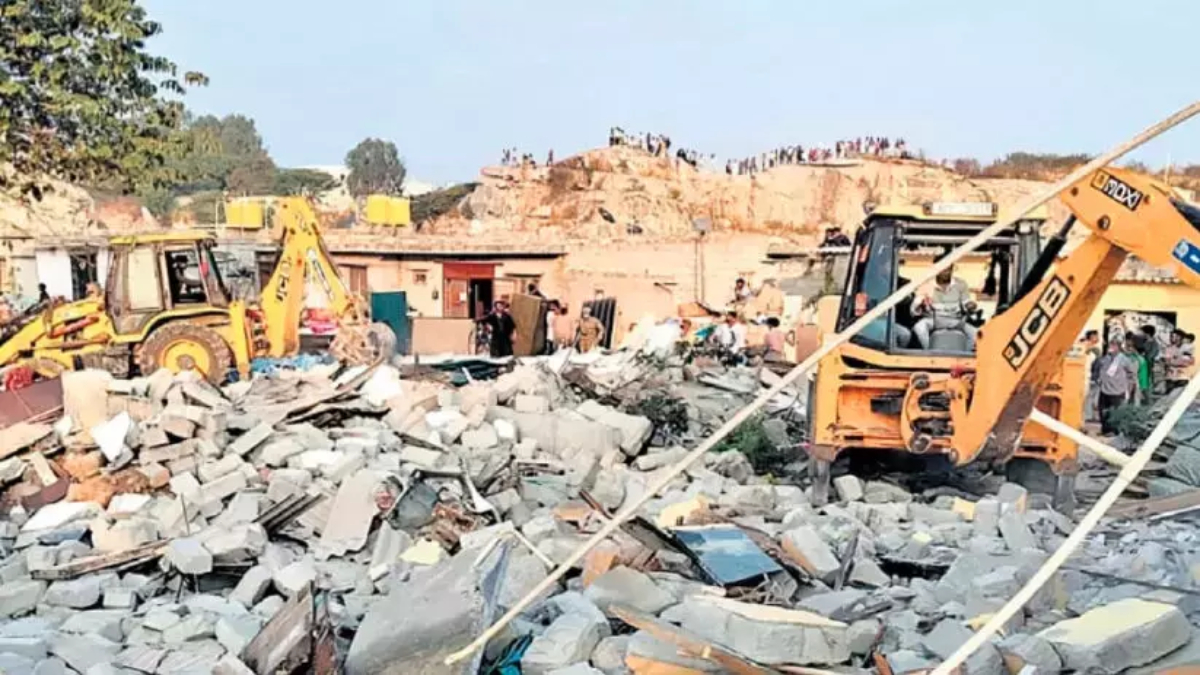
New Delhi, December 27, 2025: In a move that has sparked nationwide outrage and drawn sharp parallels to the “bulldozer justice” seen in Northern India, authorities in Bengaluru carried out a massive demolition drive in the early hours of Saturday, December 20, 2024. The operation, targeting Fakir Colony and Waseem Layout in the Yelahanka area, has left approximately 400 families—nearly 3,000 people—homeless during one of the city’s coldest winters.
The Midnight Crackdown
The operation began around 4:00 AM, catching residents off guard while they slept. Backed by nearly 150 police personnel and four heavy-duty earthmovers, the Bengaluru Solid Waste Management Limited (BSWML) and the Greater Bengaluru Authority (GBA) razed makeshift homes and semi-permanent structures.
Residents, many of whom are daily wage laborers and migrants, alleged they were given no prior notice. “We woke up to the sound of machines and were dragged out. They didn’t even let us take our blankets or our children’s school books,” said Sarah, a resident who has lived in the area for 30 years.
Government Justification vs. Resident Claims
The state government justified the action by stating the settlement was an “illegal encroachment” on five acres of government land earmarked for waste processing facilities, including a bio-methanation plant.
| Official Stance | Resident & Activist Response |
| Encroachment on public land and waterbody buffer zones. | Residents hold valid Aadhaar cards, voter IDs, and electricity bills. |
| Necessary for urban development and waste management. | Families have resided there for over 25 years without legal challenge. |
| Action taken following “repeated warnings.” | Residents and the Minority Commission claim no official notice was served. |
Political Fallout: A War of Words
The incident has triggered a fierce political debate, particularly as Karnataka is currently under a Congress-led government. Critics have accused the party of hypocrisy, noting that Congress leadership has frequently condemned “Bulldozer Raj” in BJP-ruled states like Uttar Pradesh.
- Kerala CM Pinarayi Vijayan slammed the move, calling it “anti-minority politics” and “inhumane.”
- Karnataka Deputy CM D.K. Shivakumar defended the drive, asserting that the government was clearing land from the “land mafia” to prevent the growth of slums, though he insisted the state “is not into bulldozers.”
- Internal Criticism: Senior Congress leader P. Chidambaram had previously warned against such measures, stating that “bulldozer justice” is illegal and violates the Supreme Court’s guidelines on due process.
A Humanitarian Crisis
As the debris is cleared, the human cost remains stark. Hundreds of women, children, and elderly residents are currently living in makeshift shelters and a nearby government school playground. Human rights activists and the Dalit Sangharsha Samithi have joined protests, demanding immediate rehabilitation and compensation.
With school exams approaching and temperatures dropping, the displaced families of Yelahanka face an uncertain future, caught between the gears of urban development and the lack of a “right to housing” for the urban poor.