

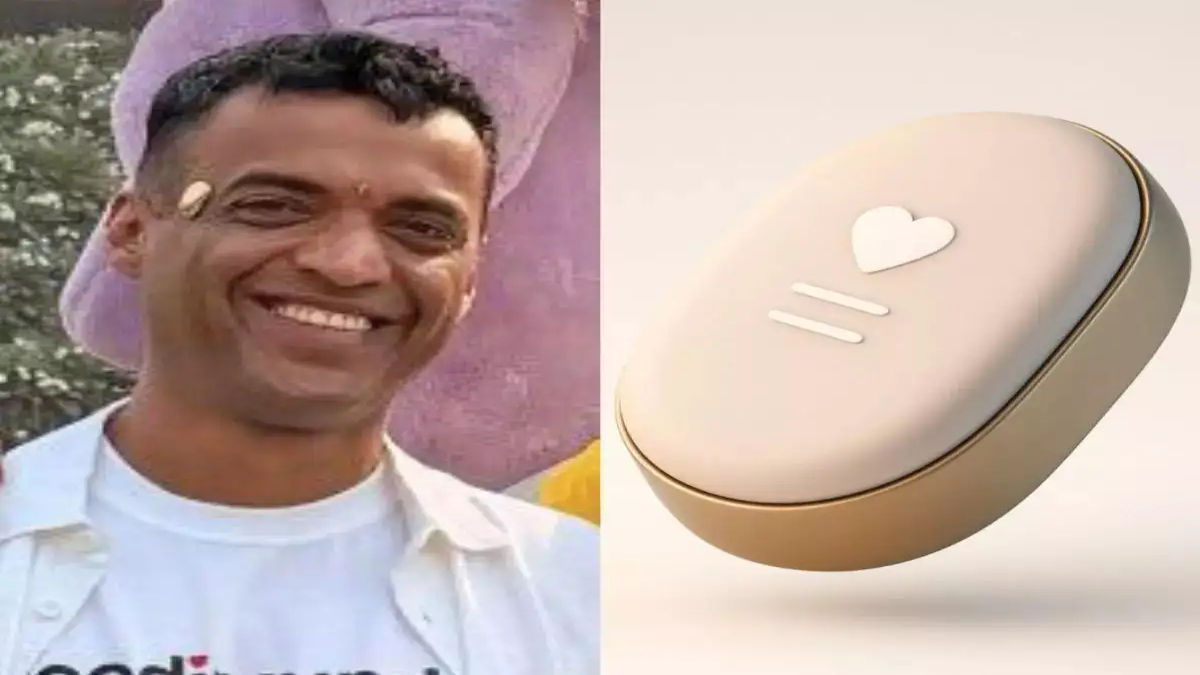
New Delhi, May 6, 2026: In a move that marks a dramatic shift from food delivery to the frontiers of health-tech, Deepinder Goyal, the founder of Zomato, has officially opened applications for early access to Temple—the mysterious, brain-monitoring wearable that first captured the internet’s attention earlier this year.
After months of speculation following his viral appearance on a podcast wearing a small, clip-like gadget on his head, Goyal has confirmed that the first 100 units of the device are ready for deployment. This development signals a significant milestone for his health-tech venture, moving the project from a private research prototype into a controlled, early-access testing phase.
What is ‘Temple’?
Temple is an experimental wearable device designed to track cerebral blood flow (CBF) in real-time. Unlike standard fitness trackers that focus on metrics like heart rate, sleep cycles, or step counts, Temple is built on a niche, ambitious premise: that monitoring how blood reaches the brain can provide deep insights into neurological health, cognitive function, and the ageing process.
The Science Behind the Idea
The core of the project is rooted in what Goyal describes as the “Gravity Ageing Hypothesis.“ The theory posits that our daily habits—specifically the amount of time we spend in an upright, gravity-defying posture—might subtly affect blood circulation to the brain over decades. Goyal and his team are investigating whether this chronic physiological stress could be a driver for aspects of cognitive decline and biological ageing.
While the hypothesis has sparked intense debate, Goyal has positioned Temple as a research tool aimed at gathering longitudinal data rather than providing immediate medical diagnoses.
The Launch: Who is it for?
The company is not targeting a mass-market commercial launch just yet. Instead, the current phase is focused on gathering high-quality, structured feedback. Consequently, Temple is looking for a curated groupt to stress-test the device and provide input.
According to the official announcement, the startup is seeking applicants from specific fields, including:
- Athletes
- Scientists
- Doctors
- Founders/Entrepreneurs
- Content Creators
- Individuals with a deep, active commitment to cognitive and physical health
Goyal has explicitly stated that not all applicants will be chosen, as the goal is to build a community capable of contributing meaningful, actionable data for the next stages of development.
How to Apply for Early Access
If you are interested in participating in this experiment, the application process is straightforward but selective.
- Visit the Website: Navigate to the official portal at temple.com.
- Submit Your Details: You will be required to provide your name, contact information, and social media handles.
- The Statement: The application asks for a brief statement (limited to 500 characters) explaining why you are interested and what you expect from the device. This is likely the most critical part of the application, as it helps the team filter for users who are genuinely aligned with their research goals.
- Selection: If selected, the Temple team will reach out directly to applicants via WhatsApp.
Beyond early access to the hardware, the company has hinted that selected “founding users” may also be offered opportunities to participate in future funding rounds for the venture.
A Note of Caution: Innovation vs. Clinical Utility
While the buzz around Temple is significant, it is important to contextualize the device. As of May 2026, Temple remains an experimental, non-medical device.
Medical professionals and neurologists have raised valid questions regarding its utility and scientific validation. Skeptics note that the human brain has robust, inherent mechanisms (such as cerebral autoregulation) to maintain stable blood flow regardless of posture. Some experts have cautioned against interpreting data from skin-mounted, non-clinical sensors as a definitive indicator of complex internal brain circulation.
Goyal himself has been careful to frame this as an “exploration and experimentation” venture rather than a finished commercial product. He has invested significant personal resources into the project through his research initiative, Continue Research, and has invited open feedback from the scientific community.
The Path Ahead
The release of these first 100 units is a “test-and-learn” exercise. By limiting the initial batch, the team behind Temple hopes to iterate on the hardware and software based on the real-world experiences of a high-performing user base.
Whether Temple becomes a breakthrough tool for understanding the aging brain or remains a niche experiment in the world of biohacking, it is undeniable that Goyal has successfully brought a complex, high-stakes topic into the public conversation. For now, the world of health-tech will be watching closely to see what these first 100 users reveal.