

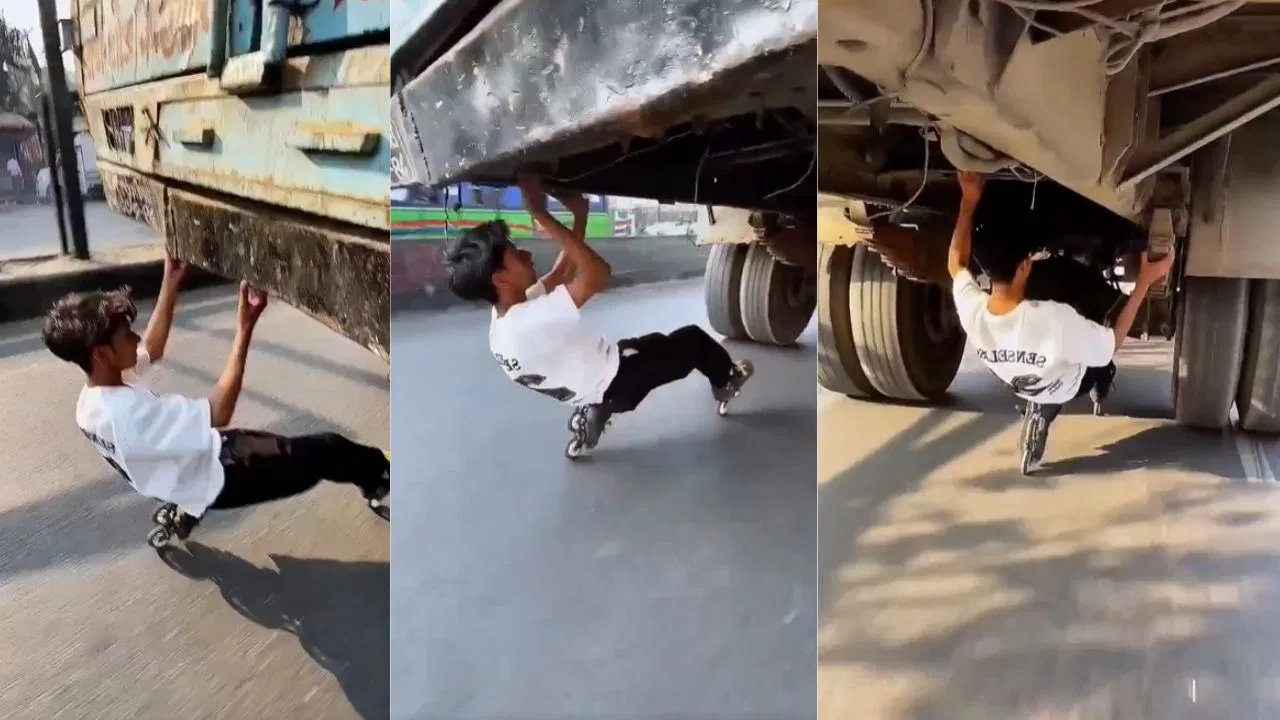
New Delhi, March 19, 2026: A significant wave of digital alarm and public condemnation has been triggered across social media platforms following the emergence of a terrifying stunt video. In the footage, which gained massive traction on March 18, 2026, a young boy is observed skating alongside a moving public bus on a busy road. It is noted that the initial sense of curiosity quickly turned to horror as the boy suddenly crouched and glided directly under the belly of the heavy vehicle while it was in motion. This startlingly dangerous visual has been widely shared as a primary example of the “death-defying” lengths to which some individuals will go to secure online engagement.
The Mechanics of “Views Bait”
The specifics of the incident and the extreme risks involved are being meticulously discussed by safety experts and concerned parents. It is observed in the viral reports that the boy managed to pass between the front and rear wheels of the bus, emerging from the other side seemingly unscathed. It is reported by several digital observers that the video was captured by an accomplice following on another vehicle, specifically to create “viral reels” for short-form video platforms. The visual of a child being inches away from a fatal crushing has provided a grounding narrative for the toxic obsession with “likes” and “views” that continues to grip the youth in 2026.
Also Read: Man’s “Tap-Powered” Light Bulb Hack Stuns the Internet
Social Media Reacts: A Symphony of Outrage and Concern
A massive conversation regarding “social media madness” and the lack of parental supervision has been ignited by this digital revelation. It is noted that the video was met with an outpouring of angry comments, with many netizens remarking that such acts are “not bravery, but sheer stupidity.” The platform creators are being widely discussed for their role in incentivizing high-risk behavior through algorithm-driven fame. Thousands of analytical comments have been left by users who expressed their fear, stating that such videos serve as a stark reminder of how a single second of miscalculation can lead to an irreversible tragedy.
Impact on Traffic Enforcement and Cyber Laws
The impact of this viral event has extended beyond simple internet criticism to influence a broader discussion on the legal repercussions for dangerous content creation. It is frequently mentioned by local police departments that individuals performing such stunts can be booked under various sections of the Bharatiya Nyay Sanhita for endangering public safety. A renewed sense of urgency is being observed among transport authorities, who are now reportedly being urged to identify the boy and the bus route to ensure strict disciplinary action is taken. It is believed that the viral nature of this specific “Bus Under-Gliding Video” will prompt a dialogue on the necessity of stricter moderation policies for “dangerous challenge” content.
A Stark Reminder of Reality vs. Reels
As the footage continues to accumulate millions of views in late March 2026, it serves as a powerful and resilient reminder that “Reel Life” is not real life. It is believed that the account of the “Boy Under the Bus” will remain a primary highlight of the month’s most discussed and socially critical news features. The legacy of this viral event is expected to be a heightened public awareness of the physical costs of digital clout. Until the thirst for viral fame is balanced with a respect for human life, this video remains a stark testament to the fact that yama—the god of death—does not care about your follower count.