

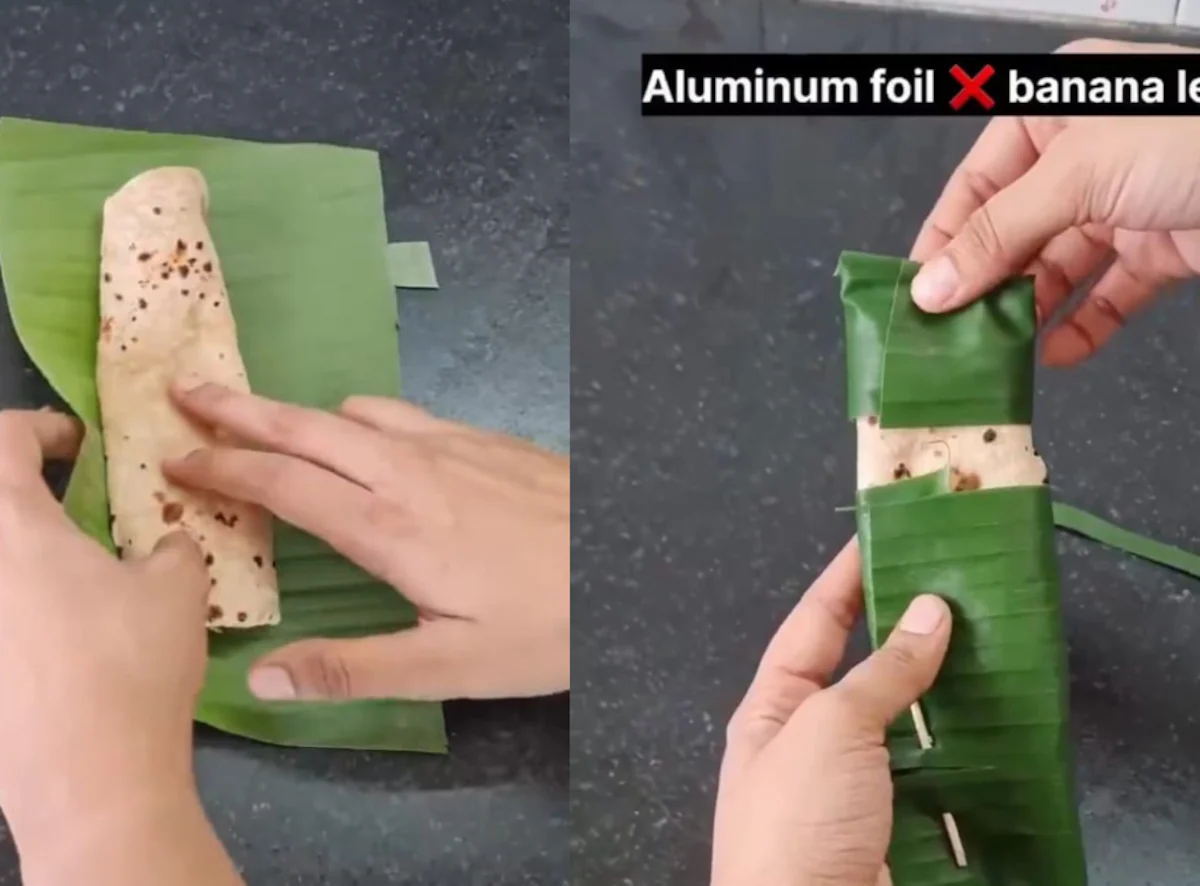
New Delhi, December 31, 2025: The age-old culinary tradition of using banana leaves for food storage and cooking has found a new life in the digital age. On December 30, 2025, a viral video sparked a massive debate on social media after a home cook demonstrated a step-by-step technique for wrapping rotis and snacks in fresh banana leaves instead of aluminum foil. While the video was hailed by environmentalists as a win for sustainability, it has also prompted questions about the practicality and safety of making a permanent switch in modern kitchens.
The Natural Benefits of Banana Leaf Wraps
In the viral footage, the numerous benefits of the “green wrapper” were highlighted, ranging from health to flavor. It was noted by experts that banana leaves possess a natural waxy coating that provides excellent insulation for hot foods without the risk of chemical leaching. Unlike aluminum foil, which has been observed in some studies to react with acidic or salty foods—especially when heated—banana leaves are non-reactive. Furthermore, the leaves are rich in polyphenols and antioxidants, which are believed to be subtly infused into the food, adding both nutritional value and a distinct, earthy aroma.
Also Read: “National Jiju” Strikes Again: Nick Jonas Vibes to Priyanka ‘Mujhse Shaadi Karogi’
Practicality vs. Tradition: The Drawbacks
Despite the aesthetic and ecological appeal, the debate has also shed light on the limitations of banana leaves as a direct replacement for foil. It was argued by critics that while foil provides an airtight seal and is indispensable for high-temperature roasting, banana leaves are porous and prone to drying out. The leaves were observed to be less durable, often tearing if not softened over a flame before use. Additionally, for urban dwellers, the availability and cost of fresh leaves remain significant barriers compared to the convenience of a mass-produced foil roll.
Steaming and Grilling: Where the Leaf Wins
The consensus among foodies and chefs appears to be that the two materials serve different purposes. Banana leaves were described as the superior choice for steaming and grilling, particularly for traditional dishes like Meen Pollichathu or Tamales, where the leaf acts as a protective, flavor-enhancing parcel. Foil, on the other hand, was noted for its strengths in long-term freezer storage and heavy-duty baking. The viral video has encouraged many to at least consider the leaf for short-term packing, such as lunchboxes, to reduce the estimated tons of foil waste that end up in landfills each year.
A Greener Culinary Future
As the year 2025 draws to a close, this debate serves as a reminder of the growing “return to roots” movement in global kitchens. While it may not be feasible to replace foil entirely, the viral trend has succeeded in making the banana leaf a mainstream “zero-waste” alternative once again. By blending traditional wisdom with modern awareness, home cooks are being encouraged to choose the leaf whenever possible, not just for the sake of the environment, but for the authentic taste and health benefits that no factory-made foil can replicate.