

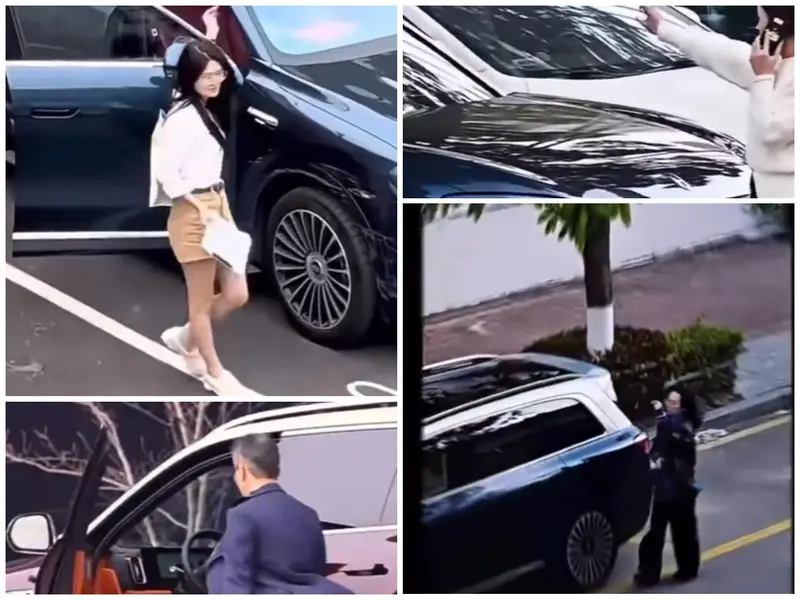
New Delhi, January 21, 2026: A fascinating vision of the future is being showcased in a viral video that has led many to claim that “China is living in 2080.” The footage, which began circulating globally in January 2026, depicts commuters in major Chinese tech hubs hailing autonomous vehicles with simple, intuitive hand gestures. It is observed that the traditional method of using a smartphone app or a physical wave to signal a taxi is being replaced by sophisticated gesture-recognition technology. This seamless interaction between humans and machines is being hailed as a major leap forward in urban mobility and artificial intelligence.
The Mechanics of Gesture Recognition
The technological prowess behind these driverless cars is being analyzed by tech enthusiasts and experts alike. It is reported that the vehicles are equipped with an array of high-resolution LiDAR sensors, 360-degree cameras, and advanced neural networks that can distinguish a specific “hail” gesture from ordinary movement. In the video, a pedestrian is seen making a subtle motion with their palm, which is immediately acknowledged by the vehicle’s exterior lighting system. The car is then seen safely navigating through traffic to pull over exactly where the passenger is standing, a feat that is being described as “magic” by many social media users.
Also Read: The Spotlight on Arohi Mim: Understanding the Viral Phenomenon
China’s Rapid Autonomous Expansion
The rapid deployment of these futuristic taxis is viewed as a testament to China’s aggressive investment in autonomous driving infrastructure. It is argued by industry analysts that cities like Shenzhen and Beijing have become living laboratories for the next generation of transport. The viral video highlights not just the technology itself, but the public’s comfort and familiarity with these driverless entities. It is noted that the transition to gesture-based hailing is part of a broader “smart city” initiative where human-vehicle interaction is designed to be as natural and frictionless as possible.
Global Reaction and Competitive Pressure
A massive wave of engagement has been generated by the footage, with viewers from around the world expressing a mix of awe and competitive curiosity. It is suggested by many commenters that the ease of use shown in the video puts significant pressure on Western tech giants to accelerate their own autonomous programs. The phrase “living in 2080” has become a trending hashtag, symbolizing the perceived gap between the current state of global transport and the advanced ecosystem being showcased in China. The video serves as a powerful demonstration of how AI is moving beyond screens and into the physical world.
The Roadmap to Universal Autonomy
As the video continues to accumulate millions of views, the conversation has shifted toward the safety and scalability of gesture-controlled hailing. It is believed that as these systems become more refined, they will be integrated into public transit systems worldwide, potentially making traditional steering wheels and human drivers a thing of the past. The “China in 2080” clip remains a definitive moment in 2026’s tech landscape, proving that the future of transportation is no longer a distant dream but a reality being practiced on the streets today. The legacy of this viral moment is a renewed global focus on the intersection of AI, robotics, and daily life.