

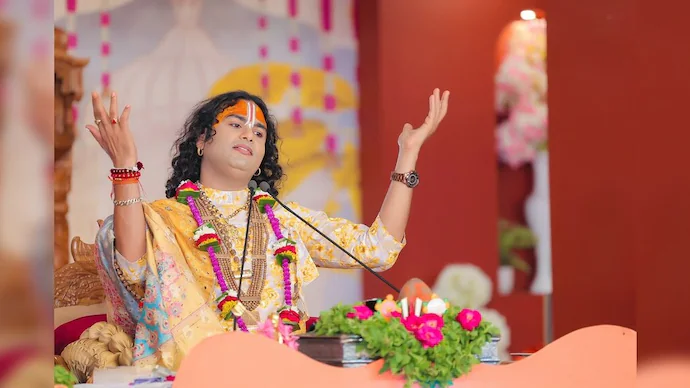
New Delhi, December 12, 2025: A formal complaint has been accepted by a local court against religious preacher Aniruddhacharya, following the viral circulation of a video clip containing highly controversial and offensive remarks made about women and the institution of marriage. The footage, which sparked widespread outrage across social media and among various women’s rights organizations, has led to the initiation of legal proceedings against the spiritual leader.
The Contentious Remarks Are Circulated
The widely circulated video clip was extracted from one of Aniruddhacharya’s public sermons or religious discourses. In the footage, the preacher was observed making derogatory statements, which reportedly included claims that women who prioritize their careers or social lives over traditional domestic roles are responsible for marital strife and societal decay. The specific content of his remarks regarding the roles and duties of women within a marriage was immediately deemed regressive, sexist, and insulting.
The video’s virality was fueled by immediate and intense condemnation, particularly from female activists and progressive groups, who argued that such public pronouncements perpetuate harmful stereotypes and undermine the progress made toward gender equality.
Also Read: ‘Kis Kisko Pyaar Karoon 2’ Review: Kapil Sharma Comedy Sequel
Complaint Is Accepted by Court
Following the massive public backlash, a formal complaint was lodged against Aniruddhacharya by an individual or organization, citing the potentially divisive and offensive nature of his remarks. The complaint argued that the statements violated several provisions of the law designed to protect women’s dignity and prevent the promotion of social disharmony.
The local court, after reviewing the submitted video evidence and the legal basis of the petition, officially accepted the complaint for hearing. This legal step means that the preacher will now be legally obliged to respond to the allegations, signifying that his public speech will be subjected to judicial scrutiny. The acceptance of the complaint was widely reported as a victory for those advocating for responsible public discourse.
Debate on Religious Figures and Accountability
The entire incident sparked a critical debate about the accountability of religious and spiritual leaders who hold considerable influence over large sections of the populace. Critics argued that prominent figures should be held to a higher standard of public discourse and must refrain from making statements that are misogynistic, regressive, or discriminatory.
The legal action taken against the preacher was widely seen as a necessary move to establish a precedent that hate speech and derogatory commentary, even when delivered within the context of a religious sermon, will not be exempt from legal challenge. The event ultimately reinforced the public’s demand for respect for gender equality and the non-negotiable dignity of women in all public forums.