

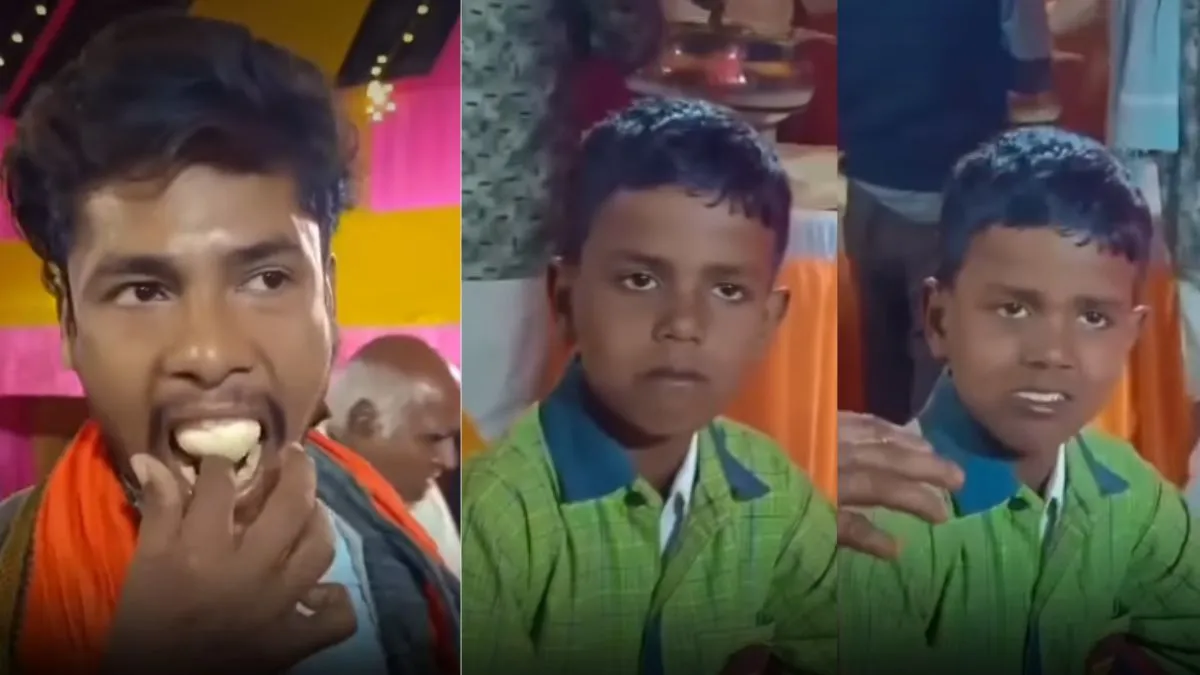
New Delhi, March 28, 2026: A disturbing video filmed during a festive gathering has ignited a wave of indignation across social media platforms, sparking a serious debate on the boundaries of humor. The footage, which has been widely circulated on Instagram and X, depicts a young child sitting at a dining table, eagerly preparing to enjoy a rasgulla from his plate. In a sudden and jarring move, the dessert is snatched away by an adult male standing nearby, who then proceeds to eat it himself while laughing at the camera.
The immediate reaction of the child, characterized by a transition from innocent anticipation to visible distress and tears, has touched a nerve with millions of viewers. This act of “prank-style” content creation is being heavily scrutinized by child psychologists and digital ethicists alike. It is argued that the emotional well-being of a minor was sacrificed for a few seconds of viral engagement, a trade-off that many find morally reprehensible.
The Psychological Impact of Public Humiliation
The psychological consequences of such actions on young children are being highlighted by concerned netizens. It is explained by experts that a child’s sense of security and trust is built through predictable and respectful interactions with adults. When a child is targeted for a “prank” that involves the theft of their food in a public setting, feelings of confusion and humiliation are often triggered.
Furthermore, the passive recording of the child’s crying by the person behind the lens has been described as an added layer of cruelty. Instead of comfort being offered, the distress was treated as entertainment material. This trend of using children as unwitting props for “engagement bait” is being condemned as a form of digital exploitation that prioritizes clicks over basic human empathy.
Also Read: Social Media Backlash: Aamir Ali and His Rumored Partner
Digital Accountability and the Call for Reform
The identity of the individual in the video is being sought by angry users, with many calling for a public apology and a report against the account that hosted the content. It is observed that social media algorithms often reward high-conflict or emotionally charged videos, which inadvertently encourages creators to push the limits of acceptable behavior. This cycle of “cringe content” is being blamed for the normalization of mean-spirited acts labeled as harmless fun.
A broader discussion regarding the ethics of filming children without their consent—and specifically for the purpose of mocking them—is now gaining momentum. It is suggested that platforms should implement stricter moderation policies for content that depicts the intentional distress of minors. The viral video serves as a stark reminder that while a rasgulla can be replaced, the damage to a child’s dignity and the loss of trust in their surroundings are far more difficult to mend.