

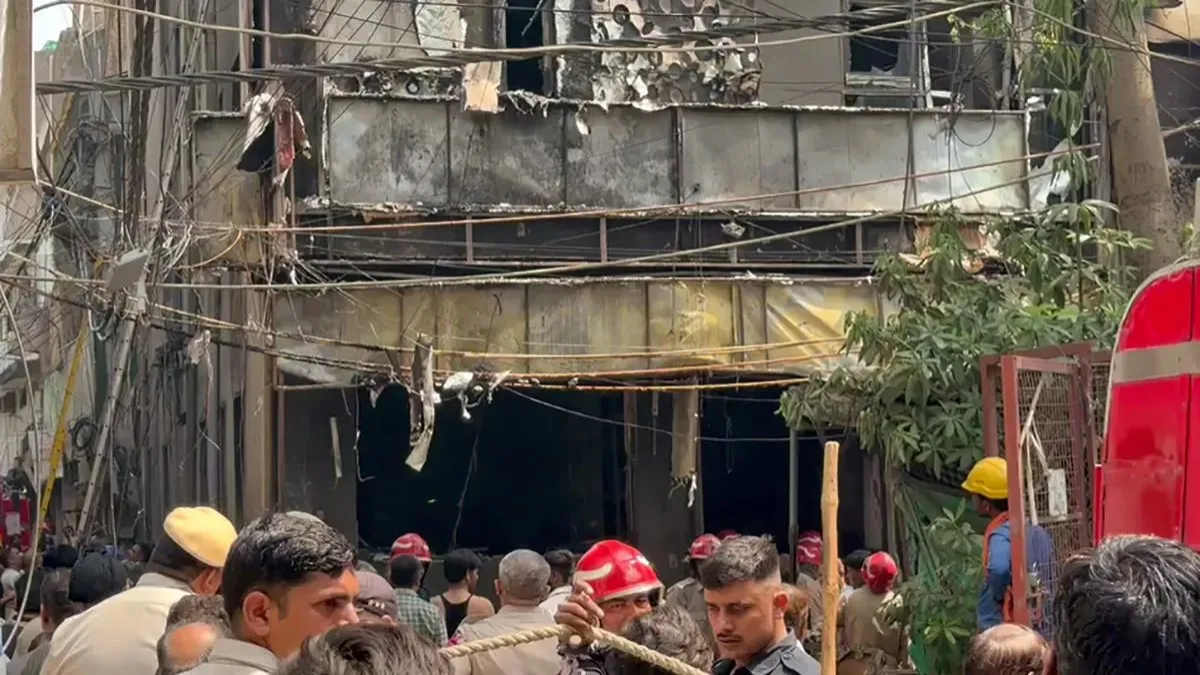
New Delhi, June 4, 2026 — In the congested, winding alleyways of south Delhi’s Hauz Rani area in Malviya Nagar, a typical Wednesday morning exploded into a scene of unmitigated horror. Around 8:30 a.m., a catastrophic fire ripped through Flourish Stay, a six-storey bed-and-breakfast hotel. Within minutes, the structure became a towering furnace, trapping dozens of unsuspecting guests inside. The air was quickly swallowed by thick, toxic black smoke, punctuated by the shattering of glass, explosive blasts, and agonizing wails for help. Amid the suffocating darkness and the grim sight of burning bodies, the true story of the morning emerged from the pavement: ordinary local citizens, shopkeepers, and bystanders instantly transformed into heroic lifesavers, risking their own lives before emergency services could even arrive.
The neighborhood, known for its proximity to major medical centers like Max Hospital, is heavily populated with multi-storey budget lodges catering to outstation patients and international tourists on medical visas. When the fire broke out on the lower floors—allegedly due to an electrical malfunction—it spread with terrifying speed. Inflammable internal paneling and structural shortcuts acted as immediate accelerants, transforming the central stairwell into a chimney of toxic carbon monoxide. Because the establishment operated over 20 rooms despite having approval for only six, and possessed only a single, choked entry-and-exit point with no external fire escape, guests found themselves utterly sealed inside a death trap.
As the flames mounted, the screams of terrified occupants echoed across the neighborhood. Hearing the commotion, local residents abandoned their shops and homes, rushing toward the billowing smoke. Among the first to respond was 61-year-old Riyazuddin, who runs a small roadside shop directly opposite the burning hotel. Recognizing that time was running out and that trapped guests were preparing to take desperate leaps from the upper floors, Riyazuddin ran to his shed and dragged out around 15 thick commercial mattresses, rapidly spreading them across the hard pavement below the windows.
Moments later, the air grew so hot that occupants began throwing themselves from the upper ledges. “Everything was extremely tense,” Riyazuddin recalled. “People were coughing violently, waving shirts from the windows, and then they started jumping. One man who rolled over from the second floor broke his leg, but the mattresses saved his life.” Another resident, 40-year-old Mohammed Israr Khan, rushed to the scene after a frantic phone call from his brother. Finding the building’s interior entirely blinded by smoke, Khan and a group of local youths—including Wasim, Amir, Shahrukh, Afzal, and Anish—formed an ad-hoc rescue squad. Working with their bare hands alongside arriving police officers, they smashed through jammed glass windows, broke down doors, and began carrying unconscious victims out into the fresh air.
The scenes inside the building were deeply traumatizing for the volunteers. “When we entered, you couldn’t see an inch in front of your face,” said Khan, who performed cardiopulmonary resuscitation (CPR) on eight separate victims. “There was only smoke, screaming, and wailing from every floor. Many were trapped in the basement. Some bodies were already severely burnt, but we used our bare hands because every second mattered.” Khan tragically recounted pulling out five individuals who had already succumbed to asphyxiation. In one heartbreaking moment during the rescue, a deceased victim’s mobile phone began ringing. “It was the person’s mother asking about her child,” Khan said, his voice trembling. “I could not bring myself to say anything and just handed the phone to a police officer. I didn’t want to be the bearer of such devastating news.”
The rescue operation was further complicated by the demographic of the hotel’s clientele. The majority of the guests were foreign nationals, particularly from African nations and Turkmenistan, who were already physically frail and visiting Delhi for critical medical treatments. Wasim Raja, another local volunteer, recounted navigating the dark corridors to find two foreign women who had locked themselves inside a bathroom in a desperate bid to escape the heat. Both were unconscious from smoke inhalation. Raja single-handedly bundled them onto a mattress and carried them down the treacherous stairs to safety.
By the time the Delhi Fire Service brought the inferno under control, officials confirmed that the tragedy had claimed at least 21 lives—including 18 foreign nationals—while leaving dozens of others injured, with several remaining in critical condition. The high death toll was attributed primarily to asphyxiation, as the toxic smoke trapped victims in rooms that lacked openable windows or ventilation. The disaster has triggered memories of Delhi’s past high-rise tragedies, such as the 2019 Arpit Palace Hotel fire in Karol Bagh and the 1986 Siddharth Hotel blaze, both of which shared identical structural flaws: locked terrace doors, unauthorized construction, absent fire alarms, and single exit pathways.
In the immediate aftermath of the disaster, the Delhi Police registered a First Information Report (FIR) for culpable homicide not amounting to murder and arrested the building’s owner. Authorities have also announced a month-long, city-wide crackdown to inspect and seal properties violating fire safety norms. Yet, as the embers cooled, a palpable sense of fear and anger lingered in the narrow lanes of Hauz Rani. Strands of loose, dangling electrical wires still criss-cross the alleyways, serving as a grim reminder of the systemic negligence that plagues the city’s commercial hubs. Throughout the afternoon, anxious relatives and worried guests from adjacent lodges were seen checking out in droves, packing their bags to flee similar structural hazards. While government officials promise strict audits and legal accountability, the survivors know that the death toll would have been far more devastating if not for the raw courage of the ordinary citizens who ran toward the screams when the city burned.