

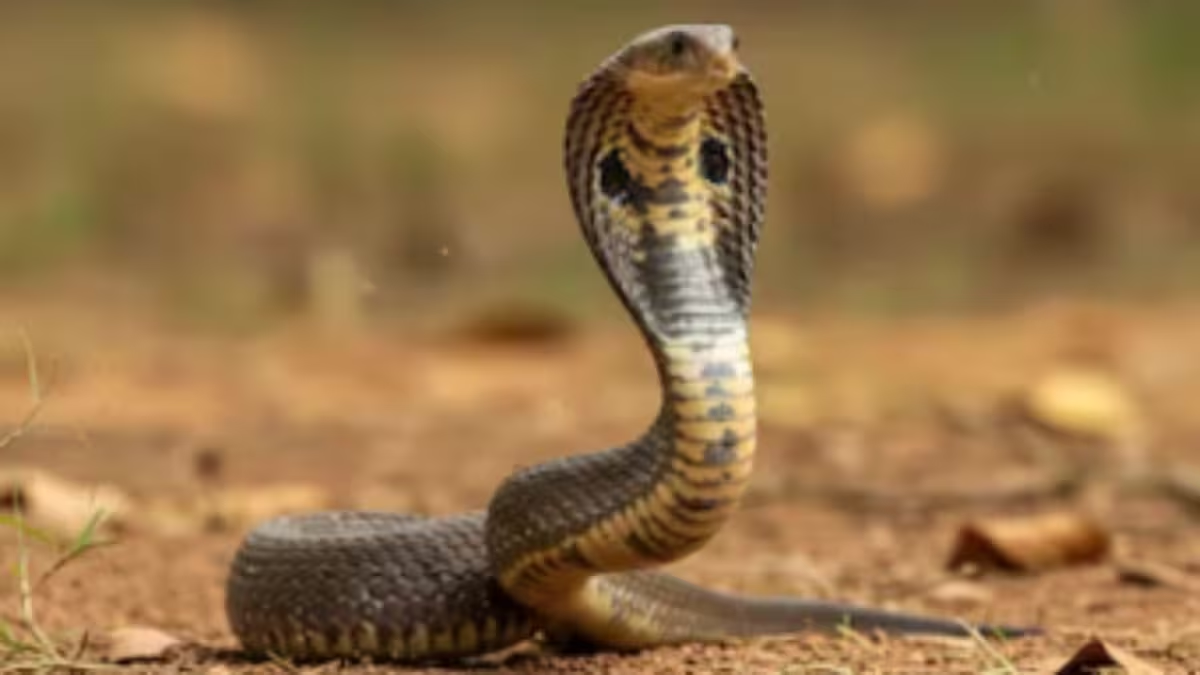
New Delhi, March 30, 2026: For many, the sight of a slithering silhouette in the garden or across a hiking trail triggers an immediate “fight or flight” response. Often, this leads to the unnecessary killing of the animal out of fear. However, snakes play a vital role in our ecosystem by controlling rodent populations and maintaining the balance of nature.
The truth is, the vast majority of snakes encountered by humans are non-venomous and completely harmless if left alone. Learning a few key visual cues can help you replace panic with informed caution.
Understanding the Key Differences
While there is no single “golden rule” that applies to every species worldwide, several anatomical features can help you distinguish a potentially dangerous snake from a harmless neighbor.
1. The Shape of the Head
One of the most common indicators is the head shape.
- Venomous: Many venomous snakes (like rattlesnakes, copperheads, and adders) have a triangular or spade-shaped head. This is often due to the large venom glands located at the rear of the jaw.
- Non-Venomous: Most harmless snakes have a rounded, slender head that flows smoothly into the neck.
- Note: Be careful—some non-venomous snakes, like hognose snakes, can flatten their heads to look triangular when they feel threatened!
2. Pupil Shape
If you are close enough to safely see the eyes (though we recommend using binoculars or a zoom lens), the pupils offer a major clue.
- Venomous: In North America and many parts of the world, venomous snakes often have elliptical, cat-like pupils (vertical slits).
- Non-Venomous: Most non-venomous species have round pupils, similar to human eyes.
- Note: This rule has exceptions; the highly venomous Coral Snake, for example, has round pupils.
3. The “Pit” Sensors
Members of the pit viper family (rattlesnakes, water moccasins, and copperheads) possess specialized heat-sensing organs.
- Venomous: Look for a small hole (pit) located between the nostril and the eye on each side of the head. These allow the snake to “see” the heat signatures of warm-blooded prey.
- Non-Venomous: These snakes lack these specific heat-sensing pits.
4. Tail Features and Rattles
- Rattlesnakes: These are the easiest to identify by the bony rattle at the end of their tail. If you hear a dry, buzzing sound, back away immediately.
- Scale Patterns: On the underside of the tail, venomous snakes usually have a single row of scales after the anal plate. Non-venomous snakes typically have a double row (divided scales).
Debunking the “Color Rule”
You may have heard the rhyme: “Red touch yellow, kill a fellow; red touch black, friend of Jack.” While this applies to the Coral Snake and its mimics (like the Scarlet King Snake) in the United States, it is not a universal rule. In South America and other regions, the color patterns can vary wildly.
The safest rule is: If you don’t know exactly what it is, treat it with respect and keep your distance.
What to Do During an Encounter
If you find a snake in your yard or on a trail, follow these steps to ensure everyone stays safe:
- Freeze and Back Away: Snakes do not view humans as food; they view us as large, scary predators. Most bites occur when a person tries to move, touch, or kill the snake.
- Give it Space: A snake can strike across a distance of about half its body length. Stay at least six feet away.
- Don’t Be a Hero: Attempting to kill a snake with a shovel or stick significantly increases your risk of being bitten, as the snake will fight for its life.
- Use Natural Deterrents: To keep snakes away from your home, keep your grass short and remove piles of wood or debris where rodents (and their predators) like to hide.
Why Snakes Matter
Snakes are “nature’s pest control.” A single black racer or garter snake can keep your property free of slugs, large insects, and mice. By coexisting peacefully, we protect the biodiversity that keeps our environment healthy.