
 faced a second consecutive mission)
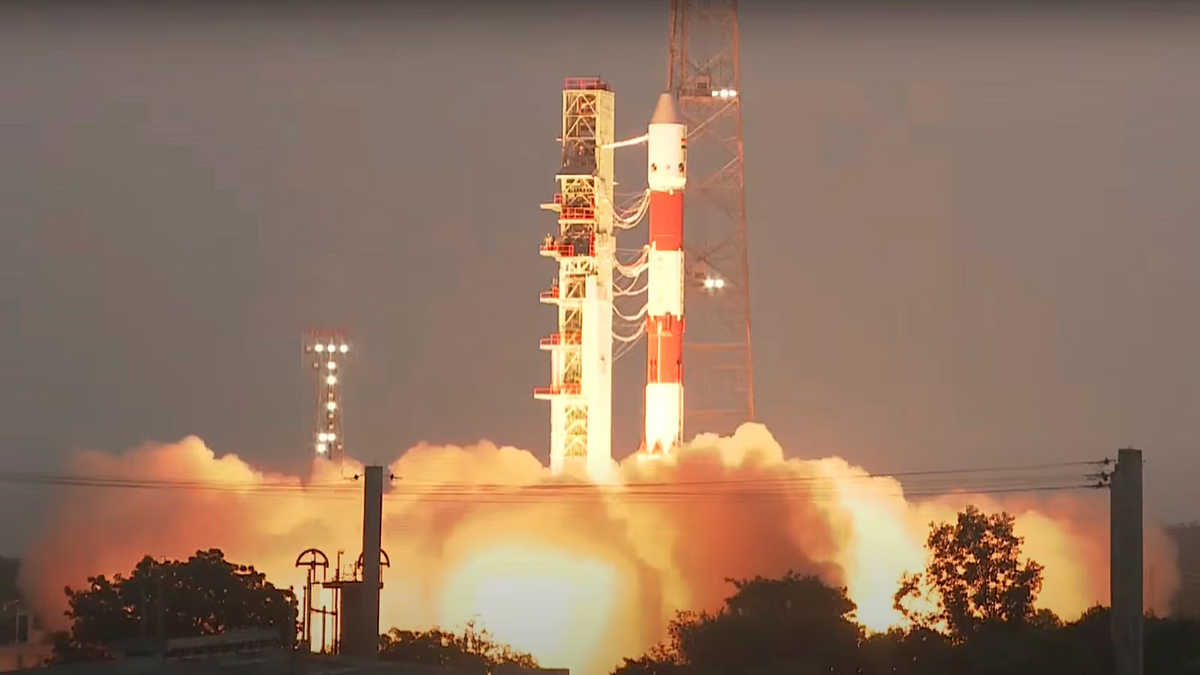
New Delhi, january 12, 2026: In a major setback for India’s space program, the Indian Space Research Organisation (ISRO) faced a second consecutive mission failure for its “workhorse” rocket, the Polar Satellite Launch Vehicle (PSLV). The PSLV-C62 mission, which launched this morning from the Satish Dhawan Space Centre, encountered a critical technical anomaly that resulted in the loss of all 16 satellites on board.
What Went Wrong?
The rocket lifted off at 10:17 AM IST with precision, performing flawlessly through its first and second stages. However, the atmosphere in mission control shifted from cheers to heavy silence during the operation of the third stage (PS3).
Preliminary data suggests that the third-stage solid motor suffered an unexpected drop in chamber pressure—the same mechanical glitch that plagued the PSLV-C61 mission in May 2025. This loss of pressure caused the vehicle to lose the “kick” required to reach orbital velocity, leading to a significant path deviation.
ISRO Chairman Dr. V. Narayanan confirmed the anomaly shortly after:
The Cargo: Strategic and Commercial Losses
The failure is particularly stinging due to the high-value payloads lost in the atmosphere:
- Anvesha (EOS-N1): The primary payload was a strategic “spy satellite” for the DRDO. Equipped with hyperspectral sensors, it was designed to unmask military camouflage and enhance border surveillance.
- AayulSAT: India’s first attempt at an “orbital petrol pump” aimed at refueling satellites in space.
- 14 Co-passengers: A mix of student-built satellites, private experiments from Indian startups, and a Spanish re-entry demonstrator.
A Pattern of Concern
This marks the first time in over three decades that the PSLV—renowned for its 94% success rate—has faced back-to-back failures. With both the 2025 and 2026 setbacks linked to the third stage, experts are raising questions about the reliability of the solid-fuel motor components or potential quality control issues during manufacturing.
| Mission | Date | Primary Cause | Payload Status |
| PSLV-C61 | May 18, 2025 | 3rd-stage pressure drop | Lost (EOS-09) |
| PSLV-C62 | Jan 12, 2026 | 3rd-stage path deviation | Lost (16 Satellites) |
The Path Ahead
The “workhorse” is now effectively grounded as a Failure Analysis Committee (FAC) begins its investigation. This double blow comes at a delicate time as India seeks to expand its commercial footprint through NewSpace India Limited (NSIL). Maintaining the trust of global customers will be the agency’s top priority.
While ISRO is famous for its resilience, the 2026 space calendar now faces a cloud of uncertainty. The agency must now race to fix this “ghost in the machine” before high-stakes missions like the NavIC expansion and Gaganyaan preparations can proceed.