
—famously known as the)
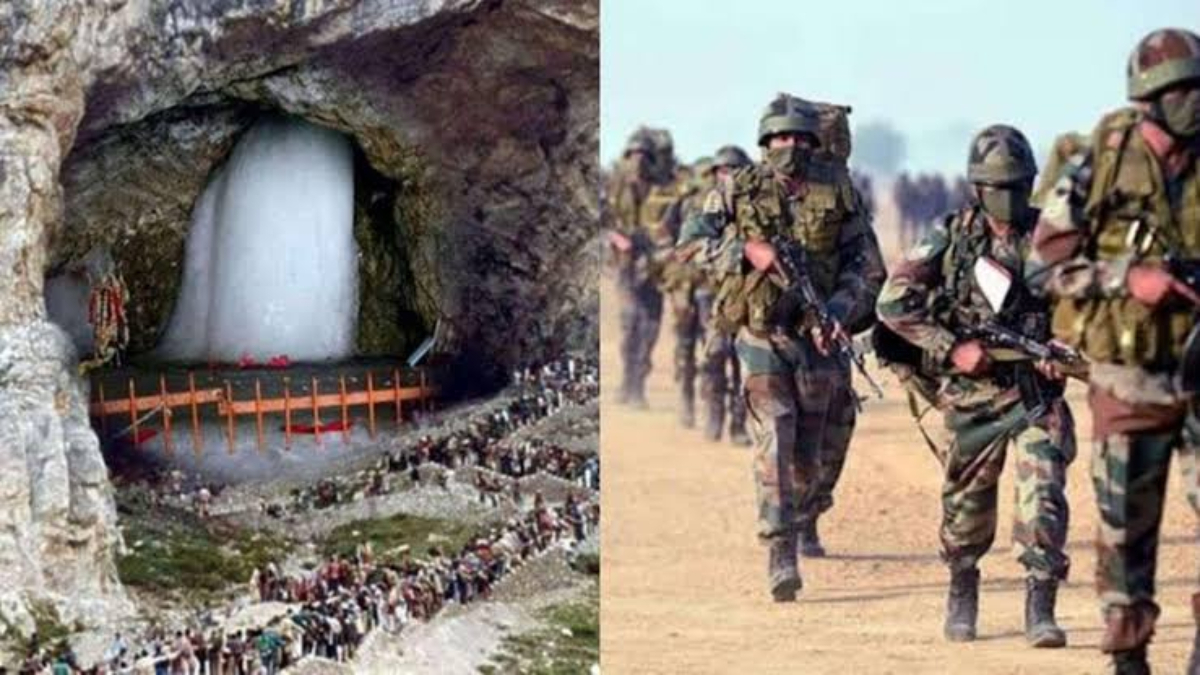
New Delhi, June 19, 2026 — In an unprecedented shift in India’s internal security strategy, the highly secretive Special Frontier Force (SFF)—famously known as the “Vikas Battalion” or Establishment 22—has been deployed to secure the high-altitude routes of the annual Amarnath Yatra.
This marks the first time in history that this specialized mountain-guerrilla force, which answers directly to the Prime Minister’s Office via the Directorate General of Security in the Cabinet Secretariat, has been pulled from its traditional border-guarding mandates to oversee a domestic pilgrimage grid.
A Shift in High-Altitude Security Strategy
The 57-day Amarnath Yatra, scheduled from July 3 to August 28, 2026, requires navigating treacherous terrain up to an altitude of 3,880 meters (nearly 13,000 feet) to reach the holy cave shrine. Historically, the multi-layered security grid has relied upon a combination of the Indian Army, Jammu and Kashmir Police, and Central Armed Police Forces (CAPFs) like the CRPF and ITBP.
However, escalating security concerns following an attack near Pahalgam, combined with constant intelligence warnings about infiltration attempts in the rugged mountainous heights overlooking the Baltal and Pahalgam-Chandanwari tracks, prompted a significant revision by the Union Ministry of Home Affairs.
While a record 670 companies of CAPF forces form the shield on the highways and transit camps, the SFF has been quietly positioned at the absolute peaks—the tactical high-ground overlooking the pilgrimage routes.
Why the SFF? Area Domination on the Ridges
Security experts point out that the deployment of the SFF is less about crowd control and entirely about ridge-line domination. The traditional 48-km Pahalgam track and the steeper 14-km Baltal route are flanked by jagged, un-monitored peaks that could offer tactical vantage points to hostile actors.
The SFF commandos, uniquely adapted to sub-zero temperatures and high-altitude warfare, have taken up positions along these crucial heights. Their primary responsibilities include:
- High-Altitude Reconnaissance: Continuous scouting of glacial ridges and caves flanking the paths.
- Counter-Infiltration: Denying access to upper mountain passes that bypass traditional military checkpoints.
- Rapid-Response Capabilities: Acting as an elite, air-transportable strike unit ready to intercept any asymmetric threat within minutes.
Complementing this covert footprint is the Indian Army’s broader “Operation Shiva,” a comprehensive security initiative implementing an airtight three-tier security setup.
A Tech-Driven, Multi-Layered Fortress
The deployment of elite commandos is matched by an extensive technological grid. The entire yatra axis from the gateway at Lakhanpur up to the holy cave has been converted into a highly monitored zone.
Alongside security forces, 45 Special Mountain Rescue Teams—comprising trained personnel from the J&K Police, SDRF, and NDRF—have been stationed at 21 vulnerable choke points (such as Pissu Top and Panchtarni) to handle medical emergencies or sudden weather anomalies.
Balancing Faith and Vigilance
The Amarnath Yatra holds profound spiritual significance for hundreds of thousands of devotees who travel to see the naturally occurring ice Shivling. Beyond its religious weight, the pilgrimage is a lifeline for the local economy, providing crucial seasonal employment for thousands of transporters, ponywalas, and local traders.
By pulling out all stops—and utilizing the legendary, alpine-hardened Special Frontier Force—the security establishment is sending a clear, uncompromising signal: the safety of the pilgrimage remains a paramount national security objective. As high-level Union Home Ministry delegations conclude their final field inspections, Kashmir prepares to host one of the most heavily fortified, yet technologically seamless pilgrimages in its modern history.
To see a detailed breakdown of the elite units and specialized commandos being stationed along the mountain passes this year, you can check out this Amarnath Yatra Elite Forces Overview. This report details how units like the SFF, PARA SF, and MARCOS are coordinating to secure the challenging terrain of the pilgrimage.