

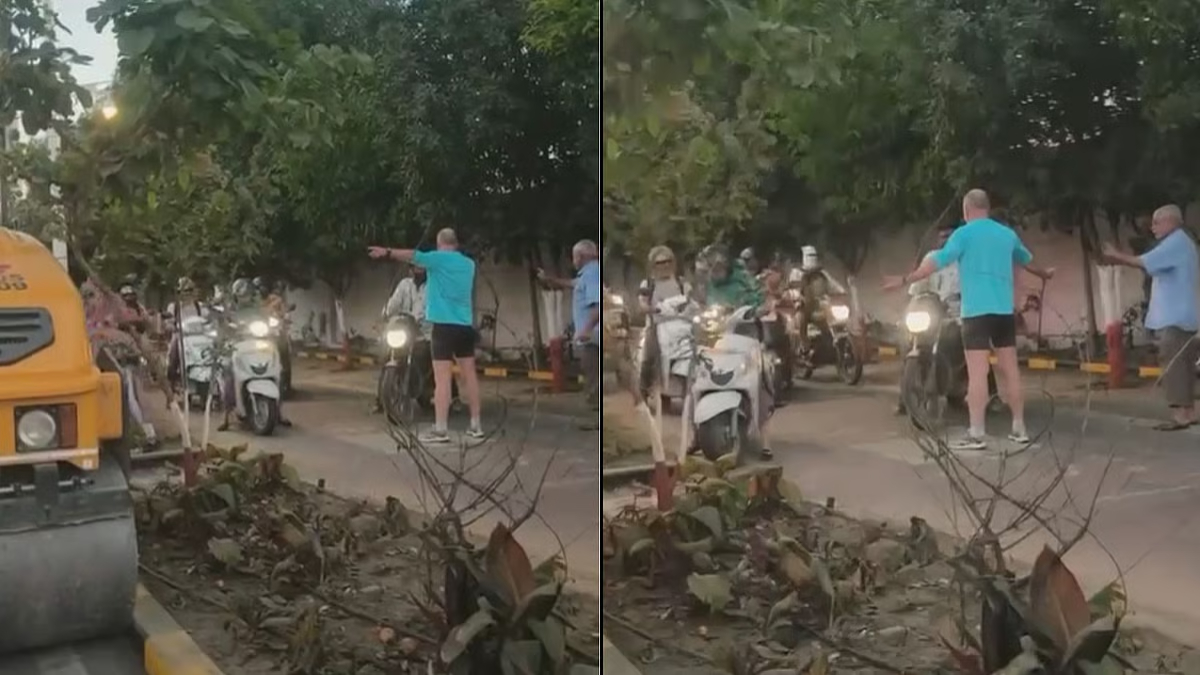
December 22, 2025: A viral video capturing two foreign tourists intercepting rule-breaking motorcyclists on a Pune footpath has ignited a massive conversation about civic responsibility and the state of traffic management in India’s IT hub.
The incident, which took place late last week at the perennially congested Rakshak Chowk in Pimple Nilakh, shows the visitors taking a firm stand against a common but dangerous local practice: riding two-wheelers on pedestrian walkways to bypass traffic snarls.
Standing Their Ground
In the footage, which has since garnered millions of views across platforms like X and Instagram, a foreign national is seen physically blocking the path of oncoming motorcycles on the footpath. Rather than stepping aside, he calmly but firmly gestures for the riders to return to the main road.
“This path is for walking, not for riding,” one of the tourists is heard saying in the video. While some bikers appeared embarrassed and immediately retreated, others were seen attempting to squeeze past the duo, highlighting the very lack of discipline the tourists were attempting to address.
A Mirror to Civic Sense
The video has triggered a wave of “collective embarrassment” among Punekars and netizens nationwide. Social media users have been quick to point out the irony of outsiders having to enforce basic Indian traffic laws.
- Public Outrage: Many residents expressed shame, with one viral comment stating, “It is deeply embarrassing that we need guests in our country to teach us the basic purpose of a footpath.”
- Safety Concerns: Pedestrians and activists highlighted that the “footpath-riding” culture poses a severe risk to senior citizens, children, and the disabled.
- Demand for Reform: A significant section of the online debate has shifted toward the education system, with calls to prioritize “Civics and Civility” over rote learning in schools.
The Role of Authorities
The incident has also put the Pimpri-Chinchwad Traffic Police under the spotlight. Despite the presence of CCTV cameras and the proximity of the Sangvi traffic division, the fact that tourists felt compelled to intervene suggests a gap in active enforcement.
Local residents claim that Rakshak Chowk is a “bottleneck” where such violations are a daily occurrence. While the police have recently stepped up “nakabandi” (checkpoints) in other parts of the city, citizens are now demanding more consistent patrolling and higher fines for footpath encroachments.
What’s Next?
As the video continues to trend, it serves as a wake-up call for urban planners and commuters alike. Whether this “viral shaming” will lead to a long-term shift in Pune’s traffic culture remains to be seen.