

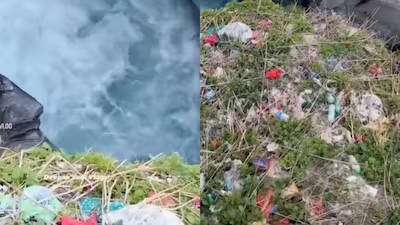
New Delhi, April 29, 2026: A deeply concerning video from Mana, the last Indian village near the Badrinath Dham, has captured the attention of environmentalists and the digital world today, April 29, 2026. The footage, which has been widely shared across social media platforms, depicts vast piles of plastic waste and garbage strewn across the pristine Himalayan landscape. The “truth” behind the viral stir reveals a stark warning from the locals: if the current pace of environmental degradation continues, the beauty of Earth will be lost, leaving “only Mars” as a clean frontier.
The interaction was observed during the peak of the ongoing Char Dham Yatra, where thousands of pilgrims and tourists have gathered in the high-altitude region. In the viral clips, which have amassed millions of views, plastic bottles, food wrappers, and non-biodegradable waste are seen clogging the natural streams and covering the meadows that surround the sacred shrine. It is reported by travelers that the waste management infrastructure of the village has been completely overwhelmed by the unprecedented influx of visitors this season.
The Perils of Overtourism: A Fragile Ecosystem Under Siege
The reaction from the digital community has been one of collective shame and a call for stricter travel regulations. It is argued by environmental experts that the “mechanical necessity” of maintaining ecological balance is being ignored for the sake of mass tourism. On various sustainability forums, the footage has been utilized to advocate for a daily cap on the number of tourists allowed to enter the sensitive zones of the Himalayas. The video serves as a powerful visual testament to the “heavy price” paid by nature when religious and leisure travel is conducted without environmental responsibility.
The impact of the video has prompted a swift response from the Uttarakhand state government and the local panchayat of Mana village. It is noted by commentators that while several “Swachh Bharat” (Clean India) drives have been initiated in the past, the lack of individual accountability among tourists remains a primary hurdle. The passive role of the administration—which has struggled to implement a “zero-waste” policy in such difficult terrain—is being scrutinized as the viral video brings global attention to the crisis.
A Call for Action: Preserving the Last Village for the Future
Following the viral success of the “Garbage in Mana” clip, a massive cleanup operation has reportedly been ordered by the district authorities. It is reported that additional sanitation workers and waste disposal vehicles are being deployed to clear the backlog of trash before the monsoon season begins. However, it is maintained by local activists that temporary cleanups are merely a “band-aid solution” for a systemic problem that requires long-term behavioral changes and stricter penalties for littering in sacred spaces.
As of the afternoon of April 29, 2026, the story remains a top trending topic in the “Environment” and “National News” categories. While the Badrinath Yatra continues to draw faithful devotees from across the globe, the digital record of the garbage piles stands as a permanent reminder of our collective duty toward nature. For now, the story stands as a digital plea: let us not wait until “only Mars is left” to appreciate and protect the paradise we already inhabit on Earth.