

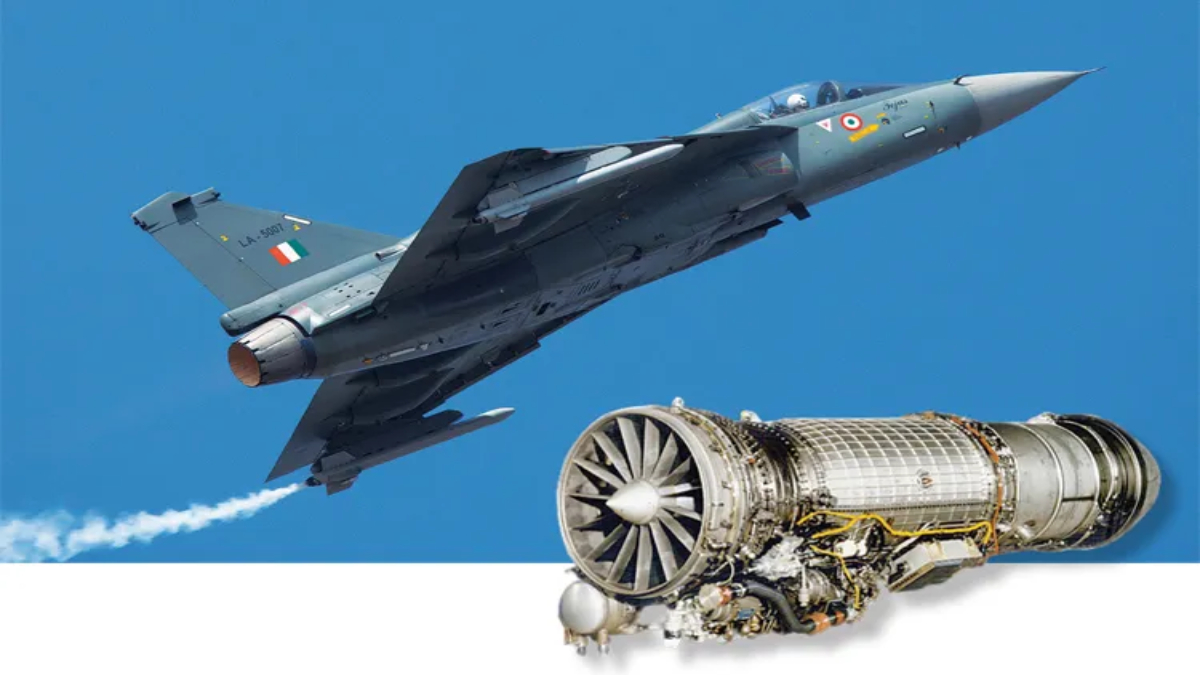
New Delhi, April 3, 2026: The delivery of India’s indigenous Tejas Mk1A fighter jets has hit another major roadblock, as American aerospace giant General Electric (GE) has reportedly delivered only six F404-IN20 engines against a much higher target. This persistent shortfall has forced Hindustan Aeronautics Limited (HAL) to invoke penalty clauses and scramble its production timelines, leaving the Indian Air Force (IAF) waiting for its much-needed reinforcements.
The Growing Backlog: Engines vs. Airframes
The current situation at HAL’s manufacturing facilities in Bengaluru and Nashik highlights a stark contrast between domestic airframe readiness and foreign engine dependency.
- Production Readiness: HAL has successfully completed nearly 20 airframes, with five aircraft already integrated with engines and ready for final handover.
- The Bottleneck: While the airframes are ready, they remain grounded. Against a target to receive roughly 12 to 15 engines by the end of the previous fiscal year, GE has only handed over six units.
- The “Sixth” Engine Mystery: As of early April 2026, the sixth engine has been “handed over” in the United States, but reports indicate it has yet to physically arrive at HAL’s facility due to global shipping delays and ongoing geopolitical tensions in West Asia.
Current Progress at a Glance
| Status | Count (Approx.) |
| Aircraft with Engines | 5-6 (Pending IAF acceptance) |
| Structurally Complete (No Engines) | 9-10 |
| Airframes in Assembly | 15-19 |
| Total Engines Delivered | 6 (of 99 ordered in 2021) |
Why the Delay? GE’s Supply Chain Struggles
General Electric has attributed the sluggish delivery pace to a “perfect storm” of global industrial disruptions. The primary reasons cited include:
- Material Scarcity: A shortage of high-temperature alloys and precision forgings required for the F404-IN20’s high-thrust performance.
- Labor & Logistics: Residual post-pandemic labor shortages in Europe and the U.S., combined with shipping bottlenecks exacerbated by the conflict in West Asia.
- Geopolitical Impact: Tensions affecting trade routes have increased the lead time for sensitive military hardware to reach the Indian subcontinent.
HAL Strikes Back: Penalties and Pressure
Frustrated by the repeated delays, HAL has officially invoked the Liquidated Damages (LD) clause within its contract with GE. This allows the state-run firm to impose financial penalties for every week of delay beyond the agreed-upon grace period.
However, money isn’t the primary concern—time is. HAL Chairman DK Sunil recently shared a more optimistic (though “pessimistic” by his own admission) outlook:
- GE has promised to deliver 20 engines between June and December 2026.
- Ramp-up plans aim for 30 engines annually starting from the 2027-28 financial year to clear the massive backlog.
Impact on IAF Combat Readiness
The IAF is currently operating with roughly 31 fighter squadrons, far below its sanctioned strength of 42. The Tejas Mk1A was intended to bridge this gap by replacing aging fleets like the MiG-21 and Jaguar.
“The delay is not just a logistical hurdle; it is a strategic concern. Every month the Mk1A is delayed, the IAF is forced to stretch the service life of its legacy platforms, impacting operational readiness along the borders.” — Defence Analyst Observation
Looking Ahead: The Road to 180 Jets
Despite the engine crisis, the Indian government remains committed to the Tejas program. Beyond the initial 83 aircraft ordered in 2021, a follow-on contract for 97 more jets was signed, bringing the total Mk1A requirement to 180 units.
To prevent future bottlenecks, there is renewed focus on the GE-F414 deal (for the Tejas Mk2), which includes a significant 80% technology transfer and local manufacturing. For the Mk1A, however, the IAF and HAL remain at the mercy of GE’s ability to fix its supply chain—one engine at a time.