

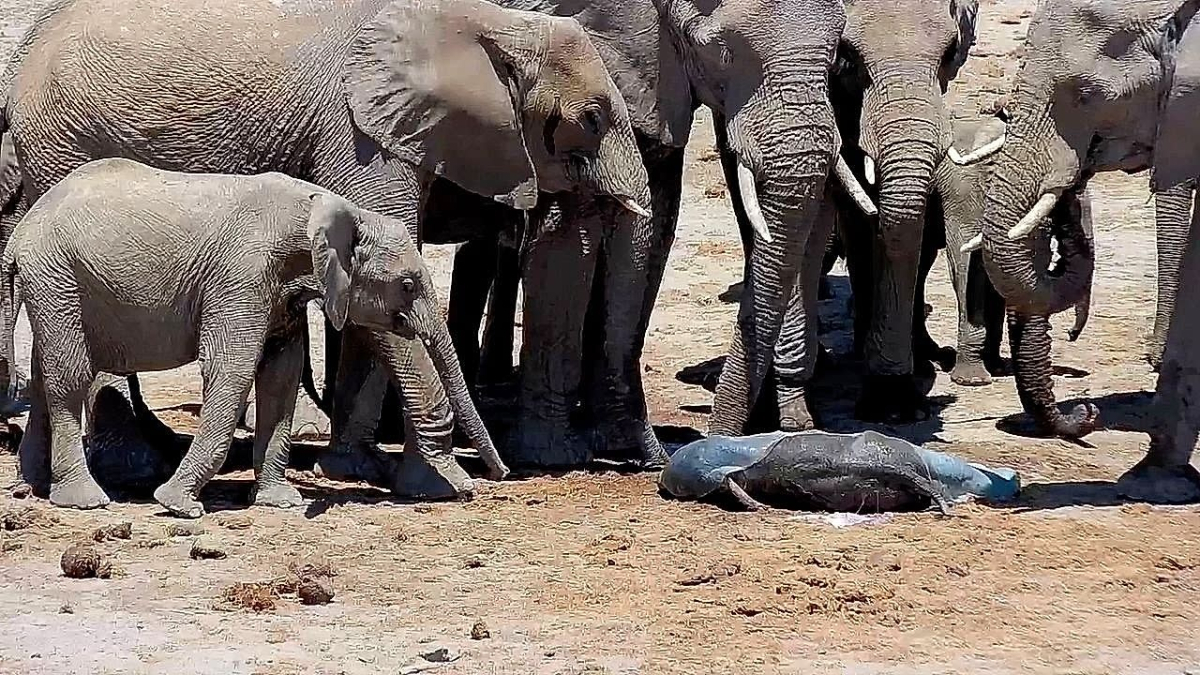
New Delhi, April 17, 2026 — In a world where the first few minutes of life are often the most dangerous, the birth of an African elephant remains one of nature’s most awe-inspiring displays of collective defense. New footage captured this week by researchers and safari-goers has provided a rare, high-definition look at the “fortress of gray”—the immediate and instinctive formation of an elephant herd to protect a newborn calf as it takes its first, wobbly steps.
The event, which occurred near a watering hole in the early dawn hours, serves as a poignant reminder of why elephants are considered some of the most socially intelligent creatures on the planet.
A Shield of Giants
The birth began unexpectedly near a clearing, but the herd was far from caught off guard. As the mother, a seasoned matriarchal figure, went into the final stages of labor, the surrounding females—sisters, aunts, and cousins—instinctively closed ranks.
This behavior, known to biologists as “the defensive ring,“ is a tactical maneuver designed to shield the vulnerable mother and the incoming calf from the eyes of predators like lions and hyenas. Within seconds of the calf’s arrival, the herd didn’t just stand by; they moved in a synchronized dance of protection.
“It’s a sight that never gets old,” says Dr. Elena Vance, a field biologist who witnessed the event. “The moment that calf touches the ground, the air changes. The herd begins a series of low-frequency rumbles—sounds so deep they are felt in the chest more than heard by the ear—announcing the arrival and signaling a state of high alert.”
The Struggle for Balance
For a newborn elephant, the first challenge is gravity. Weighing nearly 200 pounds (90 kg) at birth, the calf entered the world as a tangled heap of oversized ears and a trunk it didn’t yet know how to use.
The “news” of the morning was the calf’s struggle to stand. In the footage, the newborn is seen flailing its legs, attempting to gain purchase on the dusty earth. Every time the calf stumbled, an “auntie”—a younger female elephant serving as an allomother—used her trunk to gently nudge the baby’s backside, providing just enough leverage to help it rise.
Other members of the herd used their massive legs to create a physical barrier, effectively acting as living walls to block the wind and any potential threats. They nudged the calf toward its mother’s underside, guiding it toward the essential first meal of colostrum-rich milk.
The Role of the “Allomother”
One of the most fascinating aspects of elephant society highlighted by this recent event is the role of the “allomother.” These are non-mother females who assist in the care of the young. In this specific herd, two adolescent females were observed being particularly attentive.
Experts explain that this isn’t just altruism; it’s an education. By helping the newborn stand and shielding it from the sun, these younger females learn the vital skills they will need when they eventually have calves of their own. It is a generational transfer of knowledge that ensures the survival of the species.
“In an elephant herd, no mother raises a child alone,” Dr. Vance noted. “The survival of that calf is a win for the entire collective. If the calf falls, the herd waits. If the calf is slow, the herd slows down. It is the ultimate expression of ‘no one left behind.'”
Why the First Steps Matter
The first 48 hours are critical for a newborn elephant. Their legs are weak, their vision is blurry, and they are essentially “trunk-clumsy.” Because elephants are migratory, the calf must be able to walk within hours to keep up with the herd as they move toward food and water sources.
Key Facts About Newborn Calves:
- Weight: Between 165 and 250 lbs at birth.
- Gestation: Nearly 22 months—the longest of any land mammal.
- Trunk Control: It takes about 6 to 8 months for a calf to gain full control over its 40,000 trunk muscles.
- Nursing: Calves drink about 10 liters of milk a day.
A Modern Threat to an Ancient Ritual
While the herd can protect a calf from a lion, they are increasingly powerless against human-driven threats. Habitat fragmentation and climate-induced droughts are making these “first steps” harder. In some regions, newborns are struggling to find enough water in their first week of life, forcing herds to travel longer distances than a calf’s legs can handle.
Conservationists are using this latest viral moment to advocate for “wildlife corridors”—protected strips of land that allow herds like this one to move safely between protected areas without encountering fences, roads, or human settlements.
The Celebration
As the sun rose higher over the savanna, the calf finally found its footing. The video concludes with a triumphant scene: the matriarch leading the way, the mother following closely, and the newborn tucked safely beneath the bellies of the surrounding adults.
The herd erupted in what can only be described as a celebration—a cacophony of trumpeting and ear-flapping that echoed across the plains. It was a signal that the most dangerous part of the day was over. The calf was standing, the herd was moving, and the cycle of life in the wild continued, guarded by a thousand pounds of muscle and an immeasurable amount of love.
How You Can Help
The protection of these majestic creatures depends on global awareness. You can support elephant conservation by:
- Supporting “Room to Roam” initiatives: These projects help reconnect fragmented habitats.
- Choosing Ethical Tourism: Visit sanctuaries and parks that prioritize animal welfare over “up-close” interactions.
- Spreading Awareness: Share the stories of herd intelligence to remind the world that these are sentient, deeply emotional beings.
The first steps of a single calf may seem small, but within a herd, they are the heartbeat of the savanna’s future.