

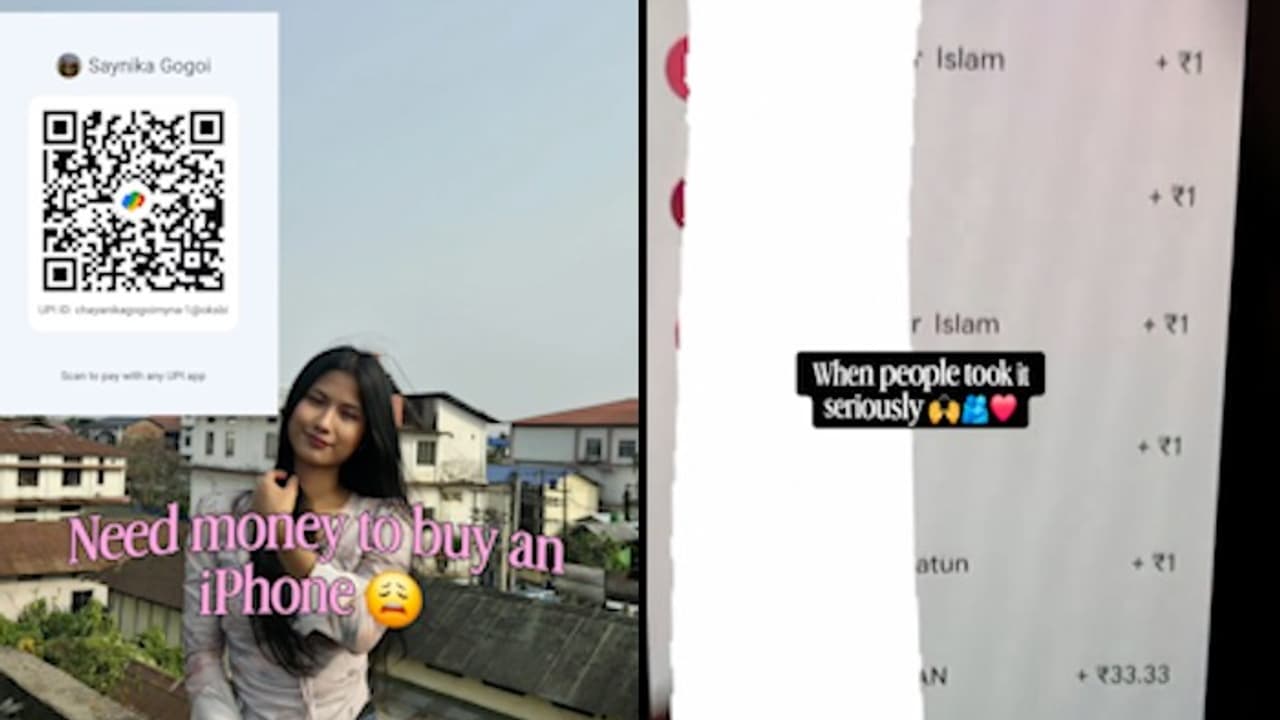
New Delhi, April 1, 2026: A peculiar social media trend has reached a new peak after a young woman’s Instagram Reel—in which she explicitly asks for money to buy a luxury iPhone—went viral across India on March 31, 2026. The footage depicts the user, identified as Urvashi Gogoi, presenting a UPI QR code directly on the screen with a bold caption: “Need money to buy an iPhone.” The “truth” behind the stunt has left the internet divided, as the video was observed by millions who questioned whether the digital space is being transformed into a platform for modern-day begging.
The interaction was observed to have triggered an immediate flood of micro-transactions, but not in the way one might expect. In a follow-up video, the creator revealed her transaction history, which was filled with hundreds of notifications for exactly ₹1. It is reported that instead of helping her reach the ₹1.5 lakh target for the latest model, netizens chose to “troll-fund” her aspirations, essentially paying a single rupee to express their sarcasm or to join in on the viral joke.
The Ethics of Influence: A Growing Trend of Crowdfunded Luxury
The reaction from the digital community has been a mixture of amusement and stern criticism, with the term “digital begging” trending alongside the video. It is argued by many social media commentators that using a QR code for frivolous luxury items diminishes the value of genuine crowdfunding used for medical emergencies or social causes. This incident follows a similar viral case from late 2025 involving a “Beauty Queen” from Lakhimpur, Mahi Singh, who was observed asking for donations to buy an iPhone 17 Pro Max after her father refused to upgrade her three-month-old iPhone 16.
The impact of these videos has prompted a wider discussion about the “entitlement culture” prevalent among modern content creators. It is noted by digital ethics experts that the passive consumption of such content encourages a “get rich quick” mentality among younger audiences. On platforms like X and Instagram, the footage of Urvashi has been cited as a perfect example of how the line between creative marketing and blatant solicitation has become increasingly blurred in the pursuit of viral fame.
Also Read: Handcuffed Woman Escaping Through Michigan Police Cruiser Window
The “One Rupee” Satire: How the Internet Fights Back
Following the viral spread of the QR code, the creator maintained that her post was intended as a “fun experiment” to see the internet’s reaction. It is reported that the massive influx of ₹1 payments served as a collective digital response to her request, showing that while people are willing to engage, they are not necessarily willing to fund a stranger’s expensive lifestyle. The passive role of the viewers—who participated just enough to make the video trend—has highlighted the ironic humor that often defines Indian internet culture.
As of the morning of April 1, 2026, the “iPhone QR Code” video remains a top trending topic in the lifestyle and tech categories. While the creator may not have secured her dream phone through the stunt, she has successfully captured the attention of the nation. For now, the story stands as a digital reminder: in the world of social media, you can ask for anything you want, but the internet always reserves the right to pay you back in a currency of pure sarcasm.