

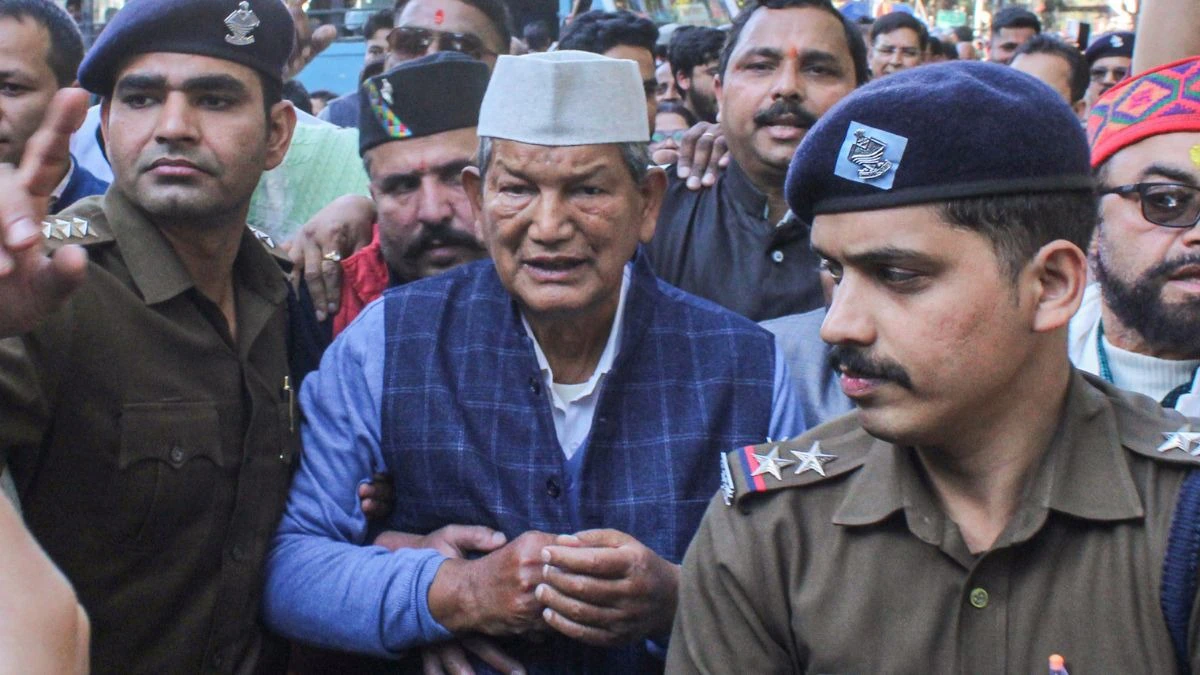
New Delhi, December 30, 2025: The political landscape of Uttarakhand has been transformed into a digital battlefield following the viral spread of a sophisticated AI-generated video. On December 18, 2025, a clip featuring an AI avatar and the cloned voice of former Chief Minister Harish Rawat surfaced on social media handles reportedly linked to the BJP’s state unit. In the fabricated footage, Rawat was heard allegedly portraying himself as a “spy” and using phrases like “Muslim sharnam gachhami,” suggesting a policy of religious appeasement. The video has been described by Congress leaders as a “malicious deepfake” designed to incite communal tension ahead of upcoming local polls.
A March to the BJP Headquarters
The fallout from the video reached a boiling point on December 25, 2025, when Harish Rawat led a massive protest march toward the BJP state headquarters in Dehradun. The veteran leader was observed being stopped by heavy police barricading, leading to a tense scuffle between Congress workers and security forces. Unable to reach the office, Rawat was seen sitting on a dharna (sit-in protest) on the road, holding placards and demanding a public apology. He was heard stating, “Either prove I am a traitor or apologize for using technology to poison the minds of the voters.”
Also Read: Terror on the Cot: Bandhavgarh Tiger Attacks Local
Judicial Action and the Gag Order Debate
A formal First Information Report (FIR) was registered at the Nehru Colony Police Station against unknown social media users under the Bharatiya Nyaya Sanhita (BNS) and the IT Act. Rawat has alleged that the video was a coordinated “character assassination” orchestrated by the ruling party’s IT cell. In response, the BJP has distanced itself from the creation of the clip. BJP state media in-charge Manveer Singh Chauhan was heard dismissing the protest as a “political stunt,” arguing that the party had no connection to the video and that Rawat was merely attacking the BJP to deflect from his own history of “appeasement politics.”
Weaponizing Identity in the AI Era
The “spy video” controversy has highlighted a dangerous trend in the 2025 political cycle: the use of generative AI to amplify old sectarian narratives. It was noted by political analysts that the themes used in the deepfake—such as claims about “Friday Namaz leaves” and “Muslim universities”—mirror the actual attack lines used by the BJP during the 2017 and 2022 assembly elections. By utilizing an AI avatar, these claims have been given a new, more visceral life, making it increasingly difficult for the public to distinguish between authentic speeches and manufactured misinformation.
A Precedent for 2026 Elections
As the year 2025 concludes, this incident has set a grim precedent for the 2026 election cycle in India. The Uttarakhand face-off has proven that “deepfake politics” can trigger real-world unrest and legal chaos within hours of a post going viral. While both parties have reportedly agreed to remove “objectionable content” from their platforms, the trust gap between the Congress and BJP has reached an all-time low. The digital “arms race” in Dehradun serves as a warning that without stricter AI regulations, the battle for the voter’s heart will increasingly be fought with phantom voices and virtual lies.