

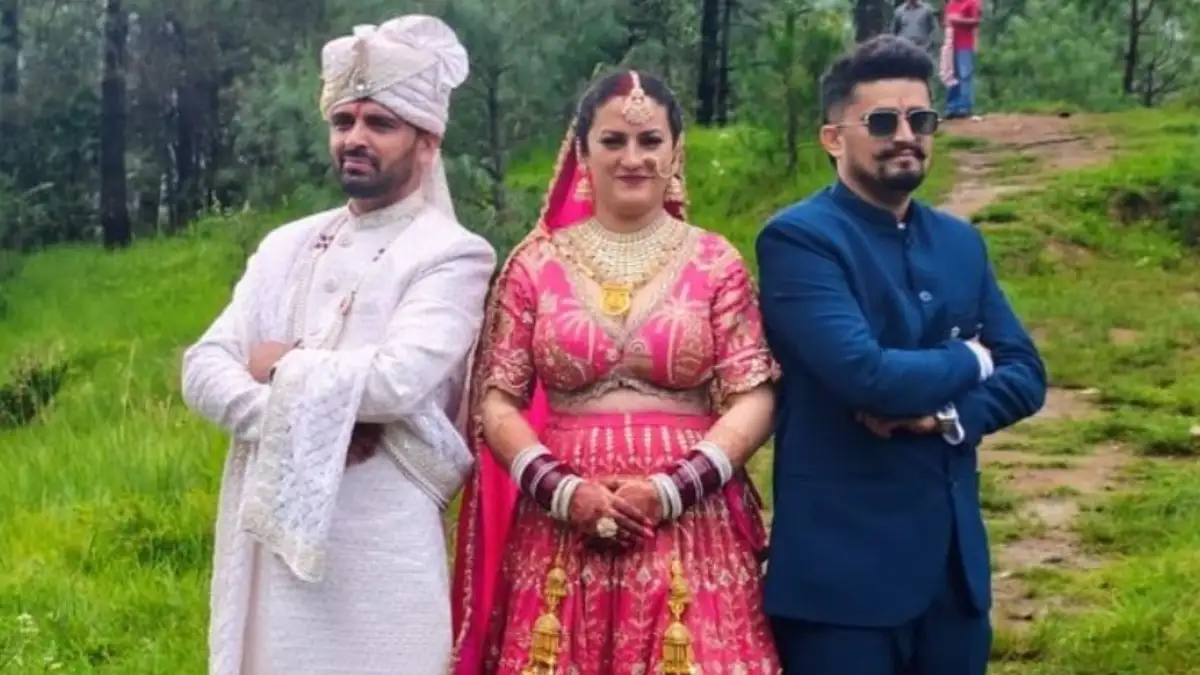
New Delhi, April 16, 2026: The mist-covered hills of Himachal Pradesh’s Sirmaur district are once again alive with a conversation that blends ancient tradition with modern life. While the world moves toward nuclear families, a unique household in the Trans-Giri region has recently welcomed a new member, bringing a centuries-old custom back into the global spotlight.
The story of Sunita Chauhan and her two husbands—brothers Pradeep and Kapil Negi—first went viral in 2025. Today, in April 2026, the family is celebrating the birth of their first child, a moment that has not only intensified their personal joy but has also reignited a national debate on culture, legality, and the changing face of Indian society.
A Celebration of New Life
The birth of a child is a milestone for any family, but for the Negi household in Shillai village, it carries a weight of cultural significance. Pradeep Negi, a government employee, was present at home to welcome the newborn, while his younger brother Kapil, who works in the hospitality industry abroad, took to social media to share his excitement.
“The arrival of this baby has completed our lives,” Kapil wrote in a post that quickly trended across platforms. He shared a photo of the infant, expressing an uncharacteristic eagerness to return home. For Kapil, who spends most of the year thousands of miles away, the baby represents a tether to his roots and a shared responsibility that defines his unique marriage.
The community in Shillai has rallied around the family. Local elders, who have seen this tradition—known as Jodidara—fade over the decades, view the birth as a sign of the custom’s resilience.
Understanding the “Jodidara” Tradition
To an outsider, the idea of one woman marrying two brothers might seem inexplicable. However, in the high-altitude regions of the Himalayas, this practice—fraternal polyandry—was born out of harsh geographical and economic necessity.
1. Land Preservation
In the rugged terrain of Himachal, fertile agricultural land is scarce. Historically, if four brothers married four different women and had separate families, the ancestral land would be divided into tiny, unsustainable plots. By sharing a wife, the brothers remain a single unit, ensuring the family estate stays intact and the household remains economically viable.
2. Emotional and Physical Security
Life in the mountains is demanding. With one husband often traveling for trade, grazing livestock in high pastures, or working abroad (like Kapil), having a second husband at home ensures the wife and children are never left without protection or support.
3. The “Pandava” Connection
The residents of the Trans-Giri region, particularly the Hatti community, often trace their lineage back to the Pandavas of the Mahabharata. They view their practice not as a social anomaly but as a sacred heritage. Just as Draupadi married the five Pandava brothers, these modern-day unions are seen as a way to maintain fraternal unity.
The Wedding that Broke the Silence
While polyandry has been practiced “quietly” for generations, Sunita, Pradeep, and Kapil’s wedding in July 2025 was different. It was public, celebrated with the traditional Jajda ceremony involving hundreds of guests, folk music, and the sacred Seenj ritual.
Sunita’s stance has been a focal point of the narrative. A modern woman from nearby Kunhat village, she has consistently maintained that the marriage was her choice. “I knew this tradition, and I chose it willingly,” she stated during the wedding. Her agency has challenged the stereotype that such traditions are always forced upon women.
Also Read: Mrunal Thakur on ‘Son of Sardaar 2’ Casting: “My Trust Was Shaken”
The Legal and Social Crossroads
Despite its cultural roots, the “Jodidara” system exists in a complex legal gray area.
- The Hindu Marriage Act: Under standard Indian law, bigamy and polyandry are illegal and punishable.
- Tribal Protections: However, the Hatti community was granted Scheduled Tribe (ST) status in 2022. This status provides certain protections for customary laws. In Himachal, revenue laws have historically recognized these unions to prevent the fragmentation of land.
The birth of the baby brings new questions to the forefront regarding inheritance and legal documentation. In traditional polyandry, the eldest brother is often considered the formal father of all children, though they are raised with equal love and status by all husbands. In modern times, some families have even turned to DNA testing to settle property disputes, though the Negi family emphasizes that their bond is built on mutual trust rather than legal technicalities.
A Tradition in Decline?
While the Negi family’s story has brought the spotlight back to polyandry, experts note that the practice is rapidly vanishing. Increased literacy, the influence of mainstream media, and the migration of youth to urban centers have made nuclear families the new norm.
In villages like Badhana, only a handful of such marriages have occurred in the last decade. Most young people in Himachal today prefer monogamous relationships, viewing polyandry as a relic of a difficult past. Yet, for the Hattis of Sirmaur, the Negi-Chauhan union serves as a reminder of a social structure that once prioritized the “we” over the “I.”
The Modern Perspective: Mixed Reactions
The viral photos of the newborn have sparked a divide in public opinion:
- The Traditionalists: Many celebrate the family for keeping a unique Himalayan identity alive. They argue that in an era of rising divorce rates, the stability and “shared responsibility” of this system are worth respecting.
- The Critics: Others express concern over women’s rights and the legal complexities for the child. They wonder how a child raised in such a setup will navigate a world that is increasingly rigid about “traditional” family structures.
Conclusion: A Living Heritage
As the sun sets over the peaks of Sirmaur, the laughter in the Negi household tells a story of a family that has found its own version of happiness. Whether the “Jodidara” system is a practical solution for mountain life or a fading echo of the past, Sunita, Pradeep, and Kapil are living their truth.
The birth of their child isn’t just a personal victory; it is a chapter in a much larger story about how ancient cultures attempt to survive in a rapidly changing world. For now, in the quiet village of Shillai, the focus isn’t on the global debate—it’s on the cradle, where a new generation has just begun its journey.