

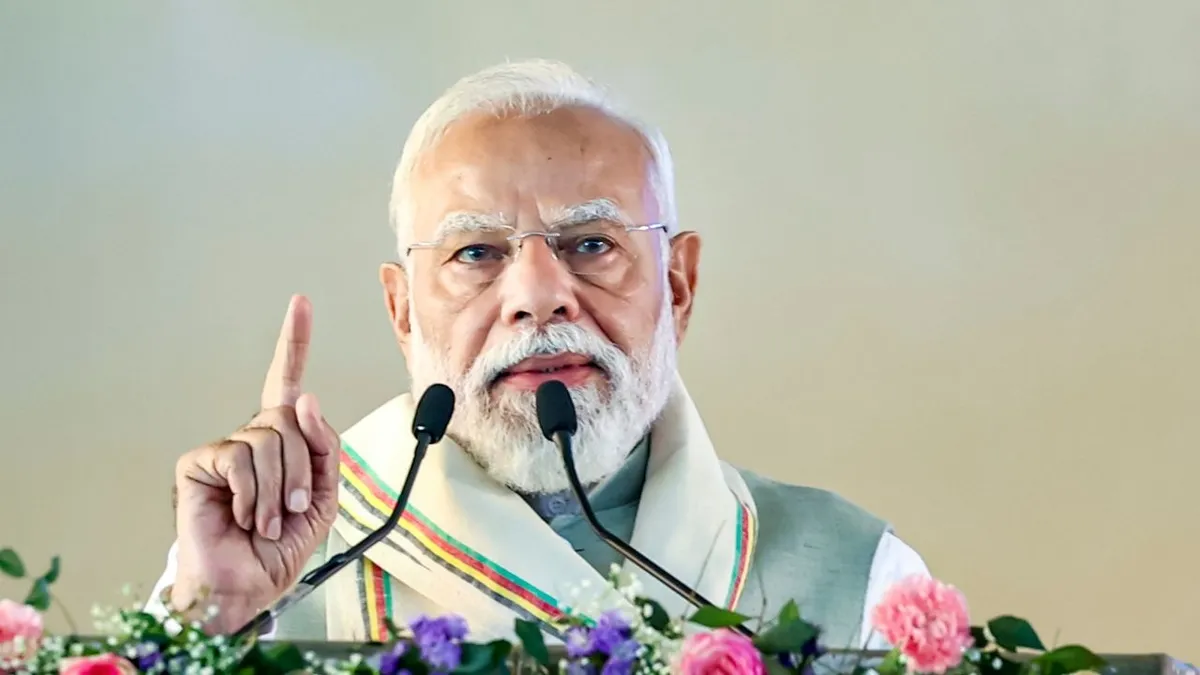
New Delhi, April 9, 2026 — In a resounding call for national unity, Prime Minister Narendra Modi has urged all political parties to set aside “political calculations” and support the final implementation framework of the Nari Shakti Vandan Adhiniyam (Women’s Reservation Bill). Addressing the nation as Parliament prepares for a crucial three-day special session from April 16 to 18, the Prime Minister emphasized that empowering women is not merely a policy goal but the very foundation of a Viksit Bharat (Developed India).
The Prime Minister’s appeal comes at a pivotal moment. While the landmark legislation was passed in 2023, the government is now moving to amend the Act to ensure its benefits reach the grassroots by the 2029 General Elections.
A Vision Beyond Politics
During a recent public address, PM Modi underscored that the representation of women in legislative bodies must translate into “real influence.” He articulated a vision where women are not just beneficiaries of development but the leaders of it.
“The government has always prioritized Nari Shakti in every form,” the Prime Minister stated. “This is an issue of winning the trust of the country’s mothers and daughters. I urge all parties to become partners in this historic journey with an open mind.”
The Prime Minister’s remarks specifically targeted the need for a “consensus-based approach,” asking the opposition—including the Congress-led alliance—to support the upcoming amendments. He noted that for decades, political roadblocks had stalled this reform, but the current era demands a shift toward women-led governance.
Key Highlights of the Nari Shakti Vandan Adhiniyam
The legislation, officially known as the Constitution (One Hundred and Sixth Amendment) Act, seeks to fundamentally alter the landscape of Indian democracy:
- 33% Reservation: One-third of all seats in the Lok Sabha, State Legislative Assemblies, and the Delhi Legislative Assembly will be reserved for women.
- Inclusive Quotas: The Act includes a “quota within a quota” for women belonging to Scheduled Castes (SC) and Scheduled Tribes (ST).
- Rotation of Seats: Reserved seats will be rotated after every delimitation exercise to ensure fair representation across various constituencies.
- Implementation Timeline: Originally tied to the completion of the census and delimitation, the government is now exploring legislative paths to solidify the 2029 rollout.
Strengthening the Democratic Fabric
Critics have historically raised concerns about the potential reduction of seats in certain regions due to delimitation. However, the Prime Minister assured that the total number of seats in Parliament would increase, ensuring that no state—particularly in South India—would face a decrease in representation.
The move is seen as a strategic effort to address India’s current gender disparity in politics. As of early 2026, women represent less than 15% of the Lok Sabha. The implementation of this Bill would more than double that figure, bringing India closer to global standards of gender parity in governance.
A Pillar of Viksit Bharat
The government’s push for the Women’s Reservation Bill is part of a broader “Nari Shakti” ecosystem that includes initiatives like Beti Bachao Beti Padhao, Ujjwala Yojana, and the expansion of Lakhpati Didis. By moving toward a legislative guarantee of power, the Prime Minister argues that India is setting an example for the world.
As Parliament reconvenes on April 16, the nation’s eyes will be on the treasury and opposition benches alike. The Prime Minister’s message is clear: the empowerment of women is a “national mission” that should transcend the divide of the aisle.