

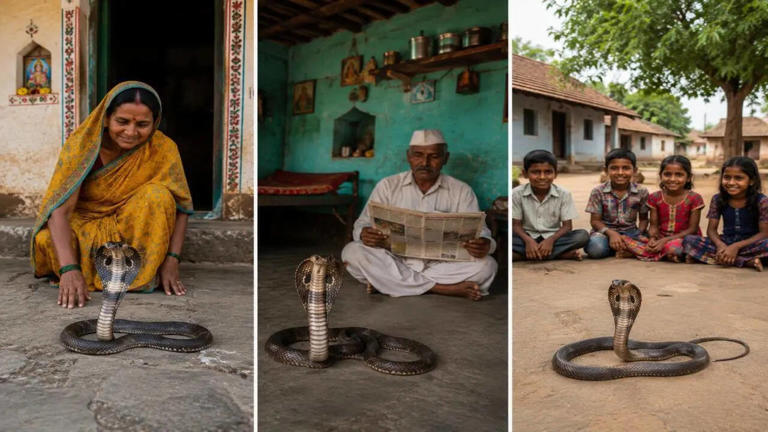
Deep in the arid plains of Maharashtra’s Solapur district, about 200 kilometers from Pune, lies the unassuming village of Shetphal.To an outsider, it looks like any other rural Indian settlement with its narrow lanes and modest houses. Step inside any doorstep, however, and you are likely to be greeted by a sight that defies human instinct: a fully grown, highly venomous Indian Cobra (Naja naja) slithering across the living room floor or resting quietly near the kitchen rafters. Known globally as the “Snake Village of India,“ Shetphal is home to a community of roughly 2,600 residents who live in absolute, fearless harmony with hundreds of wild cobras.
What makes Shetphal truly extraordinary is not just that snakes reside here, but how intentionally the villagers accommodate them. By long-standing custom, when building a new house, residents are required to construct a Devasthan (a dedicated sacred alcove or hollow space within the ceiling or walls) specifically for the snakes to seek shelter, rest, and escape the harsh afternoon heat. The reptiles are not caged, defanged, or kept as pets; they are treated as free-roaming, revered guests closely linked to Lord Shiva and the serpent deity Nag Devta. It is entirely common to see cobras gliding through school classrooms or lounging in courtyards while toddlers play just inches away.
Wildlife biologists and behaviorists who visit the village point to a deeply ingrained understanding of reptile psychology rather than divine intervention. Because the arid Solapur climate offers a perfect natural habitat for rodents and reptiles, encounters were historically inevitable. Over generations, the people of Shetphal learned to replace fear with calculated calm. They avoid sudden, threatening movements, never intentionally harm a snake, and deeply understand the creatures’ warning signs. Because the snakes are never cornered or provoked, their defensive strike reflex remains untriggered, resulting in an informal, peaceful coexistence.
Today, this ancient covenant has transformed Shetphal into an emerging hub for ecotourism and cultural documentaries. Travelers and thrill-seekers flock to the village to witness this surreal dynamic firsthand, especially during the annual festival of Nag Panchami, when the entire community gathers to offer milk and prayers to their slithering neighbors. While wildlife authorities continue to urge caution when dealing with venomous species, Shetphal stands as a fascinating living proof of how mutual respect and deep ecological awareness can completely bridge the gap between human survival and the wild.