

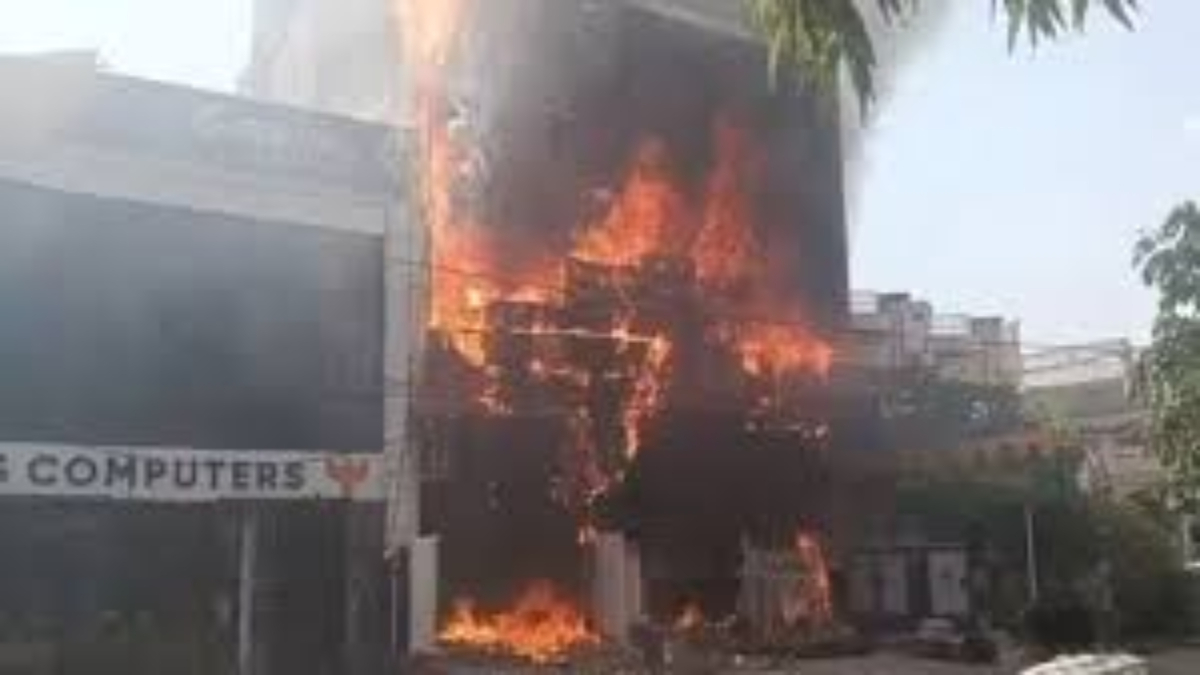
New Delhi, June 25, 2026: A horrific fire at a three-storey building in Lucknow’s Aliganj area on Monday afternoon, June 22, 2026, has tragically claimed the lives of 15 people—the majority of them young students. The building, which housed a library and an animation coaching studio on the upper floors, quickly transformed from a place of learning into a suffocating death trap. The incident has triggered massive public outrage across India after terrifying viral videos surfaced on social media, capturing the sheer panic and desperation of trapped students leaping from the windows to escape the advancing flames.
The Viral Horror and Minutes of Chaos
The fire broke out around 3:00 PM on Monday in the densely packed Purania neighborhood of Sector D, Aliganj. According to preliminary investigations, the blaze originated on the lower floors—which housed a pet shop and a veterinary clinic—and is believed to have been sparked by an electrical short circuit in an air-conditioning duct or external panel. Fueled by overloaded wiring, the fire intensified rapidly, spreading heavy, toxic black smoke directly up into the higher floors where dozens of students were attending classes or studying in the library.
As the lone staircase became instantly choked by dense smoke and intense heat, students found themselves completely cut off from the exit. Cell phone footage filmed by horrified bystanders showed young adults breaking window panes in a frantic bid for fresh air. In one widely circulated video, a student can be seen clinging to a window ledge before desperately leaping from the upper story to the ground below. Local residents rushed to help, holding out blankets and makeshift cushions, though several who jumped suffered severe impact injuries and fractures.
A Design Engineered for Tragedy
The rescue operation launched by the Uttar Pradesh Fire Service, the National Disaster Response Force (NDRF), and the State Disaster Response Force (SDRF) highlighted how structurally flawed the building truly was. The facility lacked even basic emergency preparedness. Firefighters encountered a “box-like” structure completely devoid of proper ventilation or secondary emergency exits.
The sole escape route—a single, narrow staircase—was severely obstructed by air-conditioning compressors, heavy electrical panels, and a tangle of loose wires. This setup effectively turned the building’s only exit into the primary source of smoke and fire. Furthermore, the coaching centre had reportedly installed biometric digital locks on some doors, which became non-functional or locked people in when the power failed.
The smoke was so dense that responding firefighters could not enter through standard routes. Ultimately, rescue teams had to use heavy hydraulic cutters, drills, and hammers to smash a massive hole through a thick concrete wall shared with an adjacent residential property. It was through this makeshift breach that emergency workers finally managed to slide stretchers into the building, using industrial exhaust fans to clear out the toxic air so they could search the rooms and washrooms where terrified students had tried to hide.
The Regulatory Sins of the Past
As the Special Investigation Team (SIT) digs into the disaster, official records have exposed a disturbing history of systemic corruption and regulatory apathy. The building, constructed on a 1,992-square-foot plot, was strictly approved by the Lucknow Development Authority (LDA) for residential use only back in 2014.
Despite this, the property changed ownership multiple times and was illegally converted into a high-density commercial complex. Even more alarming is the paper trail from a decade ago:
- In 2016: The LDA officially filed a case against the building for extensive unauthorized construction and explicitly issued a formal demolition order.
- Two Months Later: Following a quiet challenge by the owners claiming they hadn’t received a proper hearing, the LDA abruptly and mysteriously revoked its own demolition order.
For the last ten years, the building operated in plain sight without a valid Fire Safety Certificate (No-Objection Certificate), completely violating local zoning laws and urban building bylaws.
Public Backlash and the Demand for Accountability
The Lucknow tragedy is not an isolated event; it echoes a grim pattern in India’s unregulated urban educational hubs. Following the disaster, Uttar Pradesh Chief Minister Yogi Adityanath visited the site, announced financial compensation for the victims’ families, and ordered the immediate suspension of four local municipal and fire officials alongside the arrest of the building’s owners.
However, the public and grieving families are fiercely rejecting what they call a predictable routine of reactionary governance. Across social media, citizens are pointing out that after every catastrophic fire—such as the recent tragic blazes in Delhi and Surat—the government follows the same script: temporary crackdowns, a few low-level suspensions, and empty promises of safety audits, while the deep-rooted corruption within municipal corporations remains untouched.
In response to the mounting fury, a massive state-wide sealing drive has been initiated, with teams targeting coaching centers, digital libraries, and commercial buildings operating illegally out of residential zones across Lucknow. Yet, for the families of the 15 victims who lost their lives to greed and civic neglect, these systemic corrections have come tragically too late.