

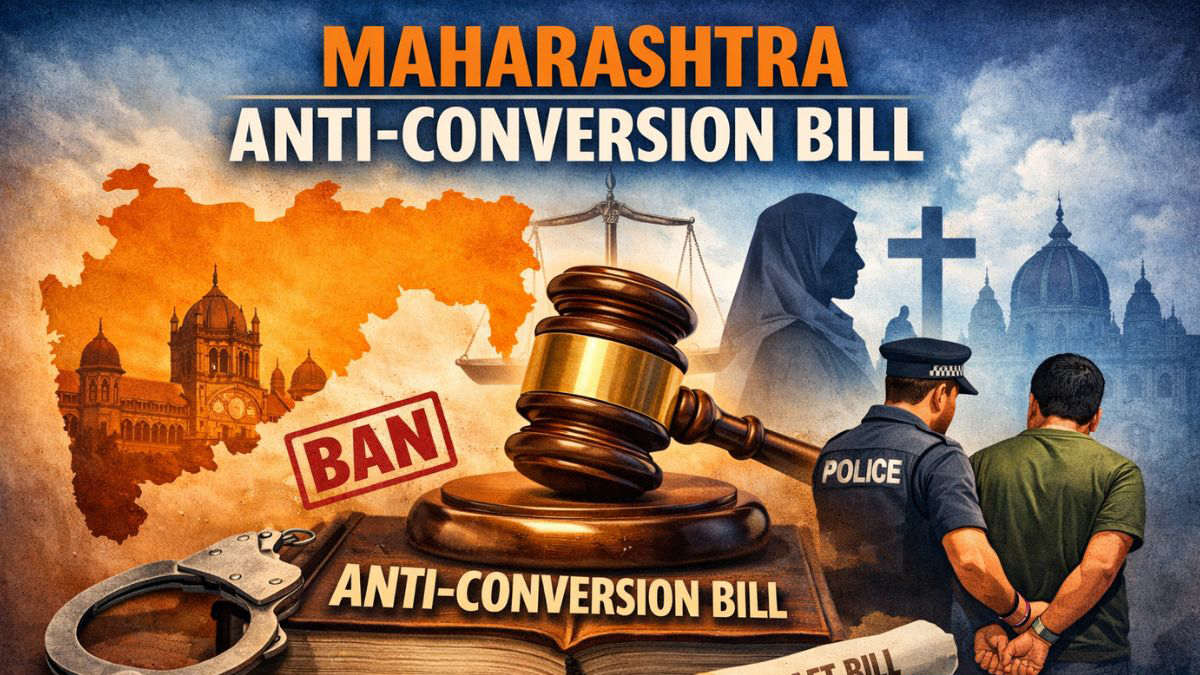
New Delhi, March 14, 2026: In a significant legislative move, the Maharashtra government officially tabled the Maharashtra Freedom of Religion Bill, 2026 (also known as the Dharma Swatantrya Adhiniyam) in the state Legislative Assembly on Friday, March 13, 2026.
The bill aims to curb religious conversions carried out through “force, fraud, or allurement” and introduces some of the most stringent penalties seen in the country. With this move, Maharashtra joins at least ten other Indian states that have enacted similar “freedom of religion” laws to regulate the process of faith conversion.
Key Provisions of the Bill
The proposed legislation establishes a rigid administrative framework for anyone wishing to change their faith.
- Mandatory Advance Notice: Any individual intending to convert, along with the person or institution organizing the ceremony, must provide a 60-day advance notice to the District Magistrate or a designated competent authority.
- Public Scrutiny: Once the notice is received, it will be displayed publicly for 30 days to invite objections. Authorities are empowered to conduct police inquiries to verify if the conversion is truly voluntary.
- Post-Conversion Declaration: Following the conversion, the individual must submit a formal declaration within 21 days to confirm the change. Failure to comply with these procedural steps will render the conversion null and void in the eyes of the law.
Penalties and Legal Consequences
The bill classifies unlawful conversion as a cognizable and non-bailable offense, meaning the police can make arrests without a warrant and bail is not a matter of right.
| Offense Category | Prison Term | Fine |
| General Violations | Up to 7 Years | Up to ₹1 Lakh |
| Vulnerable Groups (Minors, Women, SC/ST) | Up to 7 Years | Up to ₹5 Lakh |
| Mass Conversions (2 or more people) | Up to 7 Years | Up to ₹5 Lakh |
| Repeat Offenders | Up to 10 Years | Up to ₹7 Lakh |
Furthermore, the bill targets organizations involved in facilitating unlawful conversions. If found guilty, the state may cancel the registration of such institutions and withdraw all government financial assistance.
Focus on Marriage and Identity
A major focal point of the legislation is the intersection of marriage and religion.
- Marriage for Conversion: Any marriage performed solely for the purpose of religious conversion can be declared null and void by a court.
- Status of Children: In a unique provision, the bill states that a child born from a marriage deemed “unlawful” under this act will be considered to belong to the mother’s original religion.
- Rights of the Child: Despite the legal status of the marriage, the child will maintain inheritance rights to the properties of both parents and is entitled to maintenance under the Bharatiya Nagarik Suraksha Sanhita (BNSS).
The Definition of “Allurement”
The bill provides an expansive definition of “allurement” or “inducement,” which includes:
- Offering cash, gifts, or material benefits.
- Promises of employment or free education in religious institutions.
- Assurances of a “better lifestyle” or “divine healing.”
- Portraying one’s religion as superior while disparaging another’s rituals or customs.
Political and Social Reactions
The introduction of the bill has sparked intense debate within the state. Proponents, including state ministers, argue the law is a necessary safeguard to protect “gullible persons” and women from “love jihad”—a term used by some to describe alleged campaigns of conversion through marriage.
However, civil rights groups, legal experts, and religious organizations have voiced deep concerns. Critics argue that the 60-day notice period and the “burden of proof” (which lies on the person facilitating the conversion) infringe upon the Fundamental Right to Privacy and the Freedom of Religion guaranteed under Article 25 of the Constitution.
As the bill moves toward a full debate in the Assembly next week, all eyes are on the judiciary, as several similar laws from other states are currently facing challenges in the Supreme Court.