

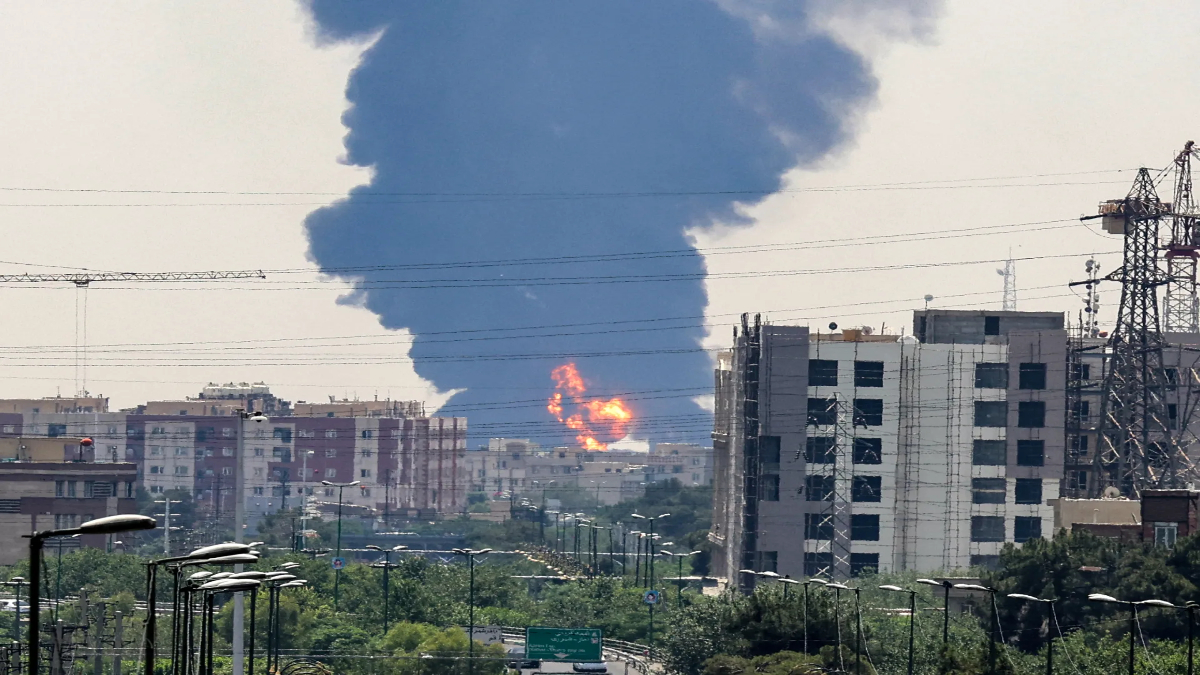
New Delhi, March 5, 2026: In the rapidly evolving geopolitical landscape of West Asia, a sensational claim recently suggested that the United States was utilizing Indian ports to launch missile strikes against Iran. Given India’s strategic “multi-alignment” policy and its delicate balancing act between Washington and Tehran, the Ministry of External Affairs (MEA) has moved swiftly to clear the air.
Here is the breakdown of the allegations and the official truth as stated by the Indian government.
The Origin of the Claim
The controversy erupted following an interview on One America News (OAN), a US-based television network. During the segment, former US Army Colonel Douglas Macgregor claimed that American naval infrastructure in the region had been severely compromised, forcing the US Navy to “fall back” on Indian naval bases.
“All of our bases have been destroyed… We are actually having to fall back on India and Indian ports, which is less than ideal,” Macgregor stated in the viral clip.
These comments quickly gained traction on social media platforms like X (formerly Twitter) and Telegram, sparking concerns about India’s neutrality in the escalating conflict between the US, Israel, and Iran.
The MEA’s Decisive Rebuttal
India’s Ministry of External Affairs did not mince words. Through its official MEA FactCheck handle, the government categorically dismissed the reports as “fake and false.”
Key Points from the MEA Statement:
- Fabricated Narratives: The MEA labeled the claims aired on OAN as “baseless and fabricated.”
- Sovereignty and Neutrality: The ministry emphasized that no Indian naval facilities—including major ports like Mumbai or Kochi—are being used by the US Navy for combat operations against Iran.
- Public Advisory: The government cautioned citizens and the international community against amplifying unverified content that could jeopardize regional stability.
India’s Strategic Stance on the Conflict
The timing of these rumors is particularly sensitive. As of March 2026, tensions in West Asia have reached a boiling point following significant military exchanges. India’s position remains anchored in two primary concerns:
- Safety of the Diaspora: With nearly 10 million Indian nationals living and working in the Gulf region, any escalation is a direct threat to their safety.
- Energy and Trade Security: India relies heavily on the Strait of Hormuz for crude oil imports. Furthermore, India’s investment in Iran’s Chabahar Port remains a cornerstone of its connectivity strategy to Central Asia, making a conflict with Iran economically disastrous for New Delhi.
Official Reaction to the War
While the MEA has expressed “deep concern” over the violence and called for “restraint and diplomacy,” it has maintained a strictly neutral path. India has consistently advocated for the respect of the sovereignty and territorial integrity of all nations involved, echoing its long-standing foreign policy of avoiding foreign military entanglements.
Conclusion: Fact vs. Fiction
The claim that India is providing a “launchpad” for American missiles is a classic example of wartime misinformation. By debunking these reports, the MEA has reaffirmed that India is not a party to the kinetic conflict. New Delhi continues to prioritize a “de-escalation first” approach to protect its economic interests and the millions of its citizens residing in the Middle East.