

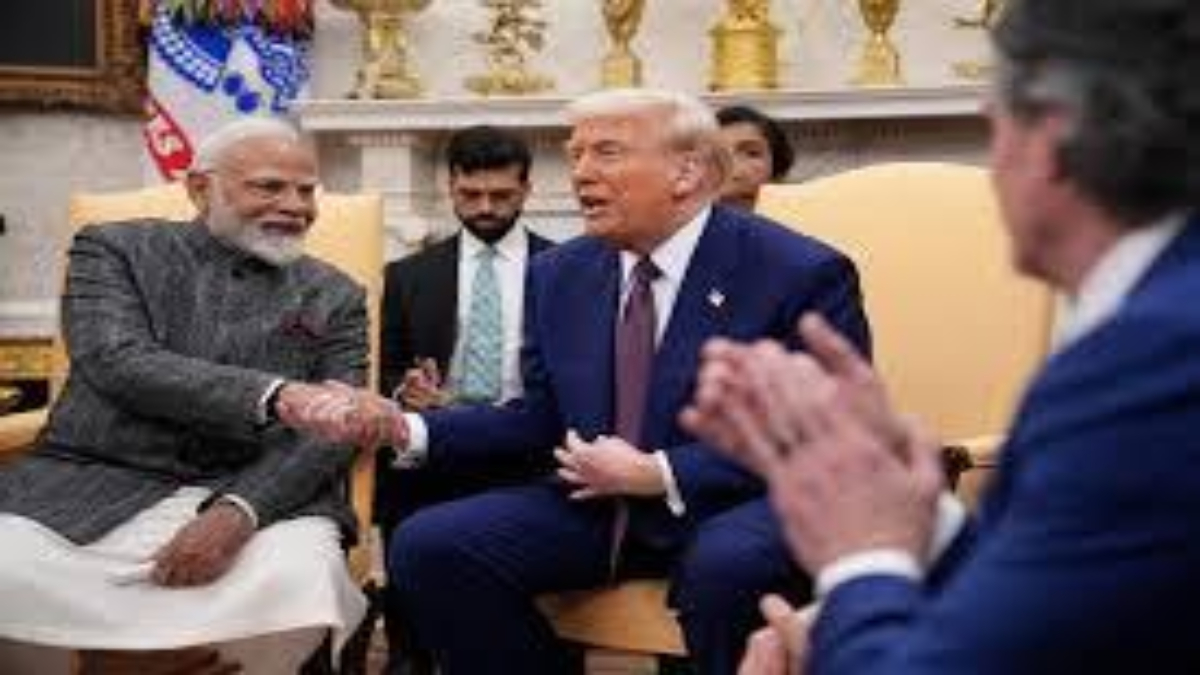
New Delhi, February 2, 2026: In a move widely seen as a strategic defense against escalating trade tensions, Prime Minister Narendra Modi’s government has unveiled a Union Budget for 2026-27 designed to “shock-absorb” the Indian economy. The announcement comes as India grapples with a staggering 50% tariff wall erected by the Trump administration, a move that has sent ripples through India’s export-heavy sectors.
The budget, presented by Finance Minister Nirmala Sitharaman on February 1, 2026, marks a pivotal shift from expansion to strategic resilience.
Countering the “Reciprocal” Reality
Relations between New Delhi and Washington reached a fever pitch in late 2025 when the U.S. imposed a baseline 25% “reciprocal” tariff on Indian goods, followed by an additional 25% penalty over India’s continued energy ties with Russia. With nearly 70% of India’s U.S.-bound exports at risk, the 2026 Budget focuses on three defensive pillars:
- Export Lifeboats: The government announced a “one-time relief” for Special Economic Zones (SEZs). To prevent mass closures, units in these zones can now sell a portion of their goods within India at concessional rates, pivoting from failing foreign markets to robust domestic demand.
- Input Cost Slashes: To keep Indian products competitive despite the high tariffs, the budget slashed customs duties on critical raw materials for textiles, leather, and seafood—the sectors hardest hit by the U.S. levies.
- The “EU Pivot”: Just days before the budget, India sealed a historic Free Trade Agreement (FTA) with the European Union. The budget allocates fresh funding to accelerate this “Strategic Indispensability” roadmap, aiming to replace U.S. market share with European access.
Boosting the “Aatmanirbhar” Engine
PM Modi described the budget as a “highway of immense opportunities,” emphasizing that India will not “bow down” to external economic pressure.
“This budget reinforces India’s strong position in a world of managed disorder,” PM Modi stated. “We are focusing on high capital expenditure to ensure that even if global trade slows, our domestic engine remains the fastest in the world.”
The Economic Survey 2025-26 remains optimistic, projecting a GDP growth of 7.4%. The government is betting on a “less financialized” growth model, relying on a large domestic market and strong foreign exchange reserves to act as a buffer.
Key Budget Highlights for 2026-27
| Sector | Key Measure | Objective |
| Manufacturing | BCD exemptions on Lithium-ion & Critical Minerals | Dominate the EV and Tech supply chain |
| Textiles | Integrated Modernization Programme | Protect 30 lakh jobs at risk from tariffs |
| Logistics | Expansion of BharatTradeNet | Reduce transaction costs for global trade |
| Defense | 18% hike in expenditure | Strategic autonomy amid geopolitical shifts |
The Road Ahead
While the budget provides a temporary shield, the pressure remains. Industry leaders in the textile sector have warned that without a diplomatic resolution, the loss of the U.S. market could be “irreversible.”
For now, the Modi government is playing a long game—using fiscal discipline and domestic substitution to wait out the “Tariff War” while aggressively courting new allies in Brussels and the Global South.