

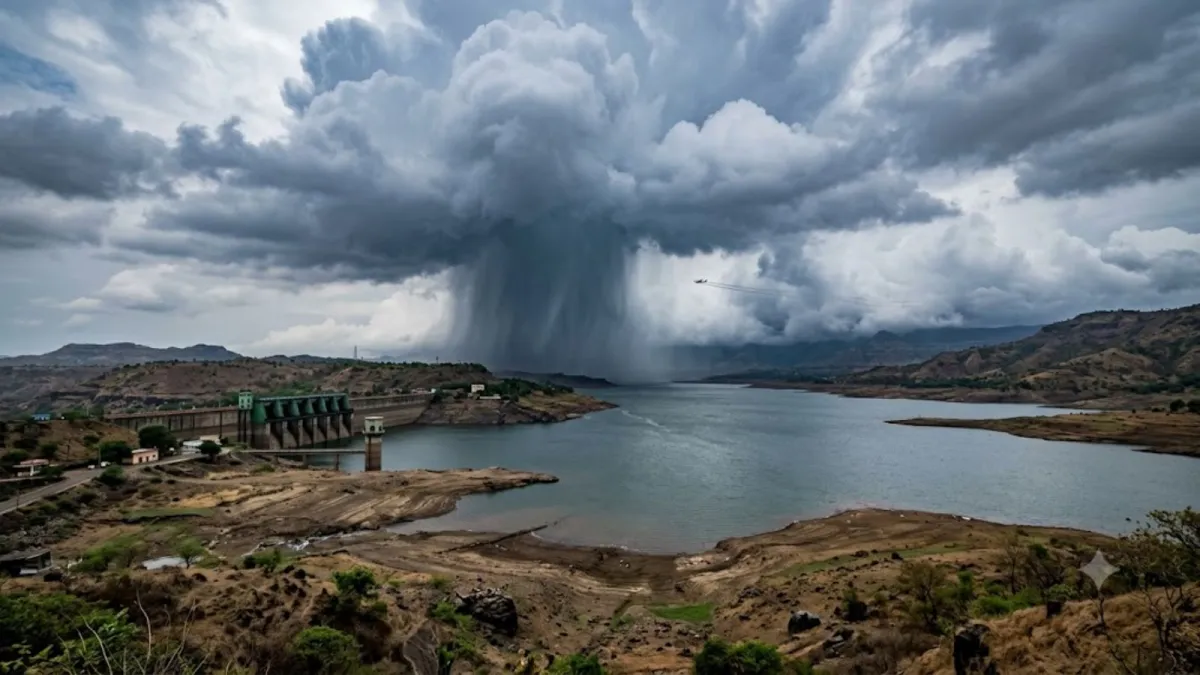
New Delhi, July 7, 2026: A dramatic shift in weather has brought immense relief—and a wave of high alert—to Pune. Following weeks of anxious waiting and looming concerns over water scarcity, a sudden and massive spell of torrential rain lashed Pune district, completely changing the city’s water outlook. Within a single 24-hour window, the four crucial reservoirs that form the Khadakwasla dam cluster collectively gained a massive 2.6 TMC (Thousand Million Cubic feet) of water.
This major surge, driven by non-stop downpours in the high-altitude catchment areas, has more than doubled the specific live storage of the Khadakwasla reservoir itself. The rapid inflow has successfully averted immediate water cuts for Pune’s citizens, but it has also forced local authorities into a state of round-the-clock vigilance.
The 24-Hour Surge: Breaking Down the Numbers
The Khadakwasla dam cluster—consisting of the Khadakwasla, Panshet, Varasgaon, and Temghar reservoirs—serves as the primary source of drinking water for Pune and its surrounding suburbs. Prior to this weekend, the collective water levels were dangerously low, hovering just below 20% capacity and sparking tense administrative debates about potential water rationing.
However, the monsoon arrived in full force over the Western Ghats. In the 24 hours ending Monday evening, the cumulative live storage of the four-dam system jumped from 5.72 TMC (19.63%) to 8.32 TMC (28.55%). According to irrigation department officials, this single day’s inflow adds enough water to secure Pune’s drinking supply for roughly two entire months.
The Khadakwasla dam, positioned lowest in the chain and acting as the direct gateway to the city, experienced the most spectacular rise:
- Initial Storage: 0.31 TMC (15.47% of its individual capacity)
- Updated Storage: 0.68 TMC (34.32% of capacity)
- Inflow Rate Spike: Surged exponentially from a minor 27 mcft (million cubic feet) to a roaring 294 mcft.
While Khadakwasla swallowed the immediate runoff from the surrounding streams, its sibling reservoirs upstream also logged massive gains. Panshet reservoir climbed steadily to hold 3.36 TMC (31.59%), and Varasgaon reached 3.73 TMC (29.06%). Meanwhile, Temghar dam—which had been sitting at critically low levels—witnessed a spectacular 165 mm of localized rainfall in its immediate catchment area, pushing its storage up to 0.55 TMC (14.99%).
Catchment Areas Drenched in Historic Rainfall
The dramatic spike in reservoir storage is a direct result of intense, localized cloudburst-like activity over the mountainous ghat sections of Pune district. Meteorological data revealed that more than 13 major reservoirs across the district recorded over 100 mm of rainfall in a single night.
The most extreme conditions were observed in the Mulshi and Vadivale catchments. Mulshi dam registered a staggering 200 mm of rain in 24 hours, followed by an additional 100 mm the next day. This brings Mulshi’s total rainfall since June 1st to over 1,700 mm—making it the wettest region within the entire Bhima river basin.
This vast amount of water flowing down from the hills quickly filled up smaller tributaries, causing a combined, heavy rush of water downstream into the Mula-Mutha river system. At the Bund Garden gauging station in Pune, the water flow rate reached a roaring 35,000 cusecs (cubic feet per second), painting a vivid picture of just how much runoff was moving through the city.
High Alerts Issued along Riverbanks
With water levels rising rapidly, the Water Resources Department and local municipal corporations moved swiftly to issue safety alerts. When the storage level at Khadakwasla crossed the 32% mark on Monday evening, engineers initially prepared for emergency water releases into the Mutha riverbed.
Kiran Deshmukh, the Executive Engineer for the Khadakwasla dam cluster, provided clarity on the situation.
Even though the gates remained closed on Monday, the administration has urged citizens to be highly cautious. Public notices have warned residents living in low-lying areas along the riverbanks to move their livestock, vehicles, and agricultural machinery to safer, higher ground. Local police have set up barricades at popular riverside spots to prevent tourists and commuters from getting dangerously close to the surging waters.
A Long Way to Go: The 2025 vs. 2026 Comparison
Despite the celebratory mood surrounding this sudden windfall of water, irrigation officials are urging caution and keeping expectations realistic. A look at historical data reveals that Pune is still playing catch-up compared to previous monsoon seasons.
Because the early summer monsoons were delayed this year, the reservoirs started from a much lower baseline. To completely eliminate the risk of water cuts for the rest of the year, the four dams need to hit a combined capacity of nearly 29 TMC by the time the monsoon wraps up in October.
Fortunately, the India Meteorological Department (IMD) has issued a sustained heavy rainfall warning for the interior ghat sections over the coming week. This means steady, heavy inflows are expected to continue pouring into the reservoirs. For now, Pune’s administrators are keeping a round-the-clock watch on the dams, carefully balancing the need to store every drop of drinking water with the vital task of managing downstream flood risks.
For a visual look at the scale of these reservoirs when they reach maximum capacity, you can watch this Khadakwasla Dam Full Storage Tour. This video showcases the massive scale of the dam and helps illustrate the sheer volume of water required to fill this critical reservoir network during the peak rainy season.